Desertcart purchases this item on your behalf and handles shipping, customs, and support to Austria.
โจ See the unseen, clean like a pro! ๐งผ
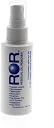
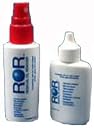
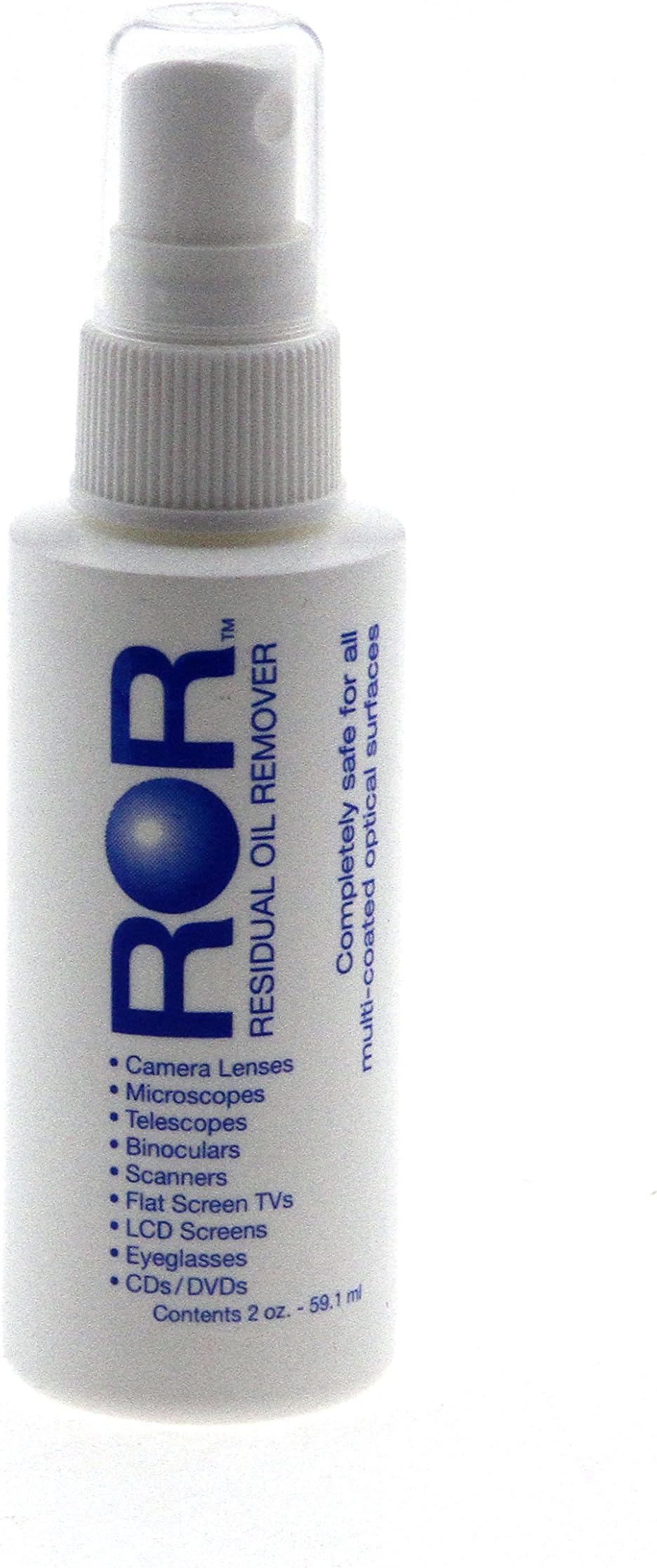
ROR Optical Lens Cleaner is a specialized 2 oz spray that emulsifies and removes microscopic oil residues from all multi-coated optical surfaces, enhancing brightness and clarity. Trusted by professionals for over 15 years, it prevents dust buildup by leaving surfaces cleaner longer, making it perfect for cameras, glasses, screens, and precision optics.
| ASIN | B0002HMRF2 |
| Best Sellers Rank | #15 in Camera & Photo Liquid Cleaners |
| Brand | ROR |
| Brand Name | ROR |
| Customer Reviews | 4.6 out of 5 stars 271 Reviews |
| Item Form | Spray |
| Item Weight | 2.4 ounces |
| Manufacturer | ROR |
| Model Number | VV-ROR2 |
| Part Number | VV-ROR2 |
| Size | 2 Ounces |
| Special Feature | 2 oz Spray Bottle |
| Special Features | 2 oz Spray Bottle |
| Specific Uses For Product | Camera lens, |
| Surface Recommendation | Glass, Plastic |
| UPC | 034447028266 |
| Unit Count | 2 Ounce |
J**N
ROR for Camera Lenses: Saves the day when others fail
There are many different ways of removing crud and spots from photographic lenses and filters. Some are good, others are better, and some are there when all other methods fail. Have used ROR Residual Oil Remover Lens Cleaner over the last fifteen years as a lens cleaning solution when nothing else would work, but it's often hard to find. Bought it here in this 2 oz. pump size when I found that I could not get the embedded crud off of the front element of a used 24mm f/2.8D AF Nikkor Lens that I had bought locally for less than the price of two good ร52mm filters. It was a gamble, but seemingly worth it. Fingerprints on front or rear lens elements are left as a result of perspiration and oils left when one touches the surfaces. Though sweat is mainly water, it contains oils, minerals and other compositions that can wreak havoc upon a lens or filter surface, especially if left there for a period of time. It may not render the lens unusable, but will definitely effect the lens or filter sharpness, especially on multicoated optics. โ What It Does: ROR isn't a standard optical surface cleaner as we know them. It actually emulsifies and removes imperceptible oil residues, a byproduct of sweat, environmental pollution and other causes, from the microscopic surface and pores of glass and acrylic surfaces. As a result, dust and pollutants have nothing to adhere to, which allows the surface to remain cleaner for a longer period of time. โ In Use: Cleaning a lens or filter is fairly straightforward, but you need to use a blower such as the Giottos Rocket Air Blaster or a lens brush to remove any general loose particles that may be on the surface. Next, place a couple of drops of ROR on the surface and let the solution sit for a few moments. Then gently wipe the surface in a circular fashion with a non-treated microfiber lens cleaning cloth or lens tissue, taking care to use a clean area of cloth or tissue each time you wipe. You may find it better to squeeze a couple of drops of ROR onto the microfiber lens cleaning cloth or applicator that you're using, and be sure to apply enough pressure to effectively clean the optical surface. You may have to do this 2 to 3 times if the surface had a lot of crud. Then use a clean cloth or tissue to do a final wipe of the surface, again using enough pressure to get it clean. As a final step, I used the LensPen NLP-1 from my LensPen New DSLR Pro Camera Cleaning Kit by uncapping the pad end of the LensPen, then gently moving it on the lens surface in a circular fashion. It will generally leave some small, black flecks that that are similar to black charcoal powder. These were dusted off with the brush end, as it's just residue from the carbon cleaning compound. The result? A sparkling clean surface on both the front and rear elements of the 24mm f/2.8D AF Nikkor lens, and in use the results from my Nikon DSLR showed that I had picked up a lucky bargain. I already knew that ROR was a good product from past experience, but in this case it exceeded my expectations. โ Summary: ROR Residual Oil Remover Lens Cleaner is an excellent solution for situations as described above. Since then I've used it on all of the lenses for my various cameras and filters as general maintenance, and also used it on my regular glasses, which are worn daily. Putting it simply, ROR is a highly recommended product, and saves the day when others fail. 8/3/2013
A**N
Cleans 4K TV screens Great.
Works great !
A**N
Clearly still the best!!
I have used The ROR Residual Oil Cleaner cleaner extensively and have been very pleased with the streak free results. The premoistened Zeiss cleaning cloths also do an outstanding job on most oils and grimes, but couldn't help when one of my kids left a greasy pizza print on the anti-glare screen of our TV. Fortunately ROR easily removed it with only a few wipes. I highly recommend removing as much dust and dirt from the lens as possible with any one of the purpose built compressed air canisters freely available and an ultra soft camel hair brush before wiping the lens. Waterproof binoculars and eyeglass lenses can be safely rinsed with warm water first in order to ensure complete removal of all dust and debris. Keep in mind that no one solvent or cleaning agent is going to be effective on every single type of grease, grime and dirty films that anti-glare coatings seem to attract. Having said that though, I have yet to find any oil, grease or grime that either of these two couldn't effectively remove, and usually without too much effort too. Note that both of the above will leave slight streaking when the cloths are very moist. Fortunately they evaporate quickly and if you continue to rub in light circles until it's almost dry will leave the cleaned surface streak and blemish free. I am not a big fan of lens pens, not because they don't work. My experience has been that they work very well, but I don't use them because the risk is too high that I may have missed a tiny piece of grit which the lens pen will then rub into the AR coating and probably scratch it. As an aside, long before Modern Photography folded, Herbert Keppler recommended the Microdear microfiber cleaning cloths as the thickest, softest and most absorbent available. I have used close to 100 different brands over the past 30 years, and IMHO this is still the best one to date, and is available on Amazon in different sizes. Wash it in hot water without any fabric softeners. Do not dry it in the dryer, it's better to hang it up to dry after squeezing as much water out of it as possible. Listed below are the ROR ingredients from the MDS posted on their web site: Ammonia 26ยฐ = 0.775% Sodium Chloride = 0.830% Isopropyl Alcohol = 4.266% Liquid Soap = 9.011% Distilled Water = 85.118% Gotta go now as I think I see a speck of dirt on one of my lenses....
J**S
Great for optics and also a great cleaner for CD's
I've used this product for a few years to clean the lenses for my camera and it does that very well. And no, it does NOT leave a film..or anything else that's difficult to remove. When used with a proper cloth, it will leave the glass squeaky clean. I prefer a very soft, very well worn, and highly worn old 100% cotton T shirt that has all the lint finally worn out of it. Spray the cloth..not the lens..and work quickly before evaporation sets in. Wipe dry with a different part of the cloth and then use a lens brush to kick off any small pieces of lint that may have come loose. Now for the real reason I'm writing this. This stuff is also an excellent cleaner for CD's, DVD, and probably BluRay also. It's highly safe for polycarbonate plastic. My disc collection contains both CD's and SACD's and I definitely appreciate the latter. Many of the SACD's are a hybrid type, containing both standard and SACD content, which is separated in the disc by an extremely small distance. Proper playback requires extreme precision to differentiate the two layers..and it doesn't take much to disturb the process. Lately I've been having issues with my older player finding the SACD layer and I had put it all down to older tech. After all it is an early generation player. But it still bugs me. I tried cleaning the spindle and clamp inside and that got me nowhere. So I tried this today..flip the disc upside down to hold it, a few spritzes of ROR, and careful wipe to work it in and then a wipe with a dry area on the cloth. Voila! The SACD logo is now lighting up with regularity...thankfully, because I didn't want to replace the player right now.
P**M
R.O.R. Lens Cleaner
When I first heard about ROR I said self more B S to spend money on OK another cleaning Product whoopee whats so great about this stuff OK I GET A BOTTLE 2oz for how much well there goes another 8 bucks yea IM a Sucker Well I got this stuff and was a little hesitant so I got one of my less expensive lenses blew it off brushed it blew it again and cleaned the lens in usual manner put this ROR on said self I hope this stuff comes Off it doesn't look or smell Bad followed the Directions and couldn't believe this was that old glass I had put in my photo equipment locker for safe keeping it wasn't being used much just wasn't sharp and it was Clean I am pretty meticulous about my lens and equipment anyway went outside shot a few pics not expecting much better than what I was Already GETING looked at the LCD wow maybe got Lucky shot another and another and said this isn't just luck Went back inside got on the computer ran the disk and these photos were popping did I get the right lens hell whats going on the only Difference was this stuff I put on the Lens so I Tried another Lens cleaned as usual put the ROR ON A soft cloth and again the same results what the heck is going on is This stuff that good Tried again and again Needless to say After cleaning My Lens and glass Equipment this is ALWAYS ONE OF THE LAST STEPS IN CLEANING Proof of the Pudding is in the Tasting and this Taste Great Earlier I said I Spent 8 bucks on 2oz.Well it works so good That I Have been Given some to friends who also like Photography and the same results Who would think that after cleaning something that Body oils and other debris holds on well it does is this worth the money TRY SOME and You tell me OR Just clean a lens normally then if you have another Lens try R.O.R after the normal cleaning and You judge for Yourself
S**E
Great for Self-cleaning DSLR Sensors!
Used for a few Canon 1D sensor cleanings by spraying 2 spritzes (one spritz on each half of the same side of a Sensor Swab), and it's worked GREAT. I tried to find the ROR drops, but only this spray bottle was offered via Amazon Prime at the time, so to save on shipping, I went with this spray. When I tried to find any guidance online about how the spray amount compares to drops on a swab, I found nothing, so experimenting on my own I came up with a two-spray routine. 1.5 would be better, but 1 is not enough to cover the entire swab well. Bottom line, if you contemplating FINALLY doing your own cleaning, go for it, and you'll never look back. I pushed aside my fear from the online warnings about damaging your sensor w. do-it-yourself methods, and embraced similar articles that said, "don't listen to the fear-mongers," and so I bought w/ a box of swabs, and an LED loupe. Boom. Life-changing. Check out some great videos via fstoppers.com and others and Do it!
R**T
Flawless product. Need to use as directed.
I have used this on eye glasses, phones, and computer screens and keyboards. It leaves things squeaky clean and residue-free. If you use this as directed, you will get a cleaner lens than I've been able to achieve with any but one product that was discontinued. Rinse and air dry your lenses to get dust off. Spray on a clean microfiber cloth and wipe your glasses or other surface. And then use the dry part of the cloth to wipe the glasses and clear residue. Do NOT spray on the surface to be cleaned. I haven't been able to get to the VERY edge of the lenses on my eye glasses with this technique, because a cloth doesn't get to the corner, but other than that this product is flawless.
J**M
Removes oil but leaves streaks
I bought 2 of these bottles based on online praises for cleaning lenses. The products I currently use for wet cleaning optics are Zeiss lens wipes, which are tissues soaked in isopropanol diluted in water, and Pec Pads with Eclipse solution (Eclipse is almost pure methanol). The Zeiss wipes are fine for less critical cleaning because they will leave streaks, while the Eclipse solution will leave almost no streaks if used a certain way (similar to the Copperhill method of wet cleaning camera sensors) but is toxic, so I was looking for a safer alternative. Based on the reviews, it seemed like ROR was some kind of a nontoxic miracle solution that left no residue. Based on its MSDS sheet, it's made up of mostly household ingredients: 85% distilled water, 9% liquid soap, 4% isopropanol, and <1% of table salt and ammonia each. I was skeptical but bought a bottle. I probably should've listened to my skeptical side because it does leave streaks, even worse than the Zeiss wipes. As advertised it does remove oil but not any better than the Zeiss wipes and the Eclipse solution. Thinking perhaps the bottle I bought from a small vendor was a fake, I purchased a second bottle from a large retailer that was 'fresher' (an expiry date 2 years) but it was the same. Chalk it up to experience - I now have 2 bottles that I'll basically have to use as expensive Windex, while I've gone back to Eclipse and Pec Pads for critical cleaning work (just making sure to wear gloves and have plenty of ventilation).
Trustpilot
1 month ago
1 week ago