

- They Called Us Enemy
Product ID: 130003963
Buy anything from 5,000+ international stores. One checkout price. No surprise fees. Join 2M+ shoppers on Desertcart.
Desertcart purchases this item on your behalf and handles shipping, customs, and support to Austria.
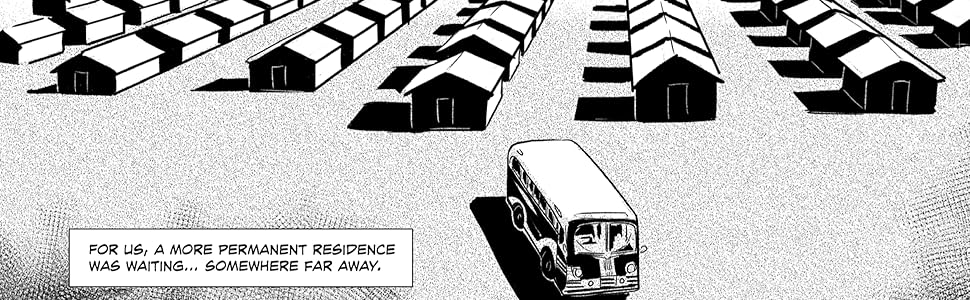
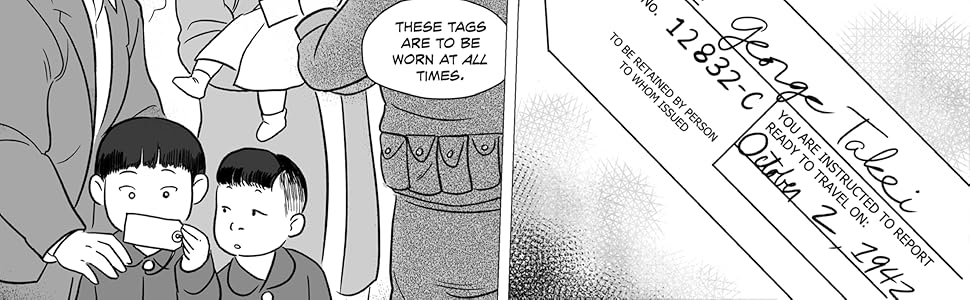
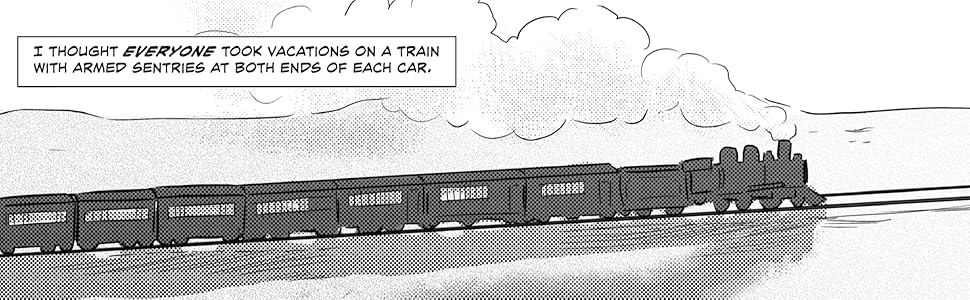
New York Times Bestseller! Discover this award-winning masterpiece before the release of George Takei's deeply personal follow-up, It Rhymes With Takei (June 2025). A stunning graphic memoir recounting actor/author/activist George Takei's childhood imprisoned within American concentration camps during World War II. Experience the forces that shaped an American icon -- and America itself -- in this gripping tale of courage, country, loyalty, and love. George Takei has captured hearts and minds worldwide with his captivating stage presence and outspoken commitment to equal rights. But long before he braved new frontiers in Star Trek , he woke up as a four-year-old boy to find his own birth country at war with his father's -- and their entire family forced from their home into an uncertain future. In 1942, at the order of President Franklin D. Roosevelt, every person of Japanese descent on the west coast was rounded up and shipped to one of ten "relocation centers," hundreds or thousands of miles from home, where they would be held for years under armed guard. They Called Us Enemy is Takei's firsthand account of those years behind barbed wire, the joys and terrors of growing up under legalized racism, his mother's hard choices, his father's faith in democracy, and the way those experiences planted the seeds for his astonishing future. What does it mean to be American? Who gets to decide? When the world is against you, what can one person do? To answer these questions, George Takei joins co-writers Justin Eisinger & Steven Scott and artist Harmony Becker for the journey of a lifetime. Review: What a depressing book. But there was no way to sugar coat the facts. - Presented as a graphic novel with simple line drawings similar to what you’d find in Japanese comic books, They Called Us Enemy is George Takei’s memoir focusing on his experience as a child living with his family in Japanese Internment Camps during WWII. Less a poetic piece of writing, it’s a mostly chronological collection of memories and events of that time, framed as part of a recent TED Talk speech he’s apparently given at least once before. What’s both great and hard-to-take about what he shares are the details. He frames most of his memories from two perspectives. First, the memories are described with the wonder and excitement of a naive child who had no context for why his family was forced to quickly pack up their belongings, move out of their L.A. area home, board trains with hundreds of other Japanese-American families, and be relocated to live in a one-room shack in Arkansas. Then at the same time, he adds how he now realizes how his parents had felt then, shamed yet working hard to shelter and care for their three young children against the harsh existence they now were forced to live. I wish the transitions between his memories were more gracefully handled, like in similar autobiographical graphic novels like the Holocaust memoir Maus and Congressman John Lewis's Civil Rights Movement memoir March. But that’s nitpicking. It also can't be helped that the book presents a very stark parallel to how Mexican immigrant families crossing the border illegally are currently looked at by our government, i.e. enemy aliens, to use Takei’s term. A side note: Takei also addresses the actions taken by politicians immediately after Pearl Harbor towards Japanese-Americans. He cites FDR’s swift action to sign legislation ordering the forced relocation of those of Japanese descent as well as then California Attorney General Earl Warren’s support of the “lock up the Japs” attitude that grew out of the Pearl Harbor bombing. I just saw a meme on Facebook recently lauding Warren who, after he became Chief Justice of the Supreme Court, criticized gun rights advocates for not truly understading the 2nd Amendment, at least the way he interpreted it. I thought Warren was a cool dude until I read Takei’s book and thought to reconsider. The book does end with a few pages devoted to his years after they were freed, including brief anecdotes about getting cast in Star Trek. This is a worthwhile book to read to learn about someone’s first-hand account of living in these camps, obviously a shameful period in our recent American history. And today, an increasingly familiar one too. (I said this was a depressing book, right?) Review: Very good book - Very good book for teenagers

| Best Sellers Rank | #2,800 in Books ( See Top 100 in Books ) #2 in Biographies & History Graphic Novels #4 in Educational & Nonfiction Graphic Novels #106 in Memoirs (Books) |
| Customer Reviews | 4.8 out of 5 stars 6,617 Reviews |
F**P
What a depressing book. But there was no way to sugar coat the facts.
Presented as a graphic novel with simple line drawings similar to what you’d find in Japanese comic books, They Called Us Enemy is George Takei’s memoir focusing on his experience as a child living with his family in Japanese Internment Camps during WWII. Less a poetic piece of writing, it’s a mostly chronological collection of memories and events of that time, framed as part of a recent TED Talk speech he’s apparently given at least once before. What’s both great and hard-to-take about what he shares are the details. He frames most of his memories from two perspectives. First, the memories are described with the wonder and excitement of a naive child who had no context for why his family was forced to quickly pack up their belongings, move out of their L.A. area home, board trains with hundreds of other Japanese-American families, and be relocated to live in a one-room shack in Arkansas. Then at the same time, he adds how he now realizes how his parents had felt then, shamed yet working hard to shelter and care for their three young children against the harsh existence they now were forced to live. I wish the transitions between his memories were more gracefully handled, like in similar autobiographical graphic novels like the Holocaust memoir Maus and Congressman John Lewis's Civil Rights Movement memoir March. But that’s nitpicking. It also can't be helped that the book presents a very stark parallel to how Mexican immigrant families crossing the border illegally are currently looked at by our government, i.e. enemy aliens, to use Takei’s term. A side note: Takei also addresses the actions taken by politicians immediately after Pearl Harbor towards Japanese-Americans. He cites FDR’s swift action to sign legislation ordering the forced relocation of those of Japanese descent as well as then California Attorney General Earl Warren’s support of the “lock up the Japs” attitude that grew out of the Pearl Harbor bombing. I just saw a meme on Facebook recently lauding Warren who, after he became Chief Justice of the Supreme Court, criticized gun rights advocates for not truly understading the 2nd Amendment, at least the way he interpreted it. I thought Warren was a cool dude until I read Takei’s book and thought to reconsider. The book does end with a few pages devoted to his years after they were freed, including brief anecdotes about getting cast in Star Trek. This is a worthwhile book to read to learn about someone’s first-hand account of living in these camps, obviously a shameful period in our recent American history. And today, an increasingly familiar one too. (I said this was a depressing book, right?)
R**S
Very good book
Very good book for teenagers
J**R
Important book
Excellent story of George Takei sent to an no internment camp at age 5. Graphic novel
C**E
Must read!
Every house should have this, it should be on EVERY school curriculum. A must read if you love America, and want it to be free.
S**T
Not just for kids.
The black and white art and the style of the illustrations may initially seem simplistic or even childish, but they actually are reflecting the era (1940's) and an interweaving of Japanese and American illustration style (with some contemporary touches). The fact that there were Japanese internment camps may be something you know, but this book will give you a more emotional view of this embarrassing passage in recent American history. George Takei takes us through his personal experience of the camps, from when he first arrives as a young boy, and then the reader experiences the growing awareness young George experiences, as he matures over time in the camps. As a teen, we watch as he grows angry with his father for not standing up better against the mistreatment, but the book continues and shows us how as a grownup he comes to appreciate better what his father did, with limited options. This is not an autobiography in the regular sense, because even though George Takei is the main character, and it is written from his point of view, the center of the story considers what it means to real people when Democracy gives way to fear, as it did with the American Japanese during WWII. The book does touch on other aspects of the author's life, mentions Star Trek, and a few other things, but these are only included as they reflect ways American culture recovered from that dark period. If you are looking for a fully fleshed out autobiography of George Takei, or if you are looking for a nonfiction book about the Japanese internment in the U.S., you will be disappointed. If you are looking for a good, fast read, centered around a human being you already know something about, as a way to learn about the experiences of the internment, and the emotional situation both from the people in the camps and the emotions leading to what happened to Japanese Americans at that time, this book is for you. 4 stars instead of 5 because there were a few passages that were hard to follow. I realize the book was carefully edited to be as succinct and direct as possible, but sometime I would have appreciated a few more frames to clarify the scene. This book is easily read by teens and adults. Probably appropriate for middle school students, though they may need someone to help them understand some of the political background (the book leaves a lot to the reader to know). Younger readers won't struggle with the vocabulary if they are old enough to read chapter books. But they won't understand the events, and they won't understand the importance of how George changes as he ages. Some adults may be inclined to not pay attention to the illustrations. Don't skip them, they're not superfluous. They help with the setting in a way that the sparse text intentionally leaves to the art in both style and content. "They Called Us Enemy" is a worthwhile read for the story, the history, and the example of the son coming to terms with his father with love, tenderness, and respect.
C**Y
Highly recommend
I would highly recommend this book. I am not a big fan of graphic novels, but the content was engaging enough to keep me interested and compel me to read it through to the end. This stuff was NOT taught in US History and should be a required reading. Thank you, George Takei, for sharing your story with the world.
M**B
One of the best non-fiction graphic novels, ever. For all ages.
This book is wonderful. Simple words explained well, with Japanese words for the time translated and explained perfectly. You get wrapped into the story quickly, and it clearly exposes and explains a little understood episode of American history that deeply affected thousands of American-born citizens as well as their legal immigrant parents and grandparents. It was both educational and touching, and enlightening and satisfying to hear how George Takei spoke out in unpopular fashion and became a popular icon even in his elder years. Very very well-drawn and well-written with detail and compassion for those who lived it and those of us trying to understand it and prevent similar, later. Engrossing for an adult, and maybe a little frightening for young children under twelve, but they could read it if they are especially good readers and have support of caring adults. Absolutely perfect for tweens and teens trying to understand why knowing history is important, and that while government tries to serve and protect, mistakes are made even by well-intentioned people. It also shows that some so-called educated adults who think they are compassionate and informed, can make terrible decisions because of bias implicit in how they were raised.
M**E
An absolute must read for anyone interested in history!
So I want to start off by saying that I may be a touch bias in this review in that I’m both a massive fan of Star Trek, and also the granddaughter of a man who was in an internment camp himself, so this book felt extremely personal. I got it because I wanted to get a better idea on what the camps were like, and how things actually went down. I hadn’t been told my grandpa was in a camp until after he had passed, so this was a resource in understanding my own family history in a way that I had otherwise never gotten in any comprehensive way. It was a bittersweet read, as the art is beautiful, the story is extremely well told, and it felt like a really good mix of personal and historical, as it was both very much the story of a man’s family and childhood, while also being a view into the inner workings of the camps, and the politics involved during and after for Japanese Americans who lived through such an unwarranted tragedy. It was very personally touching, I read it in 3 days, I could hardly get myself to put it down. I recommend it to everyone, especially anyone with a strong interest in first-hand accounts of historical events, anyone who is related to a survivor of these camps who wants to better understand what happened and what their relatives experienced, or just anyone who wants to educate themselves or their children on this specific event in US history.
L**6
Recommend
I loved to learn about it as i had never heard about it before. The story was sad but interesting. Pictures great quality and so was the book material.
M**I
Couldn't out it down
I loved reading this GN. I bought this book with no idea what it would be about and I was not at all disappointed. I finished this book in one sitting because of what I was learning with each page turn!
L**X
Memory as Resistance
They Called Us Enemy is a deeply personal and politically urgent graphic memoir by George Takei, co-written with Justin Eisinger and Steven Scott, and illustrated by Harmony Becker. It recounts Takei’s childhood experience in Japanese American internment camps during World War II, offering a firsthand account of injustice, resilience, and the contradictions of American democracy. Told with clarity and emotional nuance, the book invites readers to witness history through the eyes of a child grappling with betrayal by his own country. The artwork is clean and expressive, allowing the emotional weight of the story to shine through without distraction. More than a memoir, it’s a call to remember and reckon—with the past and with the systems that allowed such violations to occur. It’s a powerful resource for classrooms, libraries, and anyone seeking to understand how personal history intersects with national trauma.
H**8
A must read for everyone
I recommend this splendid graphic bio for all Americans, Japanese and Trekkies.
T**I
- They called us enemy (racconto illustrato) -
Il libro è arrivato oggi, in condizioni perfette, con un po' di ritardo rispetto alla data prevista; ma non è un problema: può succedere. Grazie mille !!!
Trustpilot
1 month ago
5 days ago