We remain fully operational. Our teams are working around the clock to ensure your deliveries continue safely.

DOWNLOAD THE APP


Copyright © 2025 Desertcart Holdings Limited
DOWNLOAD THE APP




Buy anything from 5,000+ international stores. One checkout price. No surprise fees. Join 2M+ shoppers on Desertcart.
Desertcart purchases this item on your behalf and handles shipping, customs, and support to Austria.
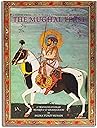
The Mughal Feast: Recipes From The Kitchen Of Emperor Shah Jahan [Husain, Salma Yusuf] on desertcart.com. *FREE* shipping on qualifying offers. The Mughal Feast: Recipes From The Kitchen Of Emperor Shah Jahan Review: The Mughal Feast - Book title: The Mughal Feast Salma Husain's (2019) The Mughal Feast: Recipes From The Kitchen Of Emperor Shahjahan (translation of the original hand-written manuscript - Nuskha-E Shahjahani) - is the best ever title available on Mughal cuisine. It's a masterpiece - in terms of both content/text and book design (reflecting the Mughal culture). Both the author and publishers (Lustre Press/Roli Books) together brilliantly put out this imperial cookbook as a feast for the reader. I was specially curious to find a sourcebook of Mughal dishes where I could check out the authenticity of any particular dish served at home or in a restaurant today. This is the sourcebook. It is my Rosetta Stone. This meticulously designed and flawless publication indeed serves as a befitting tribute to the great Mughal emperor Shahjahan who was not only the wealthiest but also an aesthetic who built the Taj Mahal. Along with the flawless translation of the original manuscript, this title offers features such as an introduction, glossary [culinary terms], a section on helpful hints, and an index that are educational in nature and, thus, help demystify the cooking of Mughlai dishes. This translated imperial cookbook is a great service to the English-speaking readers who are unable to access/read the original manuscript. Compared to Salma Husain's three other titles I am familiar with [1. The Emperor's Table (2008); 2. Flavours of Awadh (2015); And 3. Nuskha-E-Shahahani: Pulaos .... (2004)], this publication is superior in terms of text, font, paper quality, binding, inclusion of some rare Mughal paintings and colorful design of each page. As an old-timer and traditional reader (concerned about the authenticity of text in this age of careless/mindless online publishing), I take this imperial cookbook not only as a very valuable work of scholarship and conventional publishing but also as a collectible item for my personal library. Emperor Shahjahan ruled the Mughal Empire when it was at its zenith. As is characteristic of all other Muslim empires (like the Abbasid, the Safavid/Persian and the Ottoman), the Mughals gave importance to food, hospitality, entertainment and holding palace feasts - the Mughal Emperor Shahjahan not only held palace feasts but is also known to have brought its high-cuisine to the market place at Chadni Chowk - thus, its journey of Mughlai food from the emperor's palace kitchen to the street corner began. (Ref.: Origin of Mughlai Cuisine - Salma Yusuf Husain, Youtube.com, viewed on 10-07-25) THE MUGHAL FEAST [Nuskha-e Shahjahani] provides a view of the "complete Mughal feast" to be served on the dastarkhwan of Emperor Shahjahan. The author/translator (2019) Salma Husain categorizes Mughal food into 7 chapters. Further, she provided an introduction to each chapter that helps educate and guide the novice readers/cooks (unfamiliar with Mughlai cuisine) about the recipes included. The 7 chapters (what they would mean to the readers today) are as follows: 1. Naan [Breads] 2. Aash (Soups] 3. Qaliya and Dopiyazah [Qorma, qaliya, and other variations of Mughal curries/stews] 4. Bharta [Mashed preparations] 5. Zeer Biryan and Pulao [Biryanis, pulaos] 6. Kabab, Harisa, Shisranga and Khagina; and [Kababs, harisa/halim] 7. Shiriniha (Desserts, sweets, snacks] I look forward to using the recipes provided in its various chapters to check out the authenticity of some major dishes such as kababs, biryanis, pulaos, qormas, qaliyas, niharis, and similar other salans (curries/stews) so proudly served as Mughlai today everywhere around us. The desertcart book seller (THE RED FOX BOOK SHOP) surprisingly delivered the shipment 5 days earlier than expected. The book is new and in its best condition. Therefore, my rating is 5-star. - Dr. Solaiman Ali. USA (October 06, 2025) Review: awesome book - Love the recipes here.
| Best Sellers Rank | #1,158,765 in Books ( See Top 100 in Books ) #308 in Indian Cooking, Food & Wine #694 in Herb, Spice & Condiment Cooking #17,575 in Sociology (Books) |
| Customer Reviews | 4.3 4.3 out of 5 stars (137) |
| Dimensions | 7.01 x 1 x 9.49 inches |
| ISBN-10 | 8193704975 |
| ISBN-13 | 978-8193704974 |
| Item Weight | 2.35 pounds |
| Language | English |
| Print length | 224 pages |
| Publication date | March 8, 2021 |
| Publisher | Roli Books |
D**I
The Mughal Feast
Book title: The Mughal Feast Salma Husain's (2019) The Mughal Feast: Recipes From The Kitchen Of Emperor Shahjahan (translation of the original hand-written manuscript - Nuskha-E Shahjahani) - is the best ever title available on Mughal cuisine. It's a masterpiece - in terms of both content/text and book design (reflecting the Mughal culture). Both the author and publishers (Lustre Press/Roli Books) together brilliantly put out this imperial cookbook as a feast for the reader. I was specially curious to find a sourcebook of Mughal dishes where I could check out the authenticity of any particular dish served at home or in a restaurant today. This is the sourcebook. It is my Rosetta Stone. This meticulously designed and flawless publication indeed serves as a befitting tribute to the great Mughal emperor Shahjahan who was not only the wealthiest but also an aesthetic who built the Taj Mahal. Along with the flawless translation of the original manuscript, this title offers features such as an introduction, glossary [culinary terms], a section on helpful hints, and an index that are educational in nature and, thus, help demystify the cooking of Mughlai dishes. This translated imperial cookbook is a great service to the English-speaking readers who are unable to access/read the original manuscript. Compared to Salma Husain's three other titles I am familiar with [1. The Emperor's Table (2008); 2. Flavours of Awadh (2015); And 3. Nuskha-E-Shahahani: Pulaos .... (2004)], this publication is superior in terms of text, font, paper quality, binding, inclusion of some rare Mughal paintings and colorful design of each page. As an old-timer and traditional reader (concerned about the authenticity of text in this age of careless/mindless online publishing), I take this imperial cookbook not only as a very valuable work of scholarship and conventional publishing but also as a collectible item for my personal library. Emperor Shahjahan ruled the Mughal Empire when it was at its zenith. As is characteristic of all other Muslim empires (like the Abbasid, the Safavid/Persian and the Ottoman), the Mughals gave importance to food, hospitality, entertainment and holding palace feasts - the Mughal Emperor Shahjahan not only held palace feasts but is also known to have brought its high-cuisine to the market place at Chadni Chowk - thus, its journey of Mughlai food from the emperor's palace kitchen to the street corner began. (Ref.: Origin of Mughlai Cuisine - Salma Yusuf Husain, Youtube.com, viewed on 10-07-25) THE MUGHAL FEAST [Nuskha-e Shahjahani] provides a view of the "complete Mughal feast" to be served on the dastarkhwan of Emperor Shahjahan. The author/translator (2019) Salma Husain categorizes Mughal food into 7 chapters. Further, she provided an introduction to each chapter that helps educate and guide the novice readers/cooks (unfamiliar with Mughlai cuisine) about the recipes included. The 7 chapters (what they would mean to the readers today) are as follows: 1. Naan [Breads] 2. Aash (Soups] 3. Qaliya and Dopiyazah [Qorma, qaliya, and other variations of Mughal curries/stews] 4. Bharta [Mashed preparations] 5. Zeer Biryan and Pulao [Biryanis, pulaos] 6. Kabab, Harisa, Shisranga and Khagina; and [Kababs, harisa/halim] 7. Shiriniha (Desserts, sweets, snacks] I look forward to using the recipes provided in its various chapters to check out the authenticity of some major dishes such as kababs, biryanis, pulaos, qormas, qaliyas, niharis, and similar other salans (curries/stews) so proudly served as Mughlai today everywhere around us. The Amazon book seller (THE RED FOX BOOK SHOP) surprisingly delivered the shipment 5 days earlier than expected. The book is new and in its best condition. Therefore, my rating is 5-star. - Dr. Solaiman Ali. USA (October 06, 2025)
R**S
awesome book
Love the recipes here.
D**B
Authentic!
Great recipes
L**H
Fine 17th century Indian cookery
I was very excited to get this translation of the 17th century cookbook from the time of Shah Jehan. I'm sorry for the reviewer who complained the book has no photos, but, sadly, there was no photography in the first half of the 17th century. I have been cooking from historical cookbooks almost exclusively for over 20 years, primarily those from the 2nd thru 15th centuries. Foods of the past are often rather different than our expectations, such as perhaps being sweeter than modern Mughal dishes, or much saltier, as in the recipes from the ca. 1590 Ain–i Akbari, a section of the Akbarnamah compiled by Shaikh Abu al–Fazl ibn Mubarak, a friend of Shah Akbar. I think it best to approach historical recipes with an open mind and a sense of adventure. This book has furthered my adventures.
R**N
Have a Sense of Culinary Adventure and Travel Back in Time
My book is copyright 2021 (second impression). I reserve the right to redact my review at a later date. This is the shortest of reviews I will be writing. Mainly because I am cracking up at a few reviewers complaining the lack of "food photography" in the book. Salma-ji has done a fantastic work translating and transcreation a cookery cook straight from the imperial kitchen of one of the greatest Mughal emperors of India. I recently cooked Kundan Kaliya from "Dastarkhwan-e Awadh" and although the Awadhi perfected their own style, I am intrigued by the "OG" version of Kundan Kaliya that appears in Salma-ji's "The Mughal Feast." One of the greatest joys of owning this book is kind of like time traveling to peaking at what's cooking in the royal kitchens of Shah Jahan.
L**K
Not authentic at all!
The cover was nice and some of the history. The recipes may have been original although i have my doubts. Every dish was filled with too much sweet !!! The Mughals were masters at balancing their dishes with the right amounts of salt, spice, herbs ... none of these dishes had that balance.
S**Y
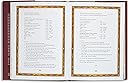
If you have someone in your life who is interested in Mughal cuisine, cooking, art, or just Mughal history, get this book for them - or yourself! It's expensive, yes, but the quality is fabulous and you get over 100 Mughal recipes with detailed instructions on high-quality glossy paper, as well as notes about history and a few miniature painting spreads. I love flipping through this book and we enjoy showing it to guests as well. The recipes are easy to follow, though the portions are very kingly (ha). There are no photos of the food, or illustrations, so manage your expectations. This is more of a cookbook for people who are experienced in the kitchen. Think biryanis, types of pulao, naan varieties, barthas, etc. About 95% of them feature lamb as the main ingredient. Enjoy!
S**Y
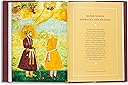
The book presents a wonderful blend of culinary history and recipes. We tried out a number of recipes at home, and each time we were surprised by how good the food tasted. As these recipes tell us, the Mughal kitchen used a rather limited variety of ingredients compared to what we use today. There is, for instance, no use of spices like turmeric or chillies or ingredients like tomatoes or potatoes which are so common in contemporary Indian food. On the other hand we see use of such thickening agents like rice paste which have largely gone out of practice. This makes the Mughal dishes compiled by Salma Hussain taste wonderfully unique and very different from anything that you might be able to order today in a restaurant. And of course the sensation that you are tasting the exact same thing that emperor Shahjahan tasted more than three hundred years ago is priceless! Also, the lavish use of Mughal miniature paintings in this book gives it an aesthetic appeal that is usually missing from most cookbooks brought out by Indian publishers. This book is a true feast for the senses and it is a must have!
U**A
I read some reviews that said the book is useless because it doesn't have photos. I have recipe books that were collected by my mum and those are excellent books but have no photo. My mum still managed to feel inspired and whip up excellent stuff out of those books !! It is lame to rate a recipe book on its photos . The content is beyond brilliant and informative. This is not for the beginner but an experienced cook will enjoy cooking from this book.
S**H
This is the best recipe book ever. The quality of the pages, the paintings in between. Everything is just awesome.
D**I
This book has everything - Beautiful pictures depicting important events in Mughal history, the introduction has a brief history of the Mughal Cuisine and how it was impacted through various additions of new vegetables and cooking customs from India and from the new world. Each page is beautifully laid out with various recipes from the Imperial Mughal Kitchen. Step into the world of the Mughal emperors, Empresses and Begums and see what they might eaten....learn to prepare those dishes and surprise your family, friends and guests.....
Trustpilot
2 weeks ago
5 days ago