![Free Will [Deckle Edge]](https://m.media-amazon.com/images/I/81owPDCGqKL._AC_SL3840_.jpg)
Buy anything from 5,000+ international stores. One checkout price. No surprise fees. Join 2M+ shoppers on Desertcart.
Desertcart purchases this item on your behalf and handles shipping, customs, and support to Austria.
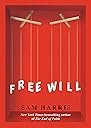
From the New York Times bestselling author of The End of Faith , a thought-provoking, "brilliant and witty" (Oliver Sacks) look at the notion of free will —and the implications that it is an illusion. A belief in free will touches nearly everything that human beings value. It is difficult to think about law, politics, religion, public policy, intimate relationships, morality—as well as feelings of remorse or personal achievement—without first imagining that every person is the true source of his or her thoughts and actions. And yet the facts tell us that free will is an illusion. In this enlightening book, Sam Harris argues that this truth about the human mind does not undermine morality or diminish the importance of social and political freedom, but it can and should change the way we think about some of the most important questions in life. Review: Powerful and Pervasive - Don't be fooled by the length of this book, it packs a riveting punch. Think about everything you know about yourself: the choices you've made in life, your feelings and notions, even your mood, and then throw it all away. Sam Harris' bold monograph facilitates this very notion with cogent language, opening your eyes to the nebulas realm of unconsciousness, decision-making, efforts, and intentions. This review is meant to evaluate Free Will and convince you that this book is worthwhile to read. That is, if you are ready to hear what Dr. Harris has to say. Probably the most impressive aspect of this book is its ability to capture the difficult concept of free will, and articulate it with such finesse that the mundane individual can grasp its meaning. In fact, Free Will's main objective is to destroy this idea of autonomy that has been ingrained in basic human culture. The question of free will "touches nearly everything we care about". The subject of this book is so relevant that according to the author, "if the scientific community were to declare free will an illusion, it would precipitate a culture war far more belligerent than the one that has been waged on the subject of evolution". Free Will's concise structure makes this book encouraging to read, despite its controversial material. With a degree in philosophy from Stanford University, and a Ph.D. in neuroscience, Dr. Harris is well equipped to enlighten us on such a challenging topic. The book is divided into eight thought out chapters that does a good job of first establishing the relevancy of its subject and then systematically breaking down the "illusion" of free will by attacking it from various angles. Here I have a brief description and opinion on some of the important parts of the book: Introduction Free Will's introduction is unsurprisingly brave and captivating. He acknowledges that the claims he makes will undoubtedly receive criticism, and that most people will "find his conclusions abhorrent". So, in order to allure his skeptical audience on such a contentious topic, Dr. Harris uses an equally controversial example on how free will is just an illusion: the Cheshire murders of the Petit family. If you are an individual with a weak stomach, vivid imagination, and sensitive heart, I advise you skip over this part of the book. He is defending the criminals involved in Cheshire murders who were also convicted of rape and abuse. He strives to reduce these acts of blatant horror and moral disregard to products of uncontrollable experience combined with plain neurological mechanisms. Essentially, Dr. Harris says that the murder and rape of Dr. William Petit's wife and two young daughters was not their fault. If this is not enough to catch your attention, I would question your sense of basic human empathy. Ch. 1-The Unconscious Origins of the Will Free will is an illusion. This idea is repeated to the reader consistently throughout the book and is the central point that the author strives to drive home. How Dr. Harris relays this idea and tries to disabuse us of a concept that has been so instilled in our mentality is remarkable. Using examples relatable in everyday situations, he intelligibly picks apart our idea that we actually have a freedom of choice. He says, "Our sense of free will results from a failure to understand this: We do not know what we intend to do until the intention itself arises". Where does this intention originate? Dr. Harris claims it comes from our unconsciousness and bolsters his claim with some solid experimental evidence. He boldly states that scientists can have the ability to know what you're about to do seconds before you actually do it. Basically, scientists can read your mind. Read to find out the revealing nature of this evidence. Ch. 2-Changing the Subject In this chapter, Dr. Harris switches gears and gives respect to the cohorts out there dedicated to this debate of free will. He mentions the three major philosophical approaches to this issue: determinism, libertarianism, and compatibilism. I appreciate this chapter because for a moment, Dr. Harris separates himself from his personal opinion on the matter, and gives respect to the contending opinions as well. Though later on in his essay, Dr. Harris debunks these philosophies, he gives the reader an opportunity to understand the different opinions on the matter and form his own stance with object descriptions for each branch. Ch. 3-Cause and Effect This is perhaps the most scientific portion of the book. "In physical terms, we know that every human action can be reduced to a series of impersonal events: Genes are transcribed, neurotransmitters bind to their receptors, muscle fibers contract, and John Doe pulls the trigger on his gun." What does Dr. Harris describe here exactly? Did he just attribute a seemingly immoral act to plain products of physical mechanisms? Does he believe that the injustice in John Doe's acts lies not in his punitive outcome from the legal system but actually in the nature of the legal system itself? Does Mr. Doe deserve a punishment, or does Dr. Harris infer that if anyone (or anything) were to blame, it would be the simple, impersonal neurological mechanisms in the brain that were not in John's control? Read to find out how the author intriguingly develops his argument. Ch. 5-Might the Truth Be Bad for Us? My favorite part of the book involves the author defending how destroying our current idea of free will will not negatively affect the way humans progress through life. In a sense, this is also the most important aspect of the book, for if free will were a necessary illusion, our revilement to it will direct us towards a wrongful path. "Many people worry that free will is a necessary illusion-and that without it we will fail to live creative and fulfilling lives...One study found that having subjects read an argument against free will made them more likely to cheat on a subsequent exam. Another found such subjects to be less helpful and more aggressive." It is apparent that a world without free will is like a guilt-free pass into wrongful doings, but Dr. Harris maintains his stance that our exposure to the "truth" will not be harmful. "It is surely conceivable that knowing certain truths about he human mind could have unfortunate psychological and/or cultural consequences. However, I am not worried about degrading the morality of my readers by publishing this book." Actually, he boasts that losing the sense of free will has only boosted his ethics and increased his feelings of compassion and forgiveness, and diminished his sense of entitlement to "the fruits of [his] own good luck." How does this make sense? Read the books to learn his clear and logical thought process. The rest of the book is dedicated to our moral responsibility given this convincing argument Dr. Harris lays out on the table, touching on politics, law, religion, public policy, and much more. If you have a few hours to spend, and are feeling intellectually adventurous, I recommend this book. I cannot think of another book so concise, yet so powerful. Beware that the topic discussed in this book is not one for light reading, but one for thought provoking. Read it with an open mind and you will absorb a unique perspective on human nature articulated nicely by a bright scientist well suited for such a topic. Review: Good explanation of the Free Will Debate but some flaws - Harris encapsulates the primary concepts of free will as they stand today. I feel does misrepresent philosophers wrestling with this issue as there are good deal of philosophers who might disagree with his opinions here. Harris is what some might call a hard determinist and yet throughout the book he uses "choice-type" language, thus potentially unraveling his own case. All of this is not to say Harris is at fault (especially if we have free will, right?) because it seems that his influence is largely from the scientific thinkers on this subject (i.e., similar to materialistic philosophy type view). Basically, the initial argument (never directly stated in his book) against free will is as follows: (1) We are human beings with a structure / brain etc... that are made of composition of nature's materials... i.e., we are essentially products of nature (2) if you were to combine those materials in the right way, presumably we could create a human/AI that responded with appearances of free will... This could be by birth as we have done or by other scientific means etc. (3) the appearance of such free will is an illusion because we are merely products if nature still and thus the case against free will follows from points (4), (5) and conclusion (6) (4) Nature, at a large scale (Neutonian), is deterministic (5) At a small scale (quantum mechanics), it is arguably random (6) Either way, we have no free will. Harris includes several chapters in his short, well-written book directly addressing points (4), (5), (6) and while I don't necessarily think that the prior assumptions are needed to express the point, I think they are needed to fully engage with the material / debate over free will. While I believe religion to be a separate issue and fully agree with Harris's idea of being more empathetic and compassionate towards people in general, I don't believe we need to reject free will to do this. Harris does, or seems to. I think we can be empathetic toward others, just by recognizing that we are not always in full conscious control of our desires and our choices. This doesn't mean we have no agency in those choices however and the reason I believe this is because the "illusion" of free will as Harris puts it is so strong that even Harris has to jump around near the end of the book to explain how such a deterministic view can actually be more freeing. In many other, even deeply held intuitions we don't have this "aftermath" of loss feeling after such a switch in belief is introduced (save religion). And such loss cannot easily be explained away (for instance in religion beliefs and strongly held political beliefs a person might feel a loss of community... Feeling of belonging). From the free will perspective, a loss of this is a deeply troubling denial of the individual. This denial of individual is a point which Harris alludes to when mentioning studies about how people feel more compelled to cheat when having to explain beforehand how the universe and by extension their own actions are not free. And again, Harris mentions the objection of fatalism belief systems which (forgiving my ignorance) I'm not as of yet able to distinguish between hard deterministic beliefs and fatalism. Harris doesn't satisfactorily answer any of this. Scientific materialism and the extension to belief in the lack of free will falls into a category of dangerous ideas which are not necessary to hold to keep science progressing forward. In the treatment of religion and the defining and redefining of atheism (in order to avoid a burden of proof issue), atheists (depending on how its defined) lack a belief in a deist or god. This puts the burden on anyone positively claiming there is one. Here, Harris given inconclusive evidence willing accepts the burden of proof which he fails to meet. Instead claiming that those who would say we have free will must show that we have conscious control over all (all?) of our biological processes, a view which I find untenable. Imagine we are in a prison cell. Could we not walk around? Could we not think what we want? Sing? Bang our heads against the cell bars? Try to escape? Etc ... The mind is like this prison. We still will what we want within its limits. The fact that it has limits, is the reason I believe people deserve compassion to some degree. But do we really feel as empathetic toward the person who has a great life but decides to murder someone vs the person who is abused and has a terrible life and does the same? Consciousness is (almost) universally shared and perhaps an axiomatic fact of human existence. Some things, like consciousness, defy explanation. Consciousness is not like other natural phenomenon, neither is free will. In areas that lack sufficient evidence, the scientific/intellectual thing to do is hold an open-ended belief, in psychology, as Harris discusses, the prudent thing to do appears to be to hold a belief in your own autonomy and your free will.


| Best Sellers Rank | #31,387 in Books ( See Top 100 in Books ) #7 in Sociology & Religion #8 in Free Will & Determinism Philosophy #94 in History & Philosophy of Science (Books) |
| Customer Reviews | 4.3 out of 5 stars 5,269 Reviews |
A**S
Powerful and Pervasive
Don't be fooled by the length of this book, it packs a riveting punch. Think about everything you know about yourself: the choices you've made in life, your feelings and notions, even your mood, and then throw it all away. Sam Harris' bold monograph facilitates this very notion with cogent language, opening your eyes to the nebulas realm of unconsciousness, decision-making, efforts, and intentions. This review is meant to evaluate Free Will and convince you that this book is worthwhile to read. That is, if you are ready to hear what Dr. Harris has to say. Probably the most impressive aspect of this book is its ability to capture the difficult concept of free will, and articulate it with such finesse that the mundane individual can grasp its meaning. In fact, Free Will's main objective is to destroy this idea of autonomy that has been ingrained in basic human culture. The question of free will "touches nearly everything we care about". The subject of this book is so relevant that according to the author, "if the scientific community were to declare free will an illusion, it would precipitate a culture war far more belligerent than the one that has been waged on the subject of evolution". Free Will's concise structure makes this book encouraging to read, despite its controversial material. With a degree in philosophy from Stanford University, and a Ph.D. in neuroscience, Dr. Harris is well equipped to enlighten us on such a challenging topic. The book is divided into eight thought out chapters that does a good job of first establishing the relevancy of its subject and then systematically breaking down the "illusion" of free will by attacking it from various angles. Here I have a brief description and opinion on some of the important parts of the book: Introduction Free Will's introduction is unsurprisingly brave and captivating. He acknowledges that the claims he makes will undoubtedly receive criticism, and that most people will "find his conclusions abhorrent". So, in order to allure his skeptical audience on such a contentious topic, Dr. Harris uses an equally controversial example on how free will is just an illusion: the Cheshire murders of the Petit family. If you are an individual with a weak stomach, vivid imagination, and sensitive heart, I advise you skip over this part of the book. He is defending the criminals involved in Cheshire murders who were also convicted of rape and abuse. He strives to reduce these acts of blatant horror and moral disregard to products of uncontrollable experience combined with plain neurological mechanisms. Essentially, Dr. Harris says that the murder and rape of Dr. William Petit's wife and two young daughters was not their fault. If this is not enough to catch your attention, I would question your sense of basic human empathy. Ch. 1-The Unconscious Origins of the Will Free will is an illusion. This idea is repeated to the reader consistently throughout the book and is the central point that the author strives to drive home. How Dr. Harris relays this idea and tries to disabuse us of a concept that has been so instilled in our mentality is remarkable. Using examples relatable in everyday situations, he intelligibly picks apart our idea that we actually have a freedom of choice. He says, "Our sense of free will results from a failure to understand this: We do not know what we intend to do until the intention itself arises". Where does this intention originate? Dr. Harris claims it comes from our unconsciousness and bolsters his claim with some solid experimental evidence. He boldly states that scientists can have the ability to know what you're about to do seconds before you actually do it. Basically, scientists can read your mind. Read to find out the revealing nature of this evidence. Ch. 2-Changing the Subject In this chapter, Dr. Harris switches gears and gives respect to the cohorts out there dedicated to this debate of free will. He mentions the three major philosophical approaches to this issue: determinism, libertarianism, and compatibilism. I appreciate this chapter because for a moment, Dr. Harris separates himself from his personal opinion on the matter, and gives respect to the contending opinions as well. Though later on in his essay, Dr. Harris debunks these philosophies, he gives the reader an opportunity to understand the different opinions on the matter and form his own stance with object descriptions for each branch. Ch. 3-Cause and Effect This is perhaps the most scientific portion of the book. "In physical terms, we know that every human action can be reduced to a series of impersonal events: Genes are transcribed, neurotransmitters bind to their receptors, muscle fibers contract, and John Doe pulls the trigger on his gun." What does Dr. Harris describe here exactly? Did he just attribute a seemingly immoral act to plain products of physical mechanisms? Does he believe that the injustice in John Doe's acts lies not in his punitive outcome from the legal system but actually in the nature of the legal system itself? Does Mr. Doe deserve a punishment, or does Dr. Harris infer that if anyone (or anything) were to blame, it would be the simple, impersonal neurological mechanisms in the brain that were not in John's control? Read to find out how the author intriguingly develops his argument. Ch. 5-Might the Truth Be Bad for Us? My favorite part of the book involves the author defending how destroying our current idea of free will will not negatively affect the way humans progress through life. In a sense, this is also the most important aspect of the book, for if free will were a necessary illusion, our revilement to it will direct us towards a wrongful path. "Many people worry that free will is a necessary illusion-and that without it we will fail to live creative and fulfilling lives...One study found that having subjects read an argument against free will made them more likely to cheat on a subsequent exam. Another found such subjects to be less helpful and more aggressive." It is apparent that a world without free will is like a guilt-free pass into wrongful doings, but Dr. Harris maintains his stance that our exposure to the "truth" will not be harmful. "It is surely conceivable that knowing certain truths about he human mind could have unfortunate psychological and/or cultural consequences. However, I am not worried about degrading the morality of my readers by publishing this book." Actually, he boasts that losing the sense of free will has only boosted his ethics and increased his feelings of compassion and forgiveness, and diminished his sense of entitlement to "the fruits of [his] own good luck." How does this make sense? Read the books to learn his clear and logical thought process. The rest of the book is dedicated to our moral responsibility given this convincing argument Dr. Harris lays out on the table, touching on politics, law, religion, public policy, and much more. If you have a few hours to spend, and are feeling intellectually adventurous, I recommend this book. I cannot think of another book so concise, yet so powerful. Beware that the topic discussed in this book is not one for light reading, but one for thought provoking. Read it with an open mind and you will absorb a unique perspective on human nature articulated nicely by a bright scientist well suited for such a topic.
J**N
Good explanation of the Free Will Debate but some flaws
Harris encapsulates the primary concepts of free will as they stand today. I feel does misrepresent philosophers wrestling with this issue as there are good deal of philosophers who might disagree with his opinions here. Harris is what some might call a hard determinist and yet throughout the book he uses "choice-type" language, thus potentially unraveling his own case. All of this is not to say Harris is at fault (especially if we have free will, right?) because it seems that his influence is largely from the scientific thinkers on this subject (i.e., similar to materialistic philosophy type view). Basically, the initial argument (never directly stated in his book) against free will is as follows: (1) We are human beings with a structure / brain etc... that are made of composition of nature's materials... i.e., we are essentially products of nature (2) if you were to combine those materials in the right way, presumably we could create a human/AI that responded with appearances of free will... This could be by birth as we have done or by other scientific means etc. (3) the appearance of such free will is an illusion because we are merely products if nature still and thus the case against free will follows from points (4), (5) and conclusion (6) (4) Nature, at a large scale (Neutonian), is deterministic (5) At a small scale (quantum mechanics), it is arguably random (6) Either way, we have no free will. Harris includes several chapters in his short, well-written book directly addressing points (4), (5), (6) and while I don't necessarily think that the prior assumptions are needed to express the point, I think they are needed to fully engage with the material / debate over free will. While I believe religion to be a separate issue and fully agree with Harris's idea of being more empathetic and compassionate towards people in general, I don't believe we need to reject free will to do this. Harris does, or seems to. I think we can be empathetic toward others, just by recognizing that we are not always in full conscious control of our desires and our choices. This doesn't mean we have no agency in those choices however and the reason I believe this is because the "illusion" of free will as Harris puts it is so strong that even Harris has to jump around near the end of the book to explain how such a deterministic view can actually be more freeing. In many other, even deeply held intuitions we don't have this "aftermath" of loss feeling after such a switch in belief is introduced (save religion). And such loss cannot easily be explained away (for instance in religion beliefs and strongly held political beliefs a person might feel a loss of community... Feeling of belonging). From the free will perspective, a loss of this is a deeply troubling denial of the individual. This denial of individual is a point which Harris alludes to when mentioning studies about how people feel more compelled to cheat when having to explain beforehand how the universe and by extension their own actions are not free. And again, Harris mentions the objection of fatalism belief systems which (forgiving my ignorance) I'm not as of yet able to distinguish between hard deterministic beliefs and fatalism. Harris doesn't satisfactorily answer any of this. Scientific materialism and the extension to belief in the lack of free will falls into a category of dangerous ideas which are not necessary to hold to keep science progressing forward. In the treatment of religion and the defining and redefining of atheism (in order to avoid a burden of proof issue), atheists (depending on how its defined) lack a belief in a deist or god. This puts the burden on anyone positively claiming there is one. Here, Harris given inconclusive evidence willing accepts the burden of proof which he fails to meet. Instead claiming that those who would say we have free will must show that we have conscious control over all (all?) of our biological processes, a view which I find untenable. Imagine we are in a prison cell. Could we not walk around? Could we not think what we want? Sing? Bang our heads against the cell bars? Try to escape? Etc ... The mind is like this prison. We still will what we want within its limits. The fact that it has limits, is the reason I believe people deserve compassion to some degree. But do we really feel as empathetic toward the person who has a great life but decides to murder someone vs the person who is abused and has a terrible life and does the same? Consciousness is (almost) universally shared and perhaps an axiomatic fact of human existence. Some things, like consciousness, defy explanation. Consciousness is not like other natural phenomenon, neither is free will. In areas that lack sufficient evidence, the scientific/intellectual thing to do is hold an open-ended belief, in psychology, as Harris discusses, the prudent thing to do appears to be to hold a belief in your own autonomy and your free will.
B**K
Superb!!
Free Will by Sam Harris "Free Will" is the persuasive essay that makes the compelling case that free will is an illusion. Free will is intuitively understood but a difficult concept to master. Dr. Harris systematically, and with few precise words destroys the notion of the concept of free will. With a degree in philosophy and a doctorate degree in neuroscience and the innate ability to convey difficult concepts to the layperson, Dr. Harris is best suited to enlighten us on such a challenging topic. This 96-page book is composed of the following eight chapters: 1. The Unconscious Origins of the Will, 2. Changing the Subject, 3. Cause and Effect, 4. Choices, Efforts, Intentions, 5. Might the Truth Be Bad for Us?, 6. Moral Responsibility, 7. Politics, and 8. Conclusion. Positives: 1. Fascinating topic in the hands of a great thinker. 2. Profound without being unintelligible. Elegant and accessible prose. 3. Does a great job of dissecting free will. The author systematically beaks down the concept of free will by attacking it from various angles. 4. More so than his previous great essay "Lying" he makes more use of his scientific background. He relays studies that support his arguments. 5. The illusion of being in control is a concept that Dr. Harris masterfully destroys. 6. The author differentiates voluntary and involuntary actions. 7. Great quotes, "Our sense of free will results from a failure to understand this: We do not know what we intend to do until the intention itself arises". 8. A discussion on the three main philosophical approaches: determinism, libertarianism, and compatibilism. 9. Great examples that help the reader comprehend the challenging concept of free will. 10. Classic Harris eloquence, "How can we be `free' as conscious agents if everything that we consciously intend is caused by events in our brains that we do not intend and of which we are entirely unaware? We can't". 11. Does quantum mechanics provide a foothold for free will? Find out. 12. Does the process of conscious deliberation provide a foundation for free will? Find out. 13. Do we really control our minds? Once again, the mastery of Dr. Harris continues. 14. The implications of not having a free will. Great points! 15. A fascinating discussion on the level of responsibility. 16. How does a retributive judicial system fit in all this? 17. Free will within a religious framework. 18. Free will and politics. 19. A final chapter that brings everything together. 20. Links worked great on the Kindle. 21. Brief, powerful essay that can be read multiple times. Negatives: 1. My only discomfort with the essay is the casual use of the term soul. I understand that Dr. Harris does not accept the soul as an empirical concept and may have used the term as a metaphor (equating it to the brain in one instance) but I prefer leaving out all supernatural terms unless properly defined. 2. Some topics are introduced briefly and leave you wanting more, isn't that always the case with Dr. Harris? 3. Having to wait for Dr. Harris's next intellectual contribution. In summary, what makes this essay great is that the more you read the more you get out of it. It's a profound essay that is easy to follow but is hard to master. It is so rewarding to read interesting topics from great minds. This essay is the ultimate appetizer, delicious and with an everlasting aftertaste. Free will is not an easy concept to understand but a worthwhile pursuit to endeavor and Dr. Harris makes the journey a fulfilling one. I can't recommend this brief book enough, highly recommended. Further suggestions: " The Moral Landscape: How Science Can Determine Human Values " by the same author, " Who's in Charge?: Free Will and the Science of the Brain " by Michael S. Gazzaniga, " The Myth of Free Will, Revised & Expanded Edition " by Cris Evatt, " The Problem Of The Soul: Two Visions Of Mind And How To Reconcile Them " by Owen Flanagan, " Braintrust: What Neuroscience Tells Us about Morality " by Patricia S. Churchland, " The Brain and the Meaning of Life " by Paul Thagard, " Mistakes Were Made (But Not by Me): Why We Justify Foolish Beliefs, Bad Decisions, and Hurtful Acts )" by Carol Tavris, " Hardwired Behavior: What Neuroscience Reveals about Morality " by Lawrence Tancredi, and the " The Blank Slate: The Modern Denial of Human Nature " by Steven Pinker.
A**D
Well-written but too simplistic
Sam Harris is at his best when he's discussing topics like philosophy of mind and neuroscience. Less so when he says things like "Islam is a mother-load of bad ideas" when, in fact, he knows practically nothing about Islam or about everyday Muslims, for that matter. This was a well-written little essay. Sam's writing style is clear and his argument against free will is easy to follow. And I really appreciate that. The book makes some very thought provoking points but ultimately falls short of convincingly refuting the idea of free will. Let me list the strengths and weaknesses point by point. Strengths: 1. Sam makes a very convincing argument about how our choices and emotional states seem very dependent on biochemistry. A person can be depressed or psychotic for years, but after taking medication to treat a neurotransmitter imbalance, he or she becomes a totally different person. Agreed. 2. Sam says we should look at psychopaths and sociopaths with some compassion knowing that they ultimately don't operate out of free will but out of clear neurological deficiencies. Agreed. 3. Our justice system should focus more on rehabilitating and imprisoning criminals for the safety of society, and less on retribution or punishment based on the "free will" of criminals. Agreed. Weaknesses: 1. Sam admits that many of our neurological processes and the hard question of consciousness remain a huge mystery. So it surprises me that, based on our limited knowledge, he can so adamantly refute the idea of free will. 2. The question of free will actually isn't a simple either/or issue. I'd say it's more of a gradation or a spectrum. Some people may have more free will than others. Granted, many people are a product of their genes or their environment. They do what they're taught or what they've been led to believe...hardly ever using their own mind to question things. These people probably have very little "free will." But many individuals rise above their circumstances. There are people who overcome significant learning disabilities and neurological impediments in order to achieve great things. This is due to persistent effort and a conscious "choice" to NOT be a victim of biology. You could say these people strongly embody the idea of free will. Maybe I'm equating free will to willpower here, but I think my argument still stands. 3. In fact, every person may have a gradation of free will throughout life. Some of our choices seem automatic and even mystifying to us. Like Sam says, "I don't know why I decided to drink coffee this morning rather than tea. I just did." But other choices are not so automatic. They are much more deliberative and subject to self-reflection. And of course, some people are more self-reflective than others. Again, this may mean that we embody free will more fully in some cases and less so in others. Anyhoo, that's my analysis. Overall, I really enjoyed reading this book and it made me think. I've been a great admirer of Sam. He's an excellent communicator, but only when he sticks to topics he KNOWS about. His podcasts cover fascinating topics, and he always engages respectfully with his guests. Very commendable, in my humble opinion.
A**A
in perfect form, defines and details the common and generally ...
Free Will Sam Harris FREE PRESS, $10.99, ISBN: 978-1-4516-8340-0, 2012 Free Will, a non-lengthy essay book by Sam Harris, has contents that are sizably far from small. Harris characteristically takes on another fundamental issue that undercuts his four previous books as controversial. Harris, in perfect form, defines and details the common and generally accepted concept of free will—arguing that this is an illusion. Furthering that even free will as an illusion itself is an illusion. Harris’ writing is clear—defined here as using simple diction, well-structured sentences, relatable personal anecdotes, and, most importantly, is inclusive as opposed to exclusive. Readers do not need to have Harris’ own philosophy degree from Stanford or his PhD in neuroscience to read this book, nor do they not need to have these formal staples either. Although the ideas are clearly informed by his formal education they are also informed by his human brilliance—his emotional brilliance, his awareness of appealing to a broad audience. Although this appealing is, again characteristically, a standard with Harris. His communicating does not come across as active appealing as much as a natural gesture to his consistency in all conveyed platforms—blogging, debating, conversing, etc. Harris gets the point and accommodatingly gets to the point quick in a world of competitive publishing—a world of those in the information age who do not have time to read. Harris gets to the point without leaving any of the details and logic that makes this argument that free will is an illusion valid. Harris has become the objective voice in every reader’s head. He anticipates thoughts by asking questions in the book right along with the reader—not holding their hands, rather he writes with a removed, and therefore more genuine, compassion for an amalgam of the cultural standards. Harris knows that arguing against the concept of free will is bold—that this abstract concept is concretely fundamental to so many goings on in life. That he is, at face value, removing what others might grasp to for comfort in the most challenging circumstance. However, Harris elegantly picks apart the details that separate the need for comfort to still exist and be satiated without a concept that is not true. Harris’ argument is consistent along with his overarching ideas. Harris is a proponent for intellectual honesty as a prioritized moral standard explicitly in his previous book The Moral Landscape and implicitly in his other books, essays, and discussions. He is one of those rare writers and humans who actually is an embodiment of their expressed thoughts…expectations perhaps. An embodiment of not just his logic, but logic itself. Any logician would be hard pressed to find fallacy in this book—or, for that matter, in any of Harris’ expressed thoughts. Harris turns this abstract concept of free will by citing its relevance to the physicality of the brain. He uses individual examples within the writing that is as seemingly entertaining for him as it is for the reader. Harris begins with citing extreme and famous examples about how removing the concept of free will may allow humans to have this characteristic removed compassion for even what might be commonly defined within the purview of free will as the most vile and evil of humans—undercutting the intent of criminality and the operating standards of criminal law. Harris’ real life and abstract examples do an engaging type of work on the reader’s mind. The reader cannot help but be interested without any emotional or any cheap shock tactics at all. His examples are strategically placed and the book is written to keep the attention of the reader—to not decorate what is already fascinating. It seems an impossibility for a reader to not come away from this book changed. To not in the very least begin to think in a way different from how they thought before. And is that not what a good book should do? Is that not what a well conveyed idea should do? Is that not what something true is like? REVIEWER: Ana Boca lives in Mesa, AZ and teaches in Tempe, AZ at Arizona State University (ASU). She has poetry in such magazines as ASU’s own Marooned Magazine and Lux Undergraduate Creative Review.
S**7
Nice, but I was Hoping for More
I should start off by stating that I am a big fan of Sam Harris and I even possess a signed copy of Letter to a Christian Nation. The subject of Free Will is interesting but (spoiler alert) the subject has been largely resolved in the neuroscientific community for some time and we have now moved on. Fundamentally, the brain is an information processing system (like the automatic feedback loops of a computer) with outputs entirely dependent upon inputs. Succinctly and non-scientifically stated, these inputs into the brain come from the following sources: electrical signals received from our senses that convey a notion of how the world is, electrical signals that are constantly looping in our brains that synthesize information (via mechanisms such as projection neurons), and the current biochemical and organic states of our brains (from our inherent genetic structure, stored memories, and the environment we happen find ourselves in up until this point). From what we know, if there is something called Free Will, then there is really no place for it to exist. The frontal lobes (which are often incorrectly thought of as the "decision making" area of the brain) are a highly evolved neuroanatomical region that has the task of receiving, manipulating, and consolidating information from many other brain areas. Further, the frontal lobes are part of a feedback system that is constant and automatic. The notion of free will implies that somewhere within the frontal lobes is an area that can spontaneously show highly coordinated activity without inputs from other brain regions. In addition to our brains not working this way, our brains could not work this way because, for one thing, brains exist in and obey the same laws of a cause and effect physical universe like any other physical object. As stated, the notion of the absence of free will is mostly a settled topic in the neuroscientific community. What I find infinitely more interesting at this point is the implications an absence of free well has on the notion of self. I am a highly complex feedback control system with my behavioral outputs being entirely explained by the total sum and configuration of inputs. And you are this way too. If we are both undergoing these processes at the same time, then your thoughts and behaviors change me (in a fundamental neurobiological sense) as much as my own thoughts and behaviors. With this realization, the distinction I make between you and me is largely artificial. And even though the neurons in our brains are not directly connected to each other, they might as well be. This is because sensory information exchanged back and forth between you and me inescapably make us both part of the same process. So if the difference between you and me is predominately because your brain is in your head and my brain is in my head, this now appears to be a distinction without much of a difference. And, as can be inferred from the writer's arguments in his book, you and me are not really distinguishable by me supposedly being conscious (or more conscious) of my thoughts and you of yours. In fact, because we do not act separately from each other, distinguishing you and me at the individual/person level can actually seem sort of arbitrary. It is possible that we distinguish each other in this manner merely because we have evolved to do so. These implications of the notion of self, which necessarily follow from the absence of free will, I find interesting with notable societal implications.
J**A
Brilliant, concise, insightful, often staggering
Following in typical Sam-Harris fashion, 'Free Will' is a brilliant, concise treatise on the illusory nature of what he carefully regards as the popular conception of human free will. This is a necessary and meaningful distinction that Harris correctly never tires of making, considering some of the philosophical quagmire on offer of one struggles too long and mightily (and, Harris deftly but humbly shows, needlessly). One can safely lay down the accolades I have above but also not risk pressing the point to say this long essay (or mini-book? I've yet to settle on what exactly to call these non-fiction novellas) is brilliantly concise, which is to say Harris manages a pared-down articulation that includes impressive and pointed arguments against his own position--something he's never been gun-shy about--and manages to rebut them with what always felt like, at least to this reader, a respectful and appropriate amount of consideration while still avoiding the trappings of quicksand. Harris is also found to be keeping the emphasis chiefly on what holding his position dictates in a broad, complex, contentious arena of moral, intellectual, and biological quandaries. Harris' background as a neuroscientist is truly the gem of this essay; his insights specifically about the dual mechanism of the conscious and unconscious mind gave me frequent moments of pause and were occasionally nothing less than staggering. Harris illustrates that scientific proof as well as the evidence available to any honest, introspective person can reveal how beholden we are to our unconscious, which is to say to factors that are of course 'us' in any reasonable sense yet remain completely outside of our control. He shows that while we are able to some extent to control the frameworks and factors fed into both sides of our mind, the impact and result of those variables on what bubbles up from our unconscious--resulting in the apparently 'free' realm of choices available to us consciously--is, occasionally, frighteningly narrow. How free are we in the most mundane of choices? How free are we in a storm of the most important? Without ever succumbing to the pitfalls of guru-esque language or a right-back-where-we-started conclusion, Harris explores how limited we really are, particularly in a culture that so values individualism and freedom, and how the constraints that are realized after shrugging off the illusion of true free will can be legitimately liberating. Philosophers of many stripes will probably be able to satisfy themselves and easy fall-backs in the cradle of determinism, but Harris shows here that missing the broader conception of free will--missing the bigger picture--is an unnecessary and fruitless step in this particular discourse. More compelling (and, I feel, obviously, more legitimate at this stage) are the new questions this grasp of an illusory free will present: what does this conception then mean for an invidiual's sense of self, feelings of one's desires and goals, one's failures and successes? what does this conception mean for an American culture and justice system with often crudely-guised emphases on retribution rather than rehabilitation and protection of the innocent? The questions go on, and once again I feel satisfied that Harris has not concluded this bit of discourse with a restful, self-satisfied arrogance or closure--he's offering more questions than he's claimed to have answered, and that's always a good choice.
A**A
an important voice in clear, research-focused science writing
Part philosophical treatise, part peer-reviewed literature review, Sam Harris dispels the illusion of free will in a mere 13,000 words. The determinism proposed by the New Atheist movement has been in and out of vogue for centuries, depending, in the moment, on the reigning scientific and philosophical paradigms. Harris' writing adds to the discussion (and perhaps not-so-gently placing the penultimate nail in the coffin) by citing recent neuroscience research to support his philosophical argument. It turns out our brains are unsurprisingly predictable -- our decisions even measurable. ## ...this feeling of freedom arises from our moment-to-moment ignorance of the prior causes of our thoughts and actions. The phrase "free will" describes what it feels like to identify with certain mental states as they arise in consciousness....But from a deeper perspective...thoughts simply arise unauthored and yet author our actions. The resurgence of the idea that free will is an illusory construct of human nature has, I think, an inevitably positive effect. The largest (and perhaps quixotic) hurdle is obviously shedding religion; beyond that difficult goal, a greater (and public) understanding of the brain will go beyond coffee table discussion. As we inch towards the origins of psychopathology, of crime, of hate -- of inequality, bigotry, pedophilia, obsessive individualism, etc. -- it should benefit how social organizations and the people within them interact with others (particularly the disadvantaged where social justice concerns are greatest). Simply understanding the origin of our own momentary frustration as a chemical impulse brought on by, e.g., hunger, could potentially ameliorate how our grumpiness is enforced on our environment, and leng to a greater self-awareness in general -- preferably beyond Jared Diamond. No one would deny that people are shaped in parts by their genes and their upbringing, both of which conflict with the notion of free will by definition. How do we then deny those as a reality (particularly in our justice system which explicitly denies determinism) simply because the feeling of free will and choice are so tantamount within our cultures? ## What does it mean to say that rapists and murderers commit their crimes of their own free will? If this statement means anything, it must be that they could have behaved differently -- not on the basis of random influences over which they have no control, but because they, as conscious agents, were free to think and act in other ways. To say that they were free not to rape and murder is to say that they could have resisted the impulse to do so (or could have avoided feeling such an impulse altogether) -- with the universe, including their brains, in precisely the same state it was in at the moment they committed their crimes. Assuming that violent criminals have such freedom, we reflexively blame them for their actions. But without it, the place for our blame suddenly vanishes, and even the most terrifying sociopaths begin to seem like victims themselves. The moment we catch sight of the stream of causes that precede their conscious decisions, reaching back into childhood and beyond, their culpability begins to disappear. In recent decades, we've already come to understand how brain tumors or lesions impacting the orbitofrontal cortex can lead to extreme changes in the personalities of those affected (e.g., Burns & Swerdlow 2003, detailing a subject who was then suffering from pedophilia in response to a brain tumor -- both the tumor and loss of inhibition later resurfaced), an obvious contradiction to the notion of free will (as is any mental disorder: Alzheimer's, dementia, schizophrenia, even depression). This makes it a bit hard to gauge good and evil when folks are nothing more than 'neuronal weather patterns.' (N.B. His argument does not deny the purpose of the justice system or punishment, just opens the doors towards understanding and away from retribution.) Harris punctuates his neuroscience statements with journal references and personal correspondences, which provide a good background for readers seeking more information via services like Google Scholar. See Libet (1985) for early research showing we infer rather than perceive the moments we act, or Fried et al. (2011) and Haynes (2011) for more recent experiences predicting the volition of subjects. See also Thagard and Arbie (2008) on how working memory -- the associationg between touch and sight -- creates consciousness. Or see Vohs and Schooler (2008) and Baumeister et al. (2009) for potential positive social benefits of believing in free will. Outside of Sam's sources, Baumeister and Monroe (2014) offers a more recent literature review on free will research. ## Decisions, intentions, efforts, goals, willpower, etc., are causal states of the brain, leading to specific behaviors, and the behaviors lead to outcomes in the world. Human choice, therefore, is as important as fanciers of free will believe. But the next choice you make will come out of the darkness of prior causes that you, the conscious witness of your experience, did not bring into being. Free Will is dense despite its length; complex despite the clarity of the writing. Sam Harris wrote his treatise targeting some nebulous group between layreaders and professionals, which makes for difficult reading at times. (And thank goodness for that -- we have enough science writers cherrypicking headline-grabbing research for publishers. We need more writers like Harris or Sapolsky, who can convey complex topics like this without limiting it to Gladwellian armchair psychology and pseudoscientific bar-room factoids.) Given the complexity of the subject, it's a volume I plan on revisiting frequently. And I'll need to, because I'm not Sam Harris. 9/10 ## Einstein, on free will (1932 -- the height of environmental determinism!): I cannot understand what people mean when they talk about the freedom of the human will. I have a feeling, for instance, that I will something or other, but what relation this has with freedom I cannot understand at all. I feel that I will to light my pipe and I do it; but how can I connect this up with the idea of freedom? What is behind the act of willing to light the pipe? Another act of willing? Schopenhauer once said: Man can do what he will but he cannot will what he wills.
P**O
Tardo un poco en llegar a Mexico pero llego en buenas condiciones.
L**A
Leitura Obrigatória!
É difícil não recomendar um livro do Sam Harris. Além da clareza e elegância com que escreve, ainda há principalmente a sua ciência e conhecimento irrefutáveis. Este livro me surpreendeu embora eu já esperasse um conteúdo de alto nível. A análise do tema sob o prisma científico e filosófico nos traz esclarecimento e nos coloca na humilde posição da necessidade de aprendizagem constante. Altamente recomendado!
B**R
Ethik jenseits der Illusion eines Freien Willens
Freilich, das Argument ist kein Geheimnis: Das Konzept des Freien Willens ist mit den aktuellen Erkenntnissen der Neurowissenschaften nicht vereinbar. Jedwede Entscheidung, deren Urheberschaft wir uns selbst zusprechen, ist das Ergebnis unbewusster neurophysiologischer Vorgänge, über die wir keinerlei Kontrolle haben. Folglich haben wir auch keine Kontrolle über das Ergebnis dieser unbewussten Vorgänge. Mit geeigneten Messgeräten lassen sich in (bisher einfachen) Experimenten die Entscheidungen von Testpersonen zuverlässig vorhersagen; lange bevor der Proband die Entscheidung getroffen hat. Eine vorurteilsfreie Selbstbeobachtung komme den Tatsachen deutlich näher: Gedanken, Stimmungen, Entscheidungen entstehen unabhängig von unserem Zutun. Wir sind lediglich die Zeugen ihres Auftauchens in unserem Bewusstsein. Neben seiner neurowissenschaftlichen Arbeit hat Harris einen Abschluss in Philosophie an der Stanford University und bringt auch dieses Feld der Expertise in die Argumentation ein. Kompatibilismus, die Überzeugung (zum Beispiel seines Kollegen Dan Dennetts), auch die unüberschaubare Neurophysiologie bei jeder Entscheidungsfindung gehöre integral zu einer Persönlichkeit, so dass man der Person durchaus eine genuine Urheberschaft an ihren Entscheidungen zusprechen könne, ist für Harris lediglich ein Ausweichmanöver. Er fasst die kompatibilistische Rechtfertigungsversuche in einer einprägsamen Pointe zusammen: "A puppet ist free as long as he loves his strings." Auch die Quantenmechanik, welche einem rein deterministischen Weltbild den Boden entzogen hat, bietet laut Harris keinen Unterschlupf für das Konzept des freien Willens. Quantenmechanische Zufälligkeit mag die Neurophysiologie des Gehirns in unvorhersehbarer Weise beeinflussen; mit freiem Willen und der bewussten, autonomen Urheberschaft von Entscheidungen hat ein solcher Zufallsgenerator aber nichts zu tun. In den abschließenden Kapiteln adressiert er die verbreitete Weigerung vieler Menschen, das Konzept des freien Willens trotz Unvereinbarkeit mit neurowissenschaftlichen Erkenntnissen aufzugeben; ihre Besorgnis, mit einem deterministischeren Weltbild würde menschliches Verhalten dehumanisiert werden, das Gefühl von ethischer Verantwortlichkeit für das eigene Handeln würde schwinden oder dem menschlichen Zusammenleben potentieller Schaden erwachsen. Er zeichnet eine Vision aufrichtiger Auseinandersetzung mit den Ursachen menschlichen Verhaltens, die vereinbar ist mit philosophischen und neurowissenschaftlichen Erkenntnissen. Ein Anerkennen der Tatsachen schule Empathie, Mitgefühl und Demut angesichts eigener Errungenschaften. Viele Faktoren, die zu einem erfolgreichen Leben verholfen haben, liegen und lagen außerhalb unserer Einflussmöglichkeiten. Ungekehrt: "It seems true enough to say that the men and women on death row had a combination of bad genes, bad parents, bad ideas, or bad luck. Which of these quantities are they responsible for?" In einer Reihe von Gedankenexperimenten gelingt Harris nichts weniger als eine Katharsis: Der Leser erlebt mit, wie die Anziehungskraft einer Vergeltungsjustiz als intellektueller Fehlschluss demaskiert wird. Das Buch enthält einige von Harris' Aufsätzen, die schon in seinem Blog zu lesen waren. Nichts desto weniger liegt hier eine gut lesbare und überzeugende Zusammenschau seines Diskussionsbeitrags vor, ergänzt durch einen Ausblick, in welcher Weise das Aufgeben des Konzepts eines Freien Willens den gesellschaftlichen Diskurs zu verändern imstande sein mag. Wem 80 Seiten zu kurz sind: The Moral Landscape gleich mitbestellen; Harris argumentiert hier für eine wissenschaftliche Behandlung ethischer Fragestellungen als Gegenentwurf zu dogmatischen Moraltheologien einerseits und postmodernistisch-selbsthadernder Urteilsenthaltung anderseits.
A**ー
A must read.
You think you have the free will to choose whatever you want? Think again. Sam Harris gives a very good and brief account of how the concept of free will is really a myth. Well written and succinct.
F**E
Révélation
J'ai acheté ce livre à la suite de la vision d'une vidéo sur youtube de Sam Harris. Certainement contre-intuitif et je me suis retrouvé comme une poule ayant trouvé un os: décontenancé. Plusieurs années après, je suis toujours à la recherche du contraire. C'est devenu un jeu puisque tout contribue à confirmer l'absence de libre arbitre.
Trustpilot
3 weeks ago
1 month ago