The Complete Photo Guide to Perfect Fitting
Product ID: 1765458
Desertcart purchases this item on your behalf and handles shipping, customs, and support to Austria.
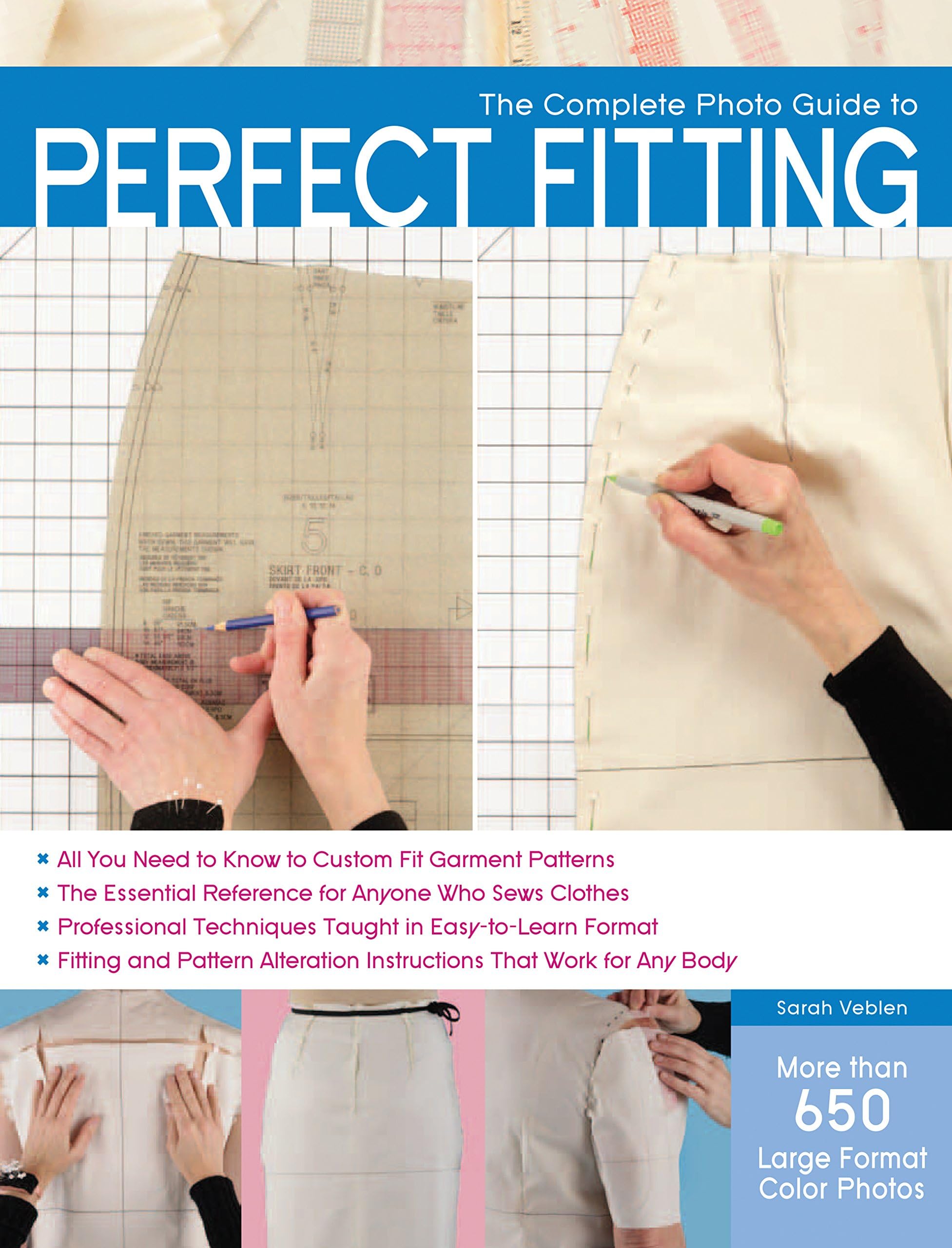
The Complete Photo Guide to Perfect Fitting is the ultimate reference for fitting test garments and transferring accurate adjustments to patterns. No matter what size or shape you are, wearing garments that fit perfectly makes you look and feel better. Rather than making commonly accepted changes to a commercial pattern, the method presented in this guide focuses on the way a test garment fits the body . The fabric is manipulated to improve the fit, and then those specific changes are made to the pattern. The result: patterns that fit perfectly! With The Complete Photo Guide to Perfect Fitting , you'll learn: The importance of a fitting axis and how to use it during a fitting How to recognize fitting issues , such as drag lines and folds How to manipulate fabric to solve common and unusual fitting problems How to transfer the fitting changes to your pattern easily Basic pattern-making skills to ensure accurate alterations See the fitting process from start to finish on basic garments, fitted on real people . Then follow fitting solutions on different body types . Hundreds of large color photos illustrate the techniques and concepts in simple step-by-step instructions. With these lessons, you will get the perfect fit for any body. Review: Must buy!! Completely solved my fitting issues! - Background: I have sewn clothes for myself my entire life (54 years old), but didn’t start trying to fit patterns to my measurements until 1997 or so. The first book I read was Palmer/Pletsch’s Fit For Real People. That helped a lot with adjusting for full bust (previously didn’t need the adjustment), forward shoulder, moving darts, length issues, wide back, and general length/width adjustments, but as I got the hang of all of this, I started realizing I had always had an issue with the center of short sleeves being shorter than the sides and other books that suggested solutions led to the sleeve then being too small around my bicep or having the sleeve seam be so long compared to the armscye seam that I’d have to gather the sleeve to make it fit. This book explains the issue, shows very clear pictures of a model wearing a shirt where this is a problem and all of the clues in the picture that indicate what the problem is, then a picture of the muslin with a seam undone and a tape measure measuring the gap in the correct place so you know how much more fabric you need, then explains how to capture this change on the pattern and correct it, then a picture of the corrected muslin on and a picture of the corrected pattern piece. This is the way every issue is approached, even pants. In addition, she explains her system of fitting that always utilizes two perpendicular lines (grain line and horizontal balance line and where to put them on each type of pattern piece) on the pattern pieces that are copied onto the muslin so the pictures clearly show how these two lines are misaligned with various fitting problems and how they guide you to the correct solution. The pictures AND these two lines for fitting are the unique pieces of the puzzle that she provided to my fitting knowledge and solved every issue I had plus helped me to identify AND solve additional fitting issues I didn’t even notice before. I was able to read the section on pants fitting in a few minutes, recognize my fitting issue (why are these diagonal lines forming on the back leg below my butt) and solve it on the muslin in 10 minutes! Nothing else has been as straightforward and I’ve been stuck on the sleeve issue for the last four years! Actually, that was the original reason I bought the book, but I didn’t get a chance to really work on it until last night. The pants issue just came up with some fitted leggings this week, so I pulled the book out and in 10 minutes immediately understood why I was seeing the drag lines and how to fix it, did it, and it worked the first time!! Fitting is normally just a frustrating and time consuming experience (I don’t have a fitting buddy to help me so it’s even harder than necessary), but not now that I have THIS book!! It also helped me to better understand all of the other fitting issues and adjustments I have to make, plus helped me figure out exactly how big my bust darts need to be (the Palmer/Pletsch method got it close, but it still was around 1/2” off but not exactly) without having to start from scratch again. Do yourself a favor and BUY THIS BOOK and take the time to add the horizontal balance line and extend the grain line the full length and width of each pattern piece and copy these onto your first cloth attempt (muslin)! You will get this time back in spades versus the usual frustrations of fitting yourself and end up with a better fitting garment than you’ve EVER had before. (The Palmer/Pletsch book is still useful for learning the basics, but this one is key to getting EVERYTHING to fit.) Good luck! (I am not affiliated with the author in any way, shape, or form, and paid for this book in full myself.) Review: The Encyclopedia of Wrinkles & Drag Lines - This is my new favorite book on fit. I have a gazillion books on fit, so that's high praise. Here's why -- clarity. You will learn how to read wrinkles and drag lines and correct them. For me, this was an eye-opening approach to fitting -- it's all about the muslin. Let me get back to the clarity. The title gives you a clue -- the photography is some of the best I've seen in a sewing book. I sincerely hope it becomes the new standard. The book is also well-written. The author covers a number of fitting concerns and explains each very clearly. I hadn't seen the concept of the horizontal balance line before and I love it! It is very helpful. The beauty of this book is the muslin photography. It really helped me understand exactly what I was seeing as I evaluated my own garments. Most of my other books use drawings and it's just not the same. Once you have identified your issues via the photography, the book does teach you how to alter your patterns. When it comes to the pattern work, I switch to more in-depth alterations books like Fit for Real People: Sew Great Clothes Using ANY Pattern (Sewing for Real People series) or Pattern Fitting With Confidence , depending on which alterations method I want to use (slash and spread, pivot and slide or the seam method. If you have a good grasp of pattern alterations, you may not need the supplemental books. I do have to give the author credit for the "Fundamentals of Altering Patterns Chapter. Many seasoned stitchers may already know this info, but for newbies it provides a one-stop shop for the process of altering patterns. They way it's written underscores that when doing alterations, you've kind of become a pattern drafter. Here's some of what the chapter contains: -Blending Seams, Using the Rulers and Adding Seam Allowances -Lengthening and Shortening Patterns and Grainline Arrows -Walking and Truing a Pattern -Placing and Creating Notches -Controlling Patterns with Built-in Ease -Truing Difficult Seams -Moving the Placement of a Seam -Moving a Dart to a New Location -Truing Dart Legs -Scaling Patterns Up and Down -Working in an Efficient Order I think this book is a must-have! You will not regret the purchase.


| Best Sellers Rank | #58,279 in Books ( See Top 100 in Books ) #34 in Sewing (Books) #52 in Fashion Craft |
| Customer Reviews | 4.6 out of 5 stars 1,802 Reviews |
T**R
Must buy!! Completely solved my fitting issues!
Background: I have sewn clothes for myself my entire life (54 years old), but didn’t start trying to fit patterns to my measurements until 1997 or so. The first book I read was Palmer/Pletsch’s Fit For Real People. That helped a lot with adjusting for full bust (previously didn’t need the adjustment), forward shoulder, moving darts, length issues, wide back, and general length/width adjustments, but as I got the hang of all of this, I started realizing I had always had an issue with the center of short sleeves being shorter than the sides and other books that suggested solutions led to the sleeve then being too small around my bicep or having the sleeve seam be so long compared to the armscye seam that I’d have to gather the sleeve to make it fit. This book explains the issue, shows very clear pictures of a model wearing a shirt where this is a problem and all of the clues in the picture that indicate what the problem is, then a picture of the muslin with a seam undone and a tape measure measuring the gap in the correct place so you know how much more fabric you need, then explains how to capture this change on the pattern and correct it, then a picture of the corrected muslin on and a picture of the corrected pattern piece. This is the way every issue is approached, even pants. In addition, she explains her system of fitting that always utilizes two perpendicular lines (grain line and horizontal balance line and where to put them on each type of pattern piece) on the pattern pieces that are copied onto the muslin so the pictures clearly show how these two lines are misaligned with various fitting problems and how they guide you to the correct solution. The pictures AND these two lines for fitting are the unique pieces of the puzzle that she provided to my fitting knowledge and solved every issue I had plus helped me to identify AND solve additional fitting issues I didn’t even notice before. I was able to read the section on pants fitting in a few minutes, recognize my fitting issue (why are these diagonal lines forming on the back leg below my butt) and solve it on the muslin in 10 minutes! Nothing else has been as straightforward and I’ve been stuck on the sleeve issue for the last four years! Actually, that was the original reason I bought the book, but I didn’t get a chance to really work on it until last night. The pants issue just came up with some fitted leggings this week, so I pulled the book out and in 10 minutes immediately understood why I was seeing the drag lines and how to fix it, did it, and it worked the first time!! Fitting is normally just a frustrating and time consuming experience (I don’t have a fitting buddy to help me so it’s even harder than necessary), but not now that I have THIS book!! It also helped me to better understand all of the other fitting issues and adjustments I have to make, plus helped me figure out exactly how big my bust darts need to be (the Palmer/Pletsch method got it close, but it still was around 1/2” off but not exactly) without having to start from scratch again. Do yourself a favor and BUY THIS BOOK and take the time to add the horizontal balance line and extend the grain line the full length and width of each pattern piece and copy these onto your first cloth attempt (muslin)! You will get this time back in spades versus the usual frustrations of fitting yourself and end up with a better fitting garment than you’ve EVER had before. (The Palmer/Pletsch book is still useful for learning the basics, but this one is key to getting EVERYTHING to fit.) Good luck! (I am not affiliated with the author in any way, shape, or form, and paid for this book in full myself.)
N**I
The Encyclopedia of Wrinkles & Drag Lines
This is my new favorite book on fit. I have a gazillion books on fit, so that's high praise. Here's why -- clarity. You will learn how to read wrinkles and drag lines and correct them. For me, this was an eye-opening approach to fitting -- it's all about the muslin. Let me get back to the clarity. The title gives you a clue -- the photography is some of the best I've seen in a sewing book. I sincerely hope it becomes the new standard. The book is also well-written. The author covers a number of fitting concerns and explains each very clearly. I hadn't seen the concept of the horizontal balance line before and I love it! It is very helpful. The beauty of this book is the muslin photography. It really helped me understand exactly what I was seeing as I evaluated my own garments. Most of my other books use drawings and it's just not the same. Once you have identified your issues via the photography, the book does teach you how to alter your patterns. When it comes to the pattern work, I switch to more in-depth alterations books like Fit for Real People: Sew Great Clothes Using ANY Pattern (Sewing for Real People series) or Pattern Fitting With Confidence , depending on which alterations method I want to use (slash and spread, pivot and slide or the seam method. If you have a good grasp of pattern alterations, you may not need the supplemental books. I do have to give the author credit for the "Fundamentals of Altering Patterns Chapter. Many seasoned stitchers may already know this info, but for newbies it provides a one-stop shop for the process of altering patterns. They way it's written underscores that when doing alterations, you've kind of become a pattern drafter. Here's some of what the chapter contains: -Blending Seams, Using the Rulers and Adding Seam Allowances -Lengthening and Shortening Patterns and Grainline Arrows -Walking and Truing a Pattern -Placing and Creating Notches -Controlling Patterns with Built-in Ease -Truing Difficult Seams -Moving the Placement of a Seam -Moving a Dart to a New Location -Truing Dart Legs -Scaling Patterns Up and Down -Working in an Efficient Order I think this book is a must-have! You will not regret the purchase.
N**Y
The New Gold Standard on Fit
Sarah Veblen has written an extraordinary book that's light year's beyond any of the other fitting books in your bookcase. I just finished reading The Complete Photo Guide to Perfect Fitting yesterday, and it's excellent in every respect -- clearly written, comprehensive and systematic with hundred of detailed photos that show every step of the way for a variety of basic pattern styles and figures. In my five years of sewing clothes, I've picked up a fair number of fitting techniques. But like many people, I use an improvised, hit and miss approach that kind of, sort of works but doesn't give the best possible fit. In contrast, Perfect Fitting outlines the steps we need to take in an orderly way. The process relies on sewing a series of test muslins which are revised on the body by: establishing the all-important Horizontal Balance Line (a new term for me); releasing tight seams by opening them; clipping tight necklines and armholes; remarking shoulder seams and waistlines; and pinning tucks, darts, and open and close wedges. Then in pattern work, the muslin changes are transferred back to the pattern, the revised pattern is walked and trued, and if necessary a second muslin is sewn for further fitting improvements. Perfect Fitting concentrates on the bodice and includes all four basic styles: shoulder princess, armhole princess, side panel and darted. All the common bodice adjustments are explained and illustrated: full and small bust adjustments, forward shoulders, rounded back, sway back, etc. Armholes, set in and raglan sleeves, and skirts are also covered, again in a high level of detail. The book does include a section on basic pants fitting, though it is relatively brief. It's quite obvious that Sarah Veblen's ability to teach rivals her ability to sew because this book conveys not just how to do something but why it needs to be done, and that leads to a deeper understanding. Sarah also stresses the importance of aesthetics in pattern fitting so the fitting changes will enhance the garment's style and the appearance of the figure. Before Perfect Fitting was published, I read the sample pages that are posted here on amazon, and I urge you to read them, too. I was so impressed with the book, I not only bought it, I also signed up for Sarah's online Bodice/Sleeve Fitting class that starts on the patternreview.com website next week. If you'd like to improve the fit of your garments and have the Tried and True patterns we all strive for -- the ones that skim our bodies and flatter our figures as only custom made garments can do -- I highly recommend The Complete Photo Guide to Perfect Fit.
I**Y
Great for muslin fitting but it doesn't cover everything.
I like this book, its got some great features and all the photo's really help. However, I think it falls short in the area of sway back adjustments, there is no specific section on this very common fitting issue (and why I purchased a fitting book in the first place). The section on fitting problems for the back area does cover a number of back fitting issues but there is no heading called sway back, you really have to look hard to find that adjustment and then there is not specific section on how to transfer that adjustment onto the paper pattern. The pant fitting section also does not cover the "gaping at the back" fitting problem, it covers rounded stomach, flat or very full buttocks and tilted waist, as well as some other general pants fitting issues. I think this book is best for a sewer who has a sewing buddy who can make all the adjustments to the muslin. There is a big section in the front of the book "Fundamentals of Altering Patterns" so make sure you read that in conjunction with the section on "Fitting Solutions for Body Types" to get the complete picture on what to do (transferring muslin adjustments onto the paper pattern). There are decent instructions for making a small bust and large bust adjustment, lots of info about fitting princess seams, which I am sure I will find very useful if I ever sew that type of garment. In the section on neckline adjustments the adjustments are for a high round neck and there is no info (that I found...if anyone knows that it is there please tell me!!) on adjusting for a gaping lower cut neckline for us smaller busted ladies. I'm still glad I have it in my library. It does a good job of showing what the wrinkles on the muslin mean, and how to pin adjustments correctly. The examples shown would be helpful for fitting a more mature body and also for those who are fuller figured, so this book will be helpful if I ever sew for my mother for example or a more curvy friend. In fact, as I read the book I was often going "oh my goodness, that is exactly my mum, thats why her skirts don't sit properly" etc etc and I rather excitedly took it over to her house to show her the pictures going "see!!!! seee!!!" so I think this book would be perfect for some. For me personally it was slightly disappointing that it missed out sway back and gaping neckline. I realise that the whole area of pattern fitting is so huge as there are so many body types and one book can't cover everything. Its all good though, I do intend to purchase another of the top rated fitting books and I am sure between the two books (or three) I'll be satisfied. **Please note after a couple of comments I have edited this review to reflect a more accurate view of the book as I felt I commented unfairly about its lack of information about transferring muslin adjustments to the paper pattern and I realised I had just skimmed over that section of the book**
W**T
Excellent resource for everyone trying to visualize fit problems
Sometimes it really is true that a picture is worth a thousand words. This book is the perfect example of how you can read something over and over and not understand it the way you can from seeing a clear full-color photo. I've read fitting tips in pretty much every garment making book and website and pattern out there, but this was, bar none, the one that made me understand it the best. The idea of a horizontal balance line to change where you do your alterations is the kind of simple and elegant idea that is absolutely radical in how you interpret things. There is a whole section on what pull and crumple lines look like in fitting, and how to alter them. It's true that this is the kind of thing that would be easier to see and adjust if you were fitting someone else, but I still think it's very valid information for someone who fits themselves -- I know I take a lot of cell phone pictures to see how things are fitting across the back or arms. It's also really nice to see a breadth of body types and "fit problems" that may be what you're facing, without seeming at all judgemental. Some people have lower or higher breasts, some people have bellies or asses or narrow shoulders or ... it's just a thing you can solve with fitting, not a moral issue. I highly recommend this book to anyone who is doing fitting for themselves. It's a great companion to the Fit for Real People book, which was my introduction into how to alter patterns for size and fit. I'd read both of them -- Fit for Real People had a better description of how to do a Full Bust Adjustment, but this book had pictures about how and why it would work. I recommend you buy the paper copy of this book -- I still buy my craft books in paper -- and then go ahead and upgrade to the digital for another couple bucks. It's worthwhile to have both of them. Read if: You do fitting for yourself. You are interested in understanding why things don't fit. Skip if: You don't do your own sewing. Also read: Fit for Real People.
D**E
Great fitting book.
I have 4 fitting books and this one is my favorite. I love the big pictures and it explains things well. I’m a visual learner. It goes into detail how to do “flat pattern fitting.” I think if I do it right, I’m hoping I’ll only have to fine tune the muslin or garment. It goes into bodices, skirts, sleeves, and pants. I think I learned a lot from it.
T**E
The fitting process can be a challenge for a beginner, but worth the time and effort
I'm not a beginner sewer, but I am new to alterations that go beyond the basics. I have at least 3 figure flaws I'd like to fix to finally achieve a pair of pants that flatters. I started with this book, and when it became too complicated for my understanding (because of my inexperience- the writing and illustrations are very thorough), I referred to Sandra Betzina's Fast Fit for a briefer, simpler introduction. I got the overview for fixing swayback, square waist, a bit of a tummy bulge, and discovered I might also have a flat butt (pelvic tilt from swayback). Sandra's provides one or two illustrations for each issue. Back I went to Sarah Veblen for the step-by-step photos breaking down the process in more detail. Veblen's book has 3 times or more the depth. For example, flat butt requires redrawing a crotch line into more of a horse-shoe shape: less in front, more in back, with the back curve being more steep. Sarah pointed out a few more tips I wouldn't have thought of: the importance of adding equivalent changes to the center seam across the crotch. Her illustration was repeated with an alternate view rotated 45 degrees to better visualize the adjustment. Great! Also included were several text-only pages describing in detail why the crotch alterations are often a multi-step process: differences from sitting to standing, different body shapes in the crotch, different types of crotch lines for the type of pants (trousers versus slacks versus jeans), etc. 4 to 10 mock-ups are typical before she gets a "great" pants fit for one of her clients. Really? So ending up on my third muslin wasn't a sign that I was a slow learner, eh? Despite the laborious process, I was very happy with the results. For me, it will take a bit more practice and skill to translate the changes made in my 3 dimensional fabric mock-up back to the paper or tissue, but I'm confident this book has everything I need. I'll just have to reread and retry. The only thing missing? A video! :-)
D**T
Pattern Fitting with confidence by Nancy Zieman was a great book to get my feet wet
I actually ended up with 3 "fitting" books - and I use them all. I have been sewing for about 24 years but haven't adjusted the patterns (other than length) until this last year. Pattern Fitting with confidence by Nancy Zieman was a great book to get my feet wet. However, after getting the hang of some very basic adjustments, I needed more. The Perfect Fit - The Classic Guide to Altering Patterns took it to the next step with more information on how to make larger adjustments. In addition it had good pictures to show you how to deal with specific fitting issues. Almost as important, it showed me how to use the Dritz Syling Design Ruler. Finally, The Complete Photo Guide to Perfect Fitting takes it the last step and has very detailed adjustments. This books show a lot with "test" garments and shows what a "problem" area would look like and then how to fix it. The only problem I had with this book is most of the adjustments are shown with a "worker" and a "model". It is hard to see and make these adjustments on yourself but the book gives you a good idea how to go about it. If you are on your own - there is just more trial and error. As I said I have 3 books. I do use all three and wouldn't want to be with out any of them. When one book failed on some explanation, I found another picked up the slack. I can't be more specific as it was a learning process and I went back and forth a lot.
評**者
専門的
仮縫いをして、補正していきましょう的な感じの本です。仮縫いをして、試着をしたときに出てくる、問題点が、写真でいろいろ出てきます。そのあと、解決方法の写真がのっています。 かなり、細かく詳しく、載っているので、ジャストフィットを狙っている人には、好いですが 初心者には、ちょっと難しい気がします。
M**D
Very helpful
It's help me very much for my stitching .
T**S
Very Helpful
Well explained and illustrated photos. Very comprehensive details. Great reference book for any sewer to have.
C**O
! Perfeito
Super vale a pena!
Y**A
Gran libro de arreglos
Muy buen libro y las fotografías ayudan mucho. Libro para profesionales del Patronaje.
Trustpilot
3 days ago
1 month ago