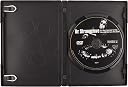


Desertcart purchases this item on your behalf and handles shipping, customs, and support to Austria.
Wickedly dark comedy features Peter Sellers (in three roles) in the midst of impending nuclear war. Co-stars George C. Scott and Sterling Hayden. Review: A black comedy for the ages - Though definitely a product of its era, “Dr. Strangelove” has stood the test of time as the epitome of a black comedy and is a great film. The late fifties and early sixties saw the popularization of serious political novels like “The Manchurian Candidate” and “Seven Days In May”. Stanley Kubrick was very much in tune with the times in wanting to film a thriller about the possibility of a nuclear war. Stanley Kramer had already had a major success with “On the Beach” (1959), a film about the aftermath of such a war set in Australia. Though nuclear anxiety had greatly decreased since the early fifties as America enjoyed its great postwar prosperity, the Cuban Missile Crisis in the fall of 1962 brought it all back again, an event that made “Dr. Strangelove” all the more relevant and probably helped its box office. Kubrick followed a suggestion to read “Red Alert”, a 1959 novel by British author Peter George, with whom he collaborated on a screenplay. The actual script is likely mostly Kubrick’s though except for its ending it follows George’s book’s detail pretty exactly, though there was no Dr. Strangelove in it.. Kubrick was somewhat taken aback by the inherent absurdity of “mutual assured destruction” and the glib way in which figures like “only twenty million dead” were thrown around by militry analysts and realized it would work better as a black comedy emphasizing these elements rather than leaving them out. George didn’t like this but it was Kubrick’s film. It worked spectacularly well, much better than if done as a serious thriller, capturing the essential absurdity of the human situation in a post-atomic world and all its nightmarish aspects. Kubrick got the tone absolutely right by not making it into a farce. The film for most of its running time is presented as if it was a serious thriller. It opens silently and except for snare drums and a riff on “When Johnny Comes Marching Home”, remains so. It is shot in black and white, which in the early to mid 60s connotated a serious film with color reserved for lighter fare like musicals, comedies and romances. It also added greatly to the tense atmosphere and German Expressionist elements of the cinematography. This included frequent shooting of the War Room characters from below, making everything seem off center and slightly surreal. Kubrick also skilfully played with audience expectations. In a film like this, a solution to the problem will be found at the last minute and all will end well. Almost all films worked this way and that’s what the audience expected would happen. The director included two such possibilities then completely changed everything. For most of its runtime you are watching a serious political thriller and not a comedy except that bizarrely comic elements keep intruding. The only farcical elements are the character names, which were seemingly created with the sophomoric glee of a collegiate review. There’s the mad General Jack D. Ripper, who sets everything in motion, Chairman of the Joint Chiefs General Buck Turgidson, bomber commander T.J. “King” Kong, Colonel Bat Guano, Russian Ambassador Alexiu de Sadeski and the unseen Russian Premier Kissoff. Peter Sellers’ characters include President Merkin Muffley (a merkin being a pubic hair wig of sorts from the 16th to 18th centuries often used to hide lesions on prostitutes) and of course, Dr. Strangelove himself. These names assure the audience that the film is intended as a comedy. The cast is exemplary though, of course, Peter Sellers dominates. He had already been one of the stars of Kubrick’s “Lolita”. Though he had been a star in Britain for a long time beginning with “The Gong Show” on radio and continuing on film, he had been little-known in America except for the international hit, “The Mouse That Roared” in which he also played multiple roles, similar to his idol, Alec Guiness in “Kind Hearts and Coronets”. This truly impressed Kubrick and the notoriously controlling director actually allowed Sellers to ad lib much of his dialog, recognizing that Sellers’ genius worked best that way. The extremely difficult Sellers, who almost never got on well with directors and castmates, got along famously with Kubrick, likely a case of mutual respect for each other’s talent. Sellers had his own kind of method, starting a character with a voice and building it out from there, often staying in character throughout a shoot and even after. His somewhat Adlai Stevenson-ish President Muffley is a serious and steely man when interrogating General Turgidson and conciliatory when on the phone to the Russian Premier. Captain Lionel Mandrake is a perceptive and intelligent RAF officer, strong and centered. And Dr. Strangelove, well, he’s one of the most indelible characters in all cinema even though he only makes two appearances and is on less than seven minutes. Columbia Pictures executives got nervous about the film and began to distance themselves from it, fearing it would be perceived as un-American. It wasn’t. It severely parodies the far right and its penchant for drinking distilled water and finding Communist plots in everything, but the far right and particularly its extreme version as the John Birch Society was already a bit of a punch line and had become a self parody by this time. The film is anti-war to an extent of course, but its real power is in exposing the utter insanity of the atomic age. Kubrick is particularly savage about the way that scientists like Dr. Edward Teller could talk dispassionately, almost cheerfully about Armageddon-like war scenarios. This is part of Strangelove’s character as well as the Nazi past of Werner von Braun (though he had become a sort of hero after being lionized by Disney). General Ripper’s fear of a fifth column attack by communist sympathizers disguised as U.S. soldiers satirized the genuine concerns of General Curtis E. LeMay. The film isn’t as unreal as it may seem. A film that everyone was talking about, it was Kubrick’s biggest breakthrough to date. Review: You will likely want to watch this movie every year or so, for the next 20 years. Clever and funny. - DR. STRANGELOVE is a black and white movie about "The Bomb." The movie stars George C. Scott, Peter Sellers, and Slim Pickens. For those not familiar with Slim Pickens, countless Americans have been thrilled by his comedic charm in Spielberg's epic movie, 1941.George C. Scott plays General Turgidson, who is played in an exaggerated cartoonish manner. Sterling Hayden plays General Jack Ripper, who plays an unpleasant paranoid character, who likes to talk about "precious bodily fluids." General Jack Ripper eventually shoots himself in his quarters. Keenan Wynn plays Colonel Bat Guano, and in this movie, he resembles the principal in Ferris Bueller's Day Off. His "big scene" in this movie is to shoot a hole in a Coca Cola machine in order to get change for a pay telephone, and out of the hole comes a gush of soda that douses Colonel Bat Guano (in the same humiliating manner as the humiliation showered upon the principal in Ferris Bueller's Day Off). The Coca Cola scene occurs at 73 minutes. Dr. Strangelove begins with an image of a remote island poking above the clouds, with the narration, "For more than a year, ominous rumors had been privately circulating among high level western leaders, that the Soviet Union had been at work on what was the ultimage weapon, a doomsday device. Intelligence sources traced the site of the top-secret Russian project . . . to the perpetually fog-shrouded wasteland below the Arctic peaks of the Zerkoff Islands . . . " SEXY FUELING SCENE. Then, at the 75-second time point, begins footage showing the fueling by a tanker jet to a bomber. Some of the footage shows a side view of the two jets, which are connected to each other by the fueling tube. Some of the footage was shot where the camera was pointing out the rear fueling door of the tanker jet, and in this shot, the viewer is shown how the fueling pipe thrusts in and out and in and out of the receiving device of the bomber. The music is romantic Montovani music. After a couple of minutes of this amusing sexual innuendo, the plot starts. We see an airforce base with radar antenna rotating, and a bomber taking off. Then we see a general conversing with Peter Sellars. "The base is being put on condition red . . . I'm afraid this is not an exercise . . . I'm afraid this is a shooting war," says the general. The general is General Jack Ripper. At the 6-minute time point comes visually appealing footage of bombers flying over snowy mountain peaks. At 6 min, 30 sec, we see Slim Pickens in the pilot's seat in the cockpit of a bomber reading Playboy Magazine. At 8 min, his crew consults a codebook, and Slim Pickens and his crew discuss "Plan R." Slim Pickens converses with another crewman, saying: "Did you say using Attack Plan R? . . . how many times have I told you that I don't want no horsing around on the airplane . . . well I've been to one world's fair, one picnic, and a rodeo, and that's the stupidest thing I've ever heard coming over a set of earphones . . . you sure you got today's code? . . . there's just gotta be something wrong." Slim Pickens looks at the control panel which reads: FGD135. Then, he looks in the codebook, and notices that FGD135 matches up with Attack Plan R. At 9 min, 45 sec, we see fellow crewman James Earl Jones (as we know, he later played the voice of Darth Vader). At 10 min begins a steady drumbeat and trumpet playing, "When Johnny Comes Marching Home." (This is on the soundtrack whenever we are shown the inside of Slim Pickens' jet bomber.) Slim Pickens says, "Well boys, I guess this is it. Nuclear combat, toe-to-toe with the Ruskies . . . look boys, I ain't much a hand at giving speeches . . . I have a fair idea of the personal emotions you might be thinking." (At this point, Slim Pickens has put on his cowboy hat, and he speaks into a microphone.) BIKINI SCENE. Then, at 12 min, we are in General Turgeson's suite (played by George C. Scott) and the viewer is treated to many views of his secretary in a bikini. The two of them talk about Plan R. For three entire minutes, the viewer is treated to images of the slender secretary in a bikini. At 16 min, the scene returns to Peter Sellars in the computer room at an air force base, that is, at the same air force base where General Jack Ripper works. BODILY FLUIDS. This movie has a few references to "precious bodily fluids." The first of these references occurs at 24 minutes in a talk in General Ripper's office by the general to Peter Sellars. At 46 min, General Ripper says this to Peter Sellars, "fresh pure water to replenish our precious bodily fluids." This takes place in a discussion about fluoridation being a Communist plot. At 56 minutes, the dialogue goes, "foreign substances introduced into our precious bodily fluids . . . that's the way a Commie works." At 60 min, Peter Sellars remarks that there was never anything wrong with his "bodily fluids." SURVIVAL KIT. At 35 min, the scene changes from the tense situation in the war room, to the comedic situation in the bomber piloted by Slim Pickens. Comedy comes from the perusual of the items in the survival kit. The items include, vitamin pills, morphine pills, sleeping pills, Russian phrase book, Russian rubles, prophylactics, nylon stockings, etc. The sound track features a harmonica and snare drum. Slim Pickens remarks, "Shoot! A fella could have a pretty good weekend in Vegas with that stuff!!!" At 51 minutes, the character of Dr. Strangelove make his entrance, and the discussion is about the Doomesday Machine. Here, Dr. Strangelove (played by Sellers) speaks to the President of the United States (played by Sellers). At 61 minutes, General Ripper kills himself in the bathroom, thus bringing to a halt his chit-chat session with Peter Sellers. The scene then changes, and we are with Slim Pickens in his bomber. The problem is that a Russian missile approaches, and it damages the bomber. At this point, Peter Sellers needs to call the President of the United States, but he does not have change for the pay telephone, and the viewer is treated to the Coca Cola scene (described above). At 68 minutes, Slim Pickens continues to fly his damaged bomber and he says: "If we was flying any lower we'd need sleigh bells on this thing." At 82 minutes, James Earl Jones notices a problem with the bomb bay doors. They won't open. So Slim Pickens decides to go down to the bomb bay to open them manually. Slim Pickens orders James Earl Jones to "fire the explosive bolts" but this does not work. And so, as the snare drums continue, and as the horns play "Johnny Comes Marching Home," Slim Pickens plays his very, very, famous "Yee-hawwww" scene by riding one of the nuclear bombs out of the bomb bay door, where it eventually explodes. Then, we hear the sone, "We'll Meet Again." The real reason I bought this movie was to see if it was the recording by The Byrds or the recording by Vera Lynn. I was disappointed to learn that it was Vera Lynn's recording, not the recording by The Byrds. Oh well.


| Contributor | George C. Scott, James Jones, Keenan Wynn, Peter Bull, Peter Sellers, Slim Pickens, Stanley Kubrick, Sterling Hayden, Tracy Reed Contributor George C. Scott, James Jones, Keenan Wynn, Peter Bull, Peter Sellers, Slim Pickens, Stanley Kubrick, Sterling Hayden, Tracy Reed See more |
| Customer Reviews | 4.7 out of 5 stars 8,387 Reviews |
| Format | DVD |
| Genre | Sci-Fi, War |
| Language | English |
| Runtime | 1 hour and 35 minutes |
J**F
A black comedy for the ages
Though definitely a product of its era, “Dr. Strangelove” has stood the test of time as the epitome of a black comedy and is a great film. The late fifties and early sixties saw the popularization of serious political novels like “The Manchurian Candidate” and “Seven Days In May”. Stanley Kubrick was very much in tune with the times in wanting to film a thriller about the possibility of a nuclear war. Stanley Kramer had already had a major success with “On the Beach” (1959), a film about the aftermath of such a war set in Australia. Though nuclear anxiety had greatly decreased since the early fifties as America enjoyed its great postwar prosperity, the Cuban Missile Crisis in the fall of 1962 brought it all back again, an event that made “Dr. Strangelove” all the more relevant and probably helped its box office. Kubrick followed a suggestion to read “Red Alert”, a 1959 novel by British author Peter George, with whom he collaborated on a screenplay. The actual script is likely mostly Kubrick’s though except for its ending it follows George’s book’s detail pretty exactly, though there was no Dr. Strangelove in it.. Kubrick was somewhat taken aback by the inherent absurdity of “mutual assured destruction” and the glib way in which figures like “only twenty million dead” were thrown around by militry analysts and realized it would work better as a black comedy emphasizing these elements rather than leaving them out. George didn’t like this but it was Kubrick’s film. It worked spectacularly well, much better than if done as a serious thriller, capturing the essential absurdity of the human situation in a post-atomic world and all its nightmarish aspects. Kubrick got the tone absolutely right by not making it into a farce. The film for most of its running time is presented as if it was a serious thriller. It opens silently and except for snare drums and a riff on “When Johnny Comes Marching Home”, remains so. It is shot in black and white, which in the early to mid 60s connotated a serious film with color reserved for lighter fare like musicals, comedies and romances. It also added greatly to the tense atmosphere and German Expressionist elements of the cinematography. This included frequent shooting of the War Room characters from below, making everything seem off center and slightly surreal. Kubrick also skilfully played with audience expectations. In a film like this, a solution to the problem will be found at the last minute and all will end well. Almost all films worked this way and that’s what the audience expected would happen. The director included two such possibilities then completely changed everything. For most of its runtime you are watching a serious political thriller and not a comedy except that bizarrely comic elements keep intruding. The only farcical elements are the character names, which were seemingly created with the sophomoric glee of a collegiate review. There’s the mad General Jack D. Ripper, who sets everything in motion, Chairman of the Joint Chiefs General Buck Turgidson, bomber commander T.J. “King” Kong, Colonel Bat Guano, Russian Ambassador Alexiu de Sadeski and the unseen Russian Premier Kissoff. Peter Sellers’ characters include President Merkin Muffley (a merkin being a pubic hair wig of sorts from the 16th to 18th centuries often used to hide lesions on prostitutes) and of course, Dr. Strangelove himself. These names assure the audience that the film is intended as a comedy. The cast is exemplary though, of course, Peter Sellers dominates. He had already been one of the stars of Kubrick’s “Lolita”. Though he had been a star in Britain for a long time beginning with “The Gong Show” on radio and continuing on film, he had been little-known in America except for the international hit, “The Mouse That Roared” in which he also played multiple roles, similar to his idol, Alec Guiness in “Kind Hearts and Coronets”. This truly impressed Kubrick and the notoriously controlling director actually allowed Sellers to ad lib much of his dialog, recognizing that Sellers’ genius worked best that way. The extremely difficult Sellers, who almost never got on well with directors and castmates, got along famously with Kubrick, likely a case of mutual respect for each other’s talent. Sellers had his own kind of method, starting a character with a voice and building it out from there, often staying in character throughout a shoot and even after. His somewhat Adlai Stevenson-ish President Muffley is a serious and steely man when interrogating General Turgidson and conciliatory when on the phone to the Russian Premier. Captain Lionel Mandrake is a perceptive and intelligent RAF officer, strong and centered. And Dr. Strangelove, well, he’s one of the most indelible characters in all cinema even though he only makes two appearances and is on less than seven minutes. Columbia Pictures executives got nervous about the film and began to distance themselves from it, fearing it would be perceived as un-American. It wasn’t. It severely parodies the far right and its penchant for drinking distilled water and finding Communist plots in everything, but the far right and particularly its extreme version as the John Birch Society was already a bit of a punch line and had become a self parody by this time. The film is anti-war to an extent of course, but its real power is in exposing the utter insanity of the atomic age. Kubrick is particularly savage about the way that scientists like Dr. Edward Teller could talk dispassionately, almost cheerfully about Armageddon-like war scenarios. This is part of Strangelove’s character as well as the Nazi past of Werner von Braun (though he had become a sort of hero after being lionized by Disney). General Ripper’s fear of a fifth column attack by communist sympathizers disguised as U.S. soldiers satirized the genuine concerns of General Curtis E. LeMay. The film isn’t as unreal as it may seem. A film that everyone was talking about, it was Kubrick’s biggest breakthrough to date.
T**Y
You will likely want to watch this movie every year or so, for the next 20 years. Clever and funny.
DR. STRANGELOVE is a black and white movie about "The Bomb." The movie stars George C. Scott, Peter Sellers, and Slim Pickens. For those not familiar with Slim Pickens, countless Americans have been thrilled by his comedic charm in Spielberg's epic movie, 1941.George C. Scott plays General Turgidson, who is played in an exaggerated cartoonish manner. Sterling Hayden plays General Jack Ripper, who plays an unpleasant paranoid character, who likes to talk about "precious bodily fluids." General Jack Ripper eventually shoots himself in his quarters. Keenan Wynn plays Colonel Bat Guano, and in this movie, he resembles the principal in Ferris Bueller's Day Off. His "big scene" in this movie is to shoot a hole in a Coca Cola machine in order to get change for a pay telephone, and out of the hole comes a gush of soda that douses Colonel Bat Guano (in the same humiliating manner as the humiliation showered upon the principal in Ferris Bueller's Day Off). The Coca Cola scene occurs at 73 minutes. Dr. Strangelove begins with an image of a remote island poking above the clouds, with the narration, "For more than a year, ominous rumors had been privately circulating among high level western leaders, that the Soviet Union had been at work on what was the ultimage weapon, a doomsday device. Intelligence sources traced the site of the top-secret Russian project . . . to the perpetually fog-shrouded wasteland below the Arctic peaks of the Zerkoff Islands . . . " SEXY FUELING SCENE. Then, at the 75-second time point, begins footage showing the fueling by a tanker jet to a bomber. Some of the footage shows a side view of the two jets, which are connected to each other by the fueling tube. Some of the footage was shot where the camera was pointing out the rear fueling door of the tanker jet, and in this shot, the viewer is shown how the fueling pipe thrusts in and out and in and out of the receiving device of the bomber. The music is romantic Montovani music. After a couple of minutes of this amusing sexual innuendo, the plot starts. We see an airforce base with radar antenna rotating, and a bomber taking off. Then we see a general conversing with Peter Sellars. "The base is being put on condition red . . . I'm afraid this is not an exercise . . . I'm afraid this is a shooting war," says the general. The general is General Jack Ripper. At the 6-minute time point comes visually appealing footage of bombers flying over snowy mountain peaks. At 6 min, 30 sec, we see Slim Pickens in the pilot's seat in the cockpit of a bomber reading Playboy Magazine. At 8 min, his crew consults a codebook, and Slim Pickens and his crew discuss "Plan R." Slim Pickens converses with another crewman, saying: "Did you say using Attack Plan R? . . . how many times have I told you that I don't want no horsing around on the airplane . . . well I've been to one world's fair, one picnic, and a rodeo, and that's the stupidest thing I've ever heard coming over a set of earphones . . . you sure you got today's code? . . . there's just gotta be something wrong." Slim Pickens looks at the control panel which reads: FGD135. Then, he looks in the codebook, and notices that FGD135 matches up with Attack Plan R. At 9 min, 45 sec, we see fellow crewman James Earl Jones (as we know, he later played the voice of Darth Vader). At 10 min begins a steady drumbeat and trumpet playing, "When Johnny Comes Marching Home." (This is on the soundtrack whenever we are shown the inside of Slim Pickens' jet bomber.) Slim Pickens says, "Well boys, I guess this is it. Nuclear combat, toe-to-toe with the Ruskies . . . look boys, I ain't much a hand at giving speeches . . . I have a fair idea of the personal emotions you might be thinking." (At this point, Slim Pickens has put on his cowboy hat, and he speaks into a microphone.) BIKINI SCENE. Then, at 12 min, we are in General Turgeson's suite (played by George C. Scott) and the viewer is treated to many views of his secretary in a bikini. The two of them talk about Plan R. For three entire minutes, the viewer is treated to images of the slender secretary in a bikini. At 16 min, the scene returns to Peter Sellars in the computer room at an air force base, that is, at the same air force base where General Jack Ripper works. BODILY FLUIDS. This movie has a few references to "precious bodily fluids." The first of these references occurs at 24 minutes in a talk in General Ripper's office by the general to Peter Sellars. At 46 min, General Ripper says this to Peter Sellars, "fresh pure water to replenish our precious bodily fluids." This takes place in a discussion about fluoridation being a Communist plot. At 56 minutes, the dialogue goes, "foreign substances introduced into our precious bodily fluids . . . that's the way a Commie works." At 60 min, Peter Sellars remarks that there was never anything wrong with his "bodily fluids." SURVIVAL KIT. At 35 min, the scene changes from the tense situation in the war room, to the comedic situation in the bomber piloted by Slim Pickens. Comedy comes from the perusual of the items in the survival kit. The items include, vitamin pills, morphine pills, sleeping pills, Russian phrase book, Russian rubles, prophylactics, nylon stockings, etc. The sound track features a harmonica and snare drum. Slim Pickens remarks, "Shoot! A fella could have a pretty good weekend in Vegas with that stuff!!!" At 51 minutes, the character of Dr. Strangelove make his entrance, and the discussion is about the Doomesday Machine. Here, Dr. Strangelove (played by Sellers) speaks to the President of the United States (played by Sellers). At 61 minutes, General Ripper kills himself in the bathroom, thus bringing to a halt his chit-chat session with Peter Sellers. The scene then changes, and we are with Slim Pickens in his bomber. The problem is that a Russian missile approaches, and it damages the bomber. At this point, Peter Sellers needs to call the President of the United States, but he does not have change for the pay telephone, and the viewer is treated to the Coca Cola scene (described above). At 68 minutes, Slim Pickens continues to fly his damaged bomber and he says: "If we was flying any lower we'd need sleigh bells on this thing." At 82 minutes, James Earl Jones notices a problem with the bomb bay doors. They won't open. So Slim Pickens decides to go down to the bomb bay to open them manually. Slim Pickens orders James Earl Jones to "fire the explosive bolts" but this does not work. And so, as the snare drums continue, and as the horns play "Johnny Comes Marching Home," Slim Pickens plays his very, very, famous "Yee-hawwww" scene by riding one of the nuclear bombs out of the bomb bay door, where it eventually explodes. Then, we hear the sone, "We'll Meet Again." The real reason I bought this movie was to see if it was the recording by The Byrds or the recording by Vera Lynn. I was disappointed to learn that it was Vera Lynn's recording, not the recording by The Byrds. Oh well.
M**C
Mein Fuhrer! I can walk!
For a long time, I didn't really understand this movie. The plot is pretty straightforward: a mad Air Force general orders a nuclear attack on the Soviet Union, and the two countries have to stop the attack before it sets off the dreaded Doomsday Machine. Just as it looks as though the day has been won, suddenly...ah, but we can't reveal the ending for those of you who haven't seen it. And yet, buried underneath this Cold War suspense plot, there is one of the darkest, sexually tinged black comedies ever made. It was the "buried underneath" part that confused me. But my curiosity about the film led me to the public library, where I checked out a book that would open my eyes to the "meaning" of Kubrick's works, and help me to "understand" movies in general: "Stanley Kubrick Directs" by Alexander Walker. I read the essays presented in this fascinating book, and I puzzled over the author's discovery of sexual metaphors buried within nearly every frame of Dr. Strangelove. "Sex! Sex! Sex!" the movie screams -- according to the book. Sex in the form of the mad general who is impotent, and strikes back against the world, finally killing himself when he cannot achieve his orgasm. Sex in the form of Dr. Strangelove himself, who is so excited with the idea that his mad plan is going to be implemented that he loses control of his own body, starts jerking his arm in phallic "Seig Heil" motions, and gets out of his own chair and walks "erect!" And sex all over the place, from Buck Turgidson's secretary to Colonel Bat Guano and his obsession with "deviated preverts" and nuclear bombs with "Hi There!" and "Dear John" written on them. Reading this interpretation of the movie encouraged me to turn opn the VCR and watch Dr. Strangelove once again...and the movie did indeed begin to fall into place. I could see where the author was coming from, though much of it seemed confusing to me...until one crucial moment, when the nuclear attack has been called off (or so everyone thinks), and General Turgidson calls out for everyone to bow their heads and utter a (kypocritical) prayer of thanks. Suddenly, as the heads of state are saying their prayers, we see Dr. Strangelove sitting far away, in a corner, shrouded in light from the screens so that his image is little more than a silhouette. But despite the fact that we can barely see him, we can practically *feel* his emotions: disappointment, or possibly even anger. This man had actually WANTED the world to end, and when it did not occur he was disappointed, or frustrated, or even furious. And with that single shot, that single moment, the meaning of Dr. Strangelove suddenly clicked into place for me. Ever since then, I've looked upon Stanley Kubrick's films with a different eye -- and, I hope, upon movies in general...or indeed, upon our society in general. For I now believe that there is indeed a hidden, subliminal "language" of interpretation that exists, if we know where to look for it. And I have Stanley Kubrick and DR. STRANGELOVE to thank for opening my eyes. This unforgettable nightmare comedy of nuclear Armegeddon, hysteria, and sexual innuendoes seems to get better with each passing year. The Cold War may be over, but the nightmare of nuclear holocaust hasn't ended, and indeed the slow collapse of the military-industrial complex only seems to make nuclear disaster of some sort more inevitable over time. (The possibility of nuclear terrorism, environmental disaster of some sort, or nuclear war between unstable powers such as India and Pakistan is currently growing at a frightening rate.) Kubrick had the audacity to show us what a sick joke the whole prospect of the arms race is, and even today a frightening number of people fail to get the punchline. I find myself returning to this movie time and again, when I'm despondent and feel like laughing at what a sick joke the world can be.
O**E
"A big plane like a 52 - Varrooom! It's jet exhaust frying chickens in the barnyard!"
I remember watching this movie as a teenager in school some 50 years ago during one of our special extended movie periods in class. The teacher obviously wanted to impart a message as well as generate some laughs and it made an indelible mark on me even back then. Further viewings since then have only deepened the tremendous respect (and laughter) I've had for this truly funny, frightening, blackest of black comedies with subtle sexual innuendo subtext, strong anti-war themes as well as some masterful characterizations from Peter Sellers, George C. Scott and the talented remainder of the cast and directing genius of Stanley Kubrick. With the opening sequence of a B-52 refueling in the air to an elegant, breezy rendition of "Try a Little Tenderness" in the background with unique graphic title designs you know right off you are in for a seriously different and funny ride. This film is as urgent a message against the true madness of nuclear war today as it ever was some 60 years ago! This Sony 4K Blu-ray release is already based on a great 2004 remastering and further work done since then to create a true 4K DI. The detail is fantastic along with some popping whites and solid greyscale. The War room scenes look almost 3D. The grain is moderately heavy in some scenes generating an almost war documentary newsroom type feeling which is most appropriate with this film. The attached SDR Blu-ray in this set looks sort of pale and lifeless in comparison. The DTS HD-MA 5.1 track is very clear with no distortion or hiss. Mainly the three front channels handle everything except some slight reverb of explosions and gunfire in the surrounds. Dialog is easy to hear. There are great sets of interviews, commentaries in the special features. I especially enjoyed the Peter Sellers documentary. I always felt he struggled so badly in his private life as many great comics do, yet his comedic talents were truly among the finest of the 20th century. Sadly, his ongoing heart problems due to those struggles with his darker side cut his life way too short. Dr. Strangelove is a true classic and just plain hilariously disturbing. This 4K release us a must own for anyone that loves witty, dark comedy.
F**S
Cold War Kookiness from Stanley Kubrick
Well after years of holding it off I decided to finally watch arguably one of the greatest and most influential movies of all time, Stanley Kubrick's Cold War satire Dr. Strangelove or: How I Learned to Stop Worrying and Love the Bomb. So what can I say that hasn't already been said about this movie, well I'll try my best to share my opinion. The acting is great with an amazing cast, and I was surprised to find out that James Earl Jones was in this. Peter Sellers did a terrific job playing three different characters, one of which I had no idea was him in the first place. His character of Dr. Strangelove was definitely a highlight of the movie even though he was barely in it, which is odd given that he's the title character. The humor in this, when I was able to understand it, is pretty damn funny. My favorite bit is when the President is calling the Russian Prime Minister explaining the situation in a way that it's like a teacher explaining to a parent what their child did wrong while the Russian representative sitting next to him is just staring on. The visuals and effects in this are pretty decent given the year it was made, and the iconic scene of Slim Pickens riding the bomb is hilarious and well shot. My main problem with the movie is that most of the dialogue in the beginning kept using too much military jargon and strategy talk that I had no idea what was being said. Another problem I had was that, like I said previously, the title character Dr. Strangelove is barely in the movie and doesn't really do anything besides explain how dangerous the Russians' doomsday device is. I also would've liked to have seen more of the B52 bomber crew but that's my personal opinion. Overall Dr. Strangelove, I'm not repeating the entire title, is a classic film that deserves all of the accolades that it has, but I think it's a little too highbrow for audiences like myself. I did enjoy it somewhat but I'd probably might not watch it casually again. And boy did I pick the right time to watch a movie about the threat of nuclear war in this year of 2026!
G**N
Just watch it already
Entire film is memorable and quotable. Magnificent film. All performances are noteworthy. Slim Pickens is a joy
F**X
Kubrick and Sellars both at their best
If this isn't the best noir comedy of the last 70 years, it is absolutely top 3. Peter Sellars gets high marks for his ridiculous portrayal of the title character, but his deadpan president is also magnificent. Kubrick took a huge risk making this film, as he was not a comedy director and the book he took the story from was not a comedy. Also, in 1963, it was awfully risqué to lampoon the characters responsible for keeping us out of nuclear war (or taking us there). Because he plays three roles, I'd say this movie represents the best performance of Sellars' career (though his straight portrayal of Chance the gardener in "Being There" 16 years later ranks a solid second). Kubrick somehow tricked George C. Scott into camping up his portrayal of the Chairman of the Joint Chiefs of Staff, and it works magnificently; all of the performances are at worst solid and Slim Pickens steals the final 15 minutes of the movie. This is definitely not for kids, but it's an all-time great comedy and film.
O**A
Great for strangelove
Great dvd
V**Z
Excelente pelicula
Llegó en buen estado y en tiempo
J**Z
Una obra maestra
Es una película que he visto un montón de veces y cada vez aprecias algo nuevo: ¡magistral!
P**S
Um clássico da Guerra Fria, sempre atual.
"Dr Strangelove" ("Dr. Fantástico" no Brasil) é uma comédia de humor negro de 1964, que explora o clima de medo ao comunismo nos Estados Unidos durante a Guerra Fria e a possibilidade de a tensão militar entre os EUA e a União Soviética escalar para um conflito nuclear. Neste clássico do cinema dirigido por Stanley Kubrick, um brigadeiro enlouquecido da Força Aérea ordena um ataque à União Soviética. Na Sala de Guerra no Pentágono, o presidente dos Estados Unidos - reunido com seus comandantes militares, na companhia do seu assessor para assuntos estratégicos (o Dr. Fantástico, um ex-nazista alemão paraplégico), o embaixador soviético, e em contato telefônico com o premier russo - tenta interromper a missão dos bombardeiros antes que seja tarde. O filme conta com um ótimo elenco, que inclui Peter Sellers em três papéis (capitão Mandrake da RAF, presidente dos Estados Unidos e Dr. Fantástico), além de George C. Scott, Sterling Hayden (o brigadeiro enlouquecido), James Earl Jones e Slim Pickens. Na minha opinião, o ponto alto do filme acontece quando, diante da possibilidade do extermínio da vida na Terra pelo conflito nuclear iminente, o Dr. Fantástico desenvolve um projeto para a sobrevivência de pessoas, plantas e animais em cavernas profundas, para o qual os voluntários humanos seriam selecionados a partir de critérios eugenistas. Passados sessenta anos do seu lançamento, Dr. Fantástico volta a ser atual no momento em que potências ascendentes desafiam a preponderância do Ocidente no cenário internacional e conflitos regionais, na Ucrânia e no Oriente Médio, têm a possibilidade de se aprofundar e engolfar o mundo.
E**Y
Wenn zwei sich streiten, freut sich der Dritte
Dr. Strangelove" ist einer der frühen Filme Kubricks, der im Erscheinungsjahr 1964 aktuelle Themen karikierte und mit einer gehörigen Portion Spott kritisierte. Der durch die Kuba-Krise seinerzeit nicht mehr ganz so kalte Kalte Krieg droht in Kubricks Film erste recht angeheizt zu werden, weil ein durchgeknallter General heiß darauf ist, die Russen endgültig kalt zu machen. Er gibt einen bestimmten Befehl, der unter keinen Umständen zurückgenommen werden kann. Daraufhin machen sich Kampfflugzeuge schwer bewaffnet auf den Weg um die Russkis" endgültig zu besiegen. Als die amerikanische Regierung davon erfährt, versammelt der Präsident sein Gefolge im War Room, wo sie beraten, wie sie die drohende Katastrophe aufhalten können. Zuerst wird die Sowjetunion unterrichtet, die wiederum die Amerikaner davon in Kenntnis setzt, dass im Falle eines Angriffs ein Mechanismus in Gang gesetzt werde, der die ganze Welt radioaktiv verseuche. Das eine wie das andere kann nicht mehr abgebrochen werden. So wird schön herausgestellt, dass sowohl Sowjets als auch Amerikaner einander eigentlich sehr ähnlich sind. Beide Staaten sind nämlich gleich dämlich und paranoid, wenn es darum geht, sich Schutzpläne auszudenken, die sie nicht mehr kontrollieren können. Dr. Strangelove" ist eine meisterlich inszenierte Kritik am Kalten Krieg und übertriebenen Patriotismus. Dabei werden sowohl die Amerikaner als auch die Sowjets negativ und sehr stereotyp dargestellt und ins Lächerliche gezogen. Immerhin bekommt man sehr schnell das Gefühl, dass es allein sexuell frustrierte oder schwanzgesteuerte männliche Wesen sind, die die Entscheidungen treffen. Phallussymbole gibt es somit auch zuhauf in diesem Film und auch einige Namen der Figuren spielen darauf an. So kann man schon das Betanken eines Flugzeugs ganz zu Anfang des Films als Phallussymbol sehen. Ganz offensichtlich wird es dann bei General Jack D. Ripper (aufgepasst: sprechender Name), der sich den Plan zur Vernichtung der Sowjetunion ausgedacht hat. Immer wieder redet er von den Körperflüssigkeiten" und wie die Russen die Amerikaner hinterrücks über das Trinkwasser vergifteten. Im Klartext bedeutet das eigentlich, dass Ripper die Russen für seine Impotenz verantwortlich macht. Dass er ständig eine Zigarre im Mund hat und mit Freude ein überdimensional großes Maschinengewehr bedient, ist Ausdruck seiner sexuellen Frustration und Minderwertigkeitskomplexe. Gesteuert von seinen Trieben, so wie viele andere Charaktere auch, handelt er völlig irrational, womit Kubrick vielleicht sagen möchte, dass auch der Krieg absolut irrational ist. Die Position der Personen im Film wird vor allem filmisch sehr gut dargestellt. Dr. Strangelove (der auch im War Room anwesend ist, weil er als wissenschaftlicher Berater des Präsidenten fungiert und eigentlich deutscher ist, jedoch nach Ende des zweiten Weltkriegs nach Amerika gegangen ist) und Ripper werden sehr häufig aus der Frosch-Perspektive gezeigt, um deutlich zu machen, dass sie eine wichtige Rolle spielen und die Fäden in Händen halten. Vor allem bei Dr. Strangelove ist dies interessant zu sehen, weil er nur sehr wenige Szenen hat, obwohl der Film ja nach ihm benannt ist. Das soll vielleicht andeuten, dass die die sich im Hintergrund haltenden meist die Mächtigsten sind, die alles kontrollieren, ohne dass es den anderen auffällt.Hinzu kommt noch, dass er eine Behinderung hat und im Rollstuhl sitzt. Seine Behinderung könnte symbolisch für seinen kranken Charakter stehen. Zynisch finde ich auch, dass jedes Mal, wenn wir Szenen aus dem Flugzeug sehen, das Lied When Johnny comes marching home again" angespielt wird. Dieses Lied wird auch in der Realität immer von der Army gespielt, wenn ihre Soldaten in den Krieg ziehen und auch bei anderen Anlässen. Dabei ist When Johnny comes marching home again" eigentlich nur eine Coverversion von Johnny, I hardly knew ya", welches ein irisches Anti-Kriegslied ist. Wenn man sich das vor Augen hält, dann kann man das eigentlich nur als kritischen Kommentar Kubricks werten. Doch vor allem einige aberwitzige Dialoge machen den Film auch ohne die Symbolik schon sehenswert. In einer Szene zum Beispiel redet der Präsident mit dem sowjetischen Außenminister, doch wenn man nicht wüsste, wer da mit wem spricht, würde man denken, dass sich da ein altes Ehepaar unterhält. Genauso amüsant sind einzelne Phrasen wie You can't fight in here, this is a War Room!" Neben den Dialogen kann man auch über so einiges, was sich im Hintergrund befindet, schmunzeln. In einer Szene kann man auf dem Stützpunkt beispielsweise eine Werbetafel mit der Aufschrift Peace is our profession" sehen. Bis zu einem gewissen Grad kann man das sogar mit dem Kontrast, der sich beim Lied auftut, vergleichen. Man kann also sagen, dass Dr. Strangelove" ein sehr komplexer Film ist, der voll von Symbolen und Seitenhieben auf damalige Verhältnisse ist. Doch würde ich sagen, dass dieser Film heute noch genauso begeistern kann wie damals und ein sehr schönes Zeitzeugnis ist. Denn auch wenn der Kalte Krieg heutzutage vorbei ist und man zu dem Ergebnis kommen könnte, dass er heute keinen Wert mehr hat, sehe ich das nicht so. Im Kern ist er auch noch für heutige Verhältnisse eine Warnung an und kritischer Kommentar zur Politik generell. Alles in allem ist er also heute auch noch ein sehr sehenswerter Film, der unterhalten wie auch nachdenklich stimmen kann. Vorsicht Spoiler! Ich würde sagen, wenn man die Story auf ein Minimum runterbrechen müsste, dann könnte man sagen, handelt es sich bei Dr. Strangelove" um eine typische Wenn-zwei-sich-streiten-freut-sich-der-Dritte-Story. Immerhin ist es ja so, dass während sich die Sowjetunion und Amerika kabbeln und am Ende für eine nukleare Katastrophe sorgen, die den Großteil der Menschheit auslöschen wird, Dr. Strangelove (der ja offensichtlich ein Nazi ist) die Staatsoberhäupter von seiner Idee in den Untergrund zu gehen mit einem Verhältnis 1 Mann :10 Frauen überzeugen kann. So obsiegen am Ende doch die Nazis und ihr krankes Gedankengut über die eigentlichen Sieger des Zweiten Weltkriegs. Dafür spricht auch die letzte Szene, in der Dr. Strangelove wieder stehen kann und den Hitlergruß macht.
O**.
I would highly recommend this film to anyone who loves satire and who appreciates jokes that aren't always below the belt.
Peter Sellers was always a brilliant actor and comedian and this is one of his greatest multiple-role films. His untimely passing has left a vacancy that no one has been able to fill, although many have tried and failed. This film is still amazingly relevant today, even 44 years after its release. This is the type of film anybody can enjoy, it's seriously funny. It will probably have more meaning if you are familiar with the Cold War and the arms race, but if you don't know too much about that, the extras are a great help. There is one extra that deals with the making of the film, and how at the time of its production there was some subtle opposition to its release. Subtle in that the Air force was unwilling to lend it's expertise in the design of the B-52 bomber used in the film, and there was fear that its release at the time of J.F.K's death might have been seen as unpatriotic.
Trustpilot
2 weeks ago
1 month ago