โ๏ธ Stay cool, save green, and live smart with Pioneerโs silent power!
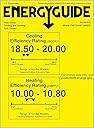
The Pioneer WYS012A-20 is a sleek, wall-mounted ductless mini split inverter+ heat pump delivering 12000 BTU of efficient cooling and heating. With ultra-quiet 40.5 dB operation, 19 SEER and 10 HSPF ratings, and a comprehensive installation kit included, itโs engineered for year-round comfort and energy savings. Backed by a 5-year warranty and responsive tech support, this system is a top-tier choice for modern homes and light commercial spaces seeking smart climate control.


| ASIN | B01DVW6G06 |
| Additional Features | ductless |
| Air Conditioner Application | home, light_commercial |
| Air Flow Efficiency | 141 Cubic Feet Per Minute Per Watt |
| Annual Energy Consumption | 269 Kilowatt Hours |
| BEE Star Rating | 3 Star |
| Best Sellers Rank | #1,470,976 in Home & Kitchen ( See Top 100 in Home & Kitchen ) #306 in Split-System Air Conditioners |
| Brand | Pioneer |
| Brand Name | Pioneer |
| Capacity | 1 Tons |
| Color | White |
| Compressor Type | rotary_scroll |
| Control Method | Remote |
| Controller Type | Remote Control |
| Cooling Power | 12000 British Thermal Units |
| Customer Reviews | 4.2 out of 5 stars 702 Reviews |
| EU Spare Part Availability Duration | 5 Years |
| Efficiency | High |
| Floor Area | 500 Square Feet |
| Form Factor | Wall-mounted unit |
| Global Trade Identification Number | 00858132006083 |
| Included Components | Indoor Unit, Outdoor Unit, Installation Kit, Remote Controller |
| Installation Type | Split System |
| Inverter Type | Has Inverter |
| Is Outdoor Unit Required | Yes |
| Is Product Cordless | No |
| Item Dimensions D x W x H | 7.38"D x 31.5"W x 11.68"H |
| Item Type Name | Mini Split Heat Pump |
| Item Weight | 19 Pounds |
| Manufacturer | Parker Davis HVAC International, Inc. |
| Model Name | Wall Mount Ductless Inverter+ |
| Model Number | WYS012AMFI20RL |
| Noise | 40.5 Decibels |
| Power Source | Corded Electric |
| Product Dimensions | 7.38"D x 31.5"W x 11.68"H |
| Refrigerant | R 410A |
| Seasonal Energy Efficiency Ratio (SEER) | 19 |
| Special Feature | ductless |
| Start Year | 2020 |
| Start year | 2020 |
| UPC | 858132006083 |
| Voltage | 120 Volts |
| Warranty Description | 5 year parts, 5 year compressor (limited parts warranty upon registration) |
| Warranty Type | Limited |
| Wattage | 790 watts |
| Window Opening Maximum Height | 12 Inches |
G**4
Just amazing. Perfect for a tiny house or other mobile application.
I had some concerns about using this air conditioner on a mobile trailer. Those concerns have been laid to rest. I am happy to say it has worked perfectly. The install went smoothly using the direction provided. The quality of the product is top notch. When I started looking into using this I had some question so I'm going to answer them in case anyone had the same question. 1. How loud is this unit? Answer: You can't even hear it run unless the room is dead silent. It is literally the quietest air conditioner I have ever heard. Even the lightest sleeper will never noticed when this thing comes on at night. 2. How many amps does it use? This was my biggest question since I was using a inverter generator to power it. At it's maximum it uses 10.5 amps. My generator has a screen with amps and volts on it. The best part about this air conditioner is that there is not spike when the unit comes on. When first started it uses about 4 amps. As the compressor speeds up the amps used slowly go up until it maxes out. With most air conditioning units there is a big spike when the unit kicks on and that requires you to have a much larger generator to handle the surge when it starts. Not this one. 3. Will the compressor vibrate a lot while running? I mounted this on a platform on the back of my trailer so I had a concern that the outdoor condenser unit would vibrate and transfer noise into the trailer. It absolutely does not. This thing runs so damn smooth that you can barely feel it running if you put your hand directly on the unit. You can tell this is a quity product the minute you fire it up. I actually got scared at first because I didn't think it was working. That's how quiet it is. I hope this review helps other who are thinking of using this for a tiny house or other trailer application. I wouldn't hesitate to purchase it again. I have even had people comment that they will be buying one when their current A/C goes out. Great product. High quality.
Z**H
Good. Works well for my small rental.
I hate people telling me what I can't do. I want to live in a society that is always trying to help others do everything, from medical help to "holier than thou" HVAC work. Programmers have put open source software into everything like TVs, refrigerators, thermostats, electrical grids, airplanes, and everything else digital. Why can all other professions have the same sharing attitude? I decided to install this myself in a small, 720 square foot decently well insulated home. This was my first time ever working with HVAC and so far it seems to have worked great. It cools off beautifully. The first thing I have to say is that the instructions are written very well. The only part that seemed understated was the head unit wiring. It's not hard but I didn't find the instructions clear on my particular model. I had trouble pumping a vacuum during my "tests" before install. I didn't even come close to tightening the copper properly. The instructions warned several times about "over tightening". I waaay under tightened. With the proper torch with a torch wrench, I had no problems. I pulled a vacuum, waited for a half hour, and filled the system with refrigerate as directed by the instructions. It worked great. Running the copper lines is the most difficult and nervous part. I was very careful, and I recommend two people help with this. The instructions are great. But there are a few things that caught me by surprise: - The indoor unit just clings onto the bracket. If feels strange, but it looks great. - The drain line seems a little short still. - It came with a small bag of "plastic" something and I have no idea what that is for. The instruction made no mention. My local discount tool place sells torch wrenches for $20 and crow foot wrench heads. You need a large head ( I believe 1") for the large line. The only place I can find that sells those is Amazon. Search for Crowfoot Wrench Set. Should run about $20. ***You need this!*** Since the heat pump mode operates at a high pressure, it's very important that it's properly tightened. - AC Refrigeration Pump (can be bought on Amazon for about $130) - Mini Split adapter fitting. (the pump is usually a different size then minisplit) ($15) -Torch Wrench ($20) -Crow Foot Wrench Set ($20) *You need this* - HVAC flaring Kit ($35) - Hole Saw ($20) - Pipe cutter (for copper) ($10) - Condenser bracket/Mounting bracket or pad ($45) - Line cover kit ($45) - Electrical AC disconnect ($10) - Electrical wire - Pipe sealant suitable for HVAC lines. ($8) So your'e looking at around $350 if you were to buy all the extra tools and parts yourself. The electrical, with a shutoff by the unit costs about $30 for all the parts and wiring. I've been running it on "eco" mode and it keeps the place cool on 100 degree days. I can easily get the house down to 67 if I crank the system on high. And that's it! I'm happy so far, seems very well engineered.
N**E
Great unit with a few quirks
Update: After using this for several months, here's some new information. Now that it's cold where I'm at, I've been using the heating mode almost exclusively. I find that the temperature readings are off. When set to 75, it usually gets about to about 69-71 (with a 40 degree outside temperature). It cycles as if it has reached temperature (even with the "Follow Me" feature enabled on the remote), but it's still a little chilly. The fix seems to be to turn on Turbo and just let it breathe hot fire. In turbo mode, combined with heat mode, the room gets warm in literally a matter of minutes, but ignores the temperature setting and "Follow Me" temperature (though it doesn't matter if "Follow Me" is on or not). It's a little annoying, but once it gets to where it needs to be, "Turbo" can be turned off and it holds temperature better. "Auto" mode seems to act like it doesn't know what heat is. I can set it on auto when I'm not in my office, and when I come back, it's freezing, and it appears as if it's just the fan blowing. I'd say this is a fault of the device's hardware/firmware, probably retrofitted into this device from models that do not have heating, without a care as to changing any of the specs. It's pretty poor design. Also, the outside unit tends to rattle quite significantly after using this since the summer. I'm not sure if it's the unit itself, as it seems to be performing as it always has, or the mounting brackets, but tightening up all the screws seemed to have no effect. It's quiet but noticeable inside when there is no other sound, but outside, it's louder than it should be. The original review: First off, the good: This thing will pump out some ridiculously cold air. It looks great and it's got great reviews. It's certainly a better alternative from the popular brands in ductless/mini split systems. I haven't tried the heating yet (except for the initial install), but if the heat pump works half as good as the air conditioning, you'll be sweating in no time. In any case, this thing is super quiet and very efficient. I'm using it to cool a renovated 300 sqft garage space (which is now a home office). However, this thing does have its faults. First off, installation was no easy task. I'd recommend hiring a professional to do this for you. Drilling through brick and mounting it correctly was not as easy as YouTube videos claim it is. Thankfully I was working with a pro, but it wasn't fun. As far as the unit operation, firstly, the remote is weird. If you don't point it at the unit, the remote will show you what you set, but the actual unit will not change. Line of sight is essential for operating this unit. And don't lose the remote, because, while there is a "manual override" function, all of the functionality is baked into it. And I still have no idea what that FP button does. The "follow me" feature tends to cut off when switching through modes; however, this feature doesn't really work. I've set it on dry mode (it has been very humid here) on 75, and the remote will say it's 71 (and that's probably a warmer reading - another thermostat in the room has read 65). There's no real difference when turning on or off the "follow me" function. I suspect this also has to do with line-of-sight with the remote, and, on my desk, there are obstacles. Or potentially the thermostat portion of this unit just isn't optimal. That said - there really needs to be some sort of auto off or economy function on this. Auto doesn't really hit your target temperature, and cool or dry tends to overshoot it. And, in any of those modes, the fan and compressor will be on - they don't seem to shut down. Some of the manuals state that specific models have this feature, but I don't see it anywhere on the remote. I'd like to use the sleep mode, but, after reading the manual, it seems to completely cut off the unit after 8 hours. It would be great to have it get warmer (when A/C is running) or cooler (when heat is running) for 8 hours and then go back, but turning it off completely isn't an option, particularly during certain parts of the year. But, all that said, it's like any other air conditioning unit - you need to adjust to its quirks. I really wish this unit had less of them, but it does what it's supposed to do excellently. The only thing I really wish this had was a 110V line for connecting a thermostat or some sort of Z-Wave/Zigbee radio for connecting to a smart home network. If I were to buy another ductless unit, I would certainly go back to Pioneer for another unit, though I would certainly like a unit with some additional features.
K**R
It is possible to install them yourself. But, it may be more difficult then you first think.
In total I have purchased 5 of these units through Amazon. They came on a big pallet and were boxed perfectly. They are an amazing deal. I opened up one unit because I thought it was bad. In reality I had a bad neutral wire in the romex wire I ran and the unit was fine. I was very impressed with the components. The wall unit looks very nice. We have a Mitsubishi Mr. Slim at work and its very industrial looking. I think the Pioneer in much better looking and I love the way the LED display shines threw the plastic becoming invisible when you don't want it. It's very quite and sips electricity. I replaced an old central air system with these units and the difference is unbelievable. I went from over a 120 kWh to just above 80 kWh for a day. In my opinion the best thing is being able to cool the bed room at night independently from the rest of the house. Now let's talk about installing these units. (This is just to give you an idea of what it required. It's not a guide.) Apart from the obvious stuff here is some of the things you should plan for. 1st. You need to install a breaker for each unit. You absolutely should not do this if you don't know what you are doing. 2nd. You need to run the romex wiring to each unit. Your local building codes need to be followed. 3rd. You will need a disconnect box at each unit. I got mine at the local big box store. I have seen them as low as 8 bucks. I also bought a whip (flexible shielded wire that goes between the disconnect box and the outside unit) for about $9 each. 4th. A bracket or concrete pad to mount the outside unit. I made my brackets myself with some hardware and angle stock from the local metal yard. 5th. You need to cut a 2 inch hole through the side of your house. For my wood house I used a hole saw kit from H.F. If you have concrete or brick you may have to rent the tools to cut the hole. 6th. Install the line set between the inside and outside units. If you want to cut the lines to the correct size you will need a pipe cutter and a 45 degree flaring tool. I bought this one: " The Rothenberger 222601 Universal Flaring Tool " If you have never done this before watch some YouTube and practice a little. Connecting the copper lines is a critical step. If your system leaks it's most likely one of you connections. I would highly recommend some sealant for your connections. I used this one:" Nylog Gasket/Thread Sealant " Pioneer also sells there own brand of sealent on their website. Be very carful bending the lines. Don't make the bend all in one spot spread it out. 7th. You will need to Vacuum out the system to get all the air out of the lines. You will need some AC gauges and a vacuum pump. I got a very nice set a H.F. for about 45 bucks with a 20% off coupon. I also got an adapter for 410A Freon. 410A freon adapter: " Yellow Jacket " Vacuum pump: " ZENY vacuum pump " In conclusion this review is for the air conditioning units themselves. Some of the other reviews may have better info in regards to the manufacturer and support.
B**B
Go with a more popular brand like mitsubishi
Bought this unit in mid October of 2019. The weather got super cold too fast for me to install because I worked 9 months straight, 12 hour days, 6am to 6pm and that doesn't leave me feeling motivated or with a lot of daylight to install this thing. Early 2020 I was able to start this as the days were staying brighter later. I followed the install manual to the letter and later had my coworker vac the lines down and open the service ports. After trying this unit for about 20 minutes (fan spinning, compressor never kicked on) the unit began smoking. I quickly pulled the local disconnect and my coworker thought maybe that I had not wired the unit up correctly. This wasn't my first wiring rodeo, but there is always a chance I missed something. Turns out it was all setup correctly. So begins the 5 week email chain (including pictures, etc) back and forth with Parker davis (pioneers parent company) and the communication was abysmal. The guy I was going back and forth with said my email went to his trash bin for some reason. He then said he woyld send me a new pcm board. A month went by with no communication and I contacted him again asking if everything was still a go on the new board. He responded with "yes, the board was on back order and it should be arriving to you within the week. Board arrived. The screw holes were chewed up like they had pulled the board from a used unit (back ordered?) and there were rub marks along the metal on the casing. I installed the new board and we were off to the races. I fired it up and hoped for no smoke. It worked this time, well i mean it didn't smoke this time. The outdoor fan kicked on and went inside. The air seemed cool coming out of the fan, but it was actually just circulating the room temperature air. I tried it in heat mode, the fan reversed and started spinning the other direction (as it is supposed to). The indoor unit fan never turned on, or if it did, it was so slow that I couldn't notice. Called a service tech to come out. He checked all the things that I checked before finally calling tech support. After about an hour of troubleshooting, the tech and the tech support tech deduced that the 4 way valve isn't working properly. So now, i have a new 4 way part on its way for a unit that has never run correctly from day one. The hvac tech said "i can come back and braise this on for you, but it will be a little expensive." I asked about warranty and he said "they will warranty parts, but not service." Less than a year old and I am paying for replacement parts to be installed on a defective unit? Last pioneer I ever deal with. Super disappointed. Fast forward to October of 2020: called customer service and please with them that their product hasn't worked from day one. Asked if there was anything they could do. They checked with their supervisor and offered me a new outdoor unit for around $200 shipped. I accepted and it was delivered in reasonable time. I installed the unit and it works great. It is pretty warm here now and at 77 degrees set point, my garage feels comfortable on hot days. In the winter, I want it to run pretty low. Just cold enough that my outdoor fridge doesn't freeze over. The lowest set point is 62 degrees. So it runs non stop in the winter, but the fridge didn't freeze. Had no issue with snow getting in the way of the outdoor unit and it never had any faults. Ran right through cold and hot temps
L**L
Good equipment, that works fine
Product works nice, is quiet, almost very quiet at about 20 dBA, and was straight forward installing it. It took me about 2 days to do it, accommodating the work at it with weather and my busy schedule. Books are good, and have some room for improvement. The outside unit do not have full adapters for High pressure, low pressure measurement, and that will make difficult in the future to control and maintenance for the right amount of refrigerant liquid/agent . Reducing the price by emptying the initially hidden content inside, is not a good practice and I felt frustrated. I will not return the product for this, I hope I may cheat it in the future if some refill might be needed, but would be nice to have all the temperature points and pressure points put in place by the manufacturer, just to connect the service instrumentation directly, and match the manufacturer's data, otherwise that may look fake, or inflated for commercial reasons.Recommendation to manufacturer and seller - put these in place with clear instructions and clear charts...it's the company's prestige! The higher diameter tube, was medium low quality, stiff and difficult to bend without tools, prone to kinks, and the flare sealant proved useful, in spite that at good quality tubing flares have to seal easily; so we got one leak that required some work to eliminate it, with some refrigerant loss from the tubing.Finally everything worked out well and for the moment is functional. The heavy weather did not come yet where to prove its capability in extreme temperatures come yet, as to give a very accurate review.
J**N
Quiet and competent
Can't wait to test the A/C. So far it works very well on heat. It's so quiet I forget it's on. The only improvement I would make is to give an option for a "turbo" fan speed to move the air quickly for a short time. Otherwise the fan works just fine. Unlike resistive elements, this takes a few minutes to generate heat while the compressor develops pressure. Also, being a heat pump, there is a limit to the total heat output. I live in inland SoCal so it doesn't get super cold so I'll never be able to test the limits of the heat. This summer will be the test of the A/C cycle as we are sure to get several 100+ยฐ days. I'll check back with you all then. The remote is a little tricky at first. RTFM and you'll figure out that there are many functions your unit doesn't have but once you get it, it works really well. Also it has excellent range and really doesn't have to point straight at the unit but it does have to have "line of sight" to communicate as it works by infrared. So don't hide it under your pillow ;-) P.S. Thanks to all who included install notes in the reviews. Just match wire for wire and forget about what colors may or may not mean. It's easy. P.P.S. Make sure and have a qualified A/C tech evacuate the line set before releasing the refrigerant. It only cost me $75 and it took about 40 minutes including testing. You can shortcut the process but you will shorten the life and efficiency of the unit.
A**R
Nice small, quiet unit, can be installed by DIY homeowners.
Installed in my attached, non-ducted, sunroom after I removed the sliding glass door going from my kitchen to the sunroom. Area heated/cooled is approx. 350-400 sq/ft with vaulted ceilings. In order to achieve 67-68 degrees at the floor I must run my ceiling fan in reverse mode during the winter and set the unit to 71-73 degrees in heat mode. Have not had it in cool mode yet. Installation is fairly well explained in the installation manual but you would be wise to consult an electrician for wiring and fuse selection when going into your panel. Consult local code for guidance. The connection and splicing of the coolant lines required a HVAC friend with a flare tool to come cut the lines and make the connection. Be advised that the larger of the two copper lines is a non-standard size and when using a pipe bender you might need coil benders to get the job done. I had to make four bends in each copper line and needed a pipe bender, coil bender, flare tool, 12 gauge direct burry electrical line, 20A fuse, short section of conduit, various screws, expanding foam, and the outside line cover kit (sold separately). Be careful, the small copper line likes to kink very easily. I also placed the condensing unit on a 2" thick concrete pad for stability. My condensate line runs out through a separate 2" hole drilled in the side of the house to achieve the proper drop. Indoor unit is silent and the outdoor unit isn't much louder.
Trustpilot
3 weeks ago
1 month ago