


Van Richten's Guide to Ravenloft
Product ID: 283679331
👹Expanded bestiary of nightmarish monsters
📚Expanded Domains of Dread lore
🧛♂️Horror-themed character lineages & subclasses
Desertcart purchases this item on your behalf and handles shipping, customs, and support to Austria.
🕯️ Embrace the Darkness — Your Ultimate Gateway to Gothic Horror in D&D
Van Richten's Guide to Ravenloft is a premium hardcover campaign sourcebook for Dungeons & Dragons 5e, offering expanded lore on Ravenloft's Domains of Dread, horror-themed character options, an enriched bestiary, and expert guidance for running atmospheric horror games. With a 4.8-star rating and over 7,400 reviews, it’s a must-have resource for DMs and players seeking to elevate their gothic horror experience.
| ASIN | 0786967250 |
| Best Sellers Rank | #139 in Dungeons & Dragons Game #3,340 in Paranormal Fantasy Books #3,656 in Action & Adventure Fantasy (Books) |
| Customer Reviews | 4.8 4.8 out of 5 stars (7,455) |
| Date First Available | February 18, 2021 |
| Item Weight | 2 pounds |
| Item model number | WTCC92800000 |
| Language | English |
| Manufacturer | Wizards of the Coast |
| Product Dimensions | 8.6 x 0.75 x 11.15 inches; 2 Pounds |
| Release date | May 18, 2021 |
| Type of item | Hardcover |
B**N
Terrific 5e take on gothic gloom and horror gaming in general
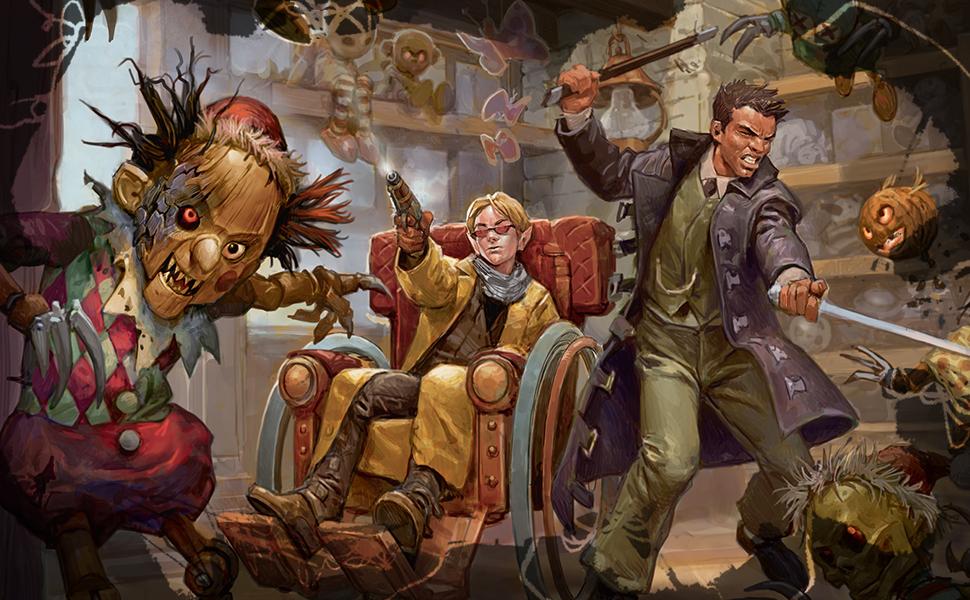
Van Richten's Guide to Ravenloft offers a lot of terrific material for players and DMs alike for building out their own Ravenloft campaign, or more broadly, for creating a horror-themed D&D adventure or campaign. The book is lavishly illustrated, clearly written and nicely laid out, and is quite in line with the generally high production values I have found in my other 5e books. A good portion of the book - Domains of Ravenloft (pp.60-180) - provides additional setting information on Ravenloft, which is you've already visited the place in Curse of Strahd, this should give you plenty to book a return visit. Or, you can turn that adventure book into something larger with the additional detail provided here. It's all fun stuff to read and to imagine one's players in. Monsters of Ravenloft (p.222-255) offers a bunch of fun critters and villains to throw at your party as well. They are all horror-themed, of course, so they will feel most suitable for horror adventures or campaigns. But you could work one of these into a particularly dark and spooky corner of a dungeon or one-shot you're writing on your own, just fine. But where the book really shines is in its sections on Creating a Domain of Dread (p.38-60) and Horror Adventures (p. 184-221), which are marvelously written chapters on how to get into the tone and direction of a fantasy horror game. Creating a Domain of Dread is helpful intro material for those looking to dive into a horror campaign, and offers nice overviews of various sub-genres of horror, which make the whole thing a bit more manageable to understand and absorb. Just calling a game a horror game is fairly broad, and creates a lot of opportunity for players to have widely divergent expectations of where the game will take them, and that leads to an experience that often isn't as fun for everyone as i could be. The Horror Adventures section is aimed at DMs, but would be a good section for any player to read as well. It is a really, really great section because it doesn't presume one knows what makes a horror story tick. Sure, everyone knows what it's like to be scared or creeped out, but actually crafting that experience for others so that they enjoy it is a much more difficult and nuanced thing. And this chapter provides a lot of helpful tips on how to set atmosphere, create tension, and so on. It also has some really important guidance on setting boundaries, checking in on the players and seeking consent. It gets into the concept of having a Session Zero for the campaign (which is a good idea for any campaign in any game, really), and it stresses that just because you know your players, it's not good to presume to know what their deepest fears are. The point being, running a game that triggers your friend's most intimate fear or trauma is not a legit avenue for entertaining them, yourself, or the other people at the table. And guess what? Everybody has something deep down that they just don't want to see mined for role-playing. We just don't like to talk about that often. There are those gamers who feel such things are unnecessary, to the point of grousing over how this book is too "PC" or "woke" or whatever other buzzword folks like to use to complain about how hard it is to actually be respectful of others at the table. (These same voices seem to have difficulty accepting illustrations of adventurers in wheelchairs, which also appear in this book. That seems like a strange hill to defend, and one that provides no avenues for heroism. But I digress.) The reality is, a horror game is still about having fun. And if you genuinely freak out a player because you weren't mindful of their limits, you've failed as a GM and you've done harm to your player. That's not what any game should be about, even a horror one. And keeping these things in mind is a way to respect everyone at the table. Very few games bother to address this, let along provide helpful guidance to DMs on it, so for this section, I'd give the book a sixth star, if I could. I will also say this - I didn't see any specific sections on "Insanity" or "Madness," as often appear in other horror games, and I welcomed that. Such approaches often treat mental wellness with a very broad brush, ignorantly wielded. Van Richten's Guide often rounds back to how much fear a player is experiencing, and how debilitating that is to one's character in the moment. It doesn't rely on tired old concepts of mental collapse that a) lead to lazy storytelling and b) often reinforce a weird kind of aggression from DMs who say where and when a character is no longer fully in control of their faculties. Once again, there are those who find this approach too gentle. I say that in a world where we are making strides to acknowledge and destigmatize mental wellness issues so that people in the real world can get the help they need without shame or ridicule, using things like D&D to dress up in broad stereotypes about mental illness isn't helpful, and is not pointing towards a better future for this game, our beloved hobby or the RPG industry. Van Richten's Guide is a rich, detailed and fun book that I am looking forward to integrating into my game. I'm not a particularly huge horror gaming fan. But I can see the many things here that I can make use of and bring a sense of dread into my game that I think my players will enjoy.
B**R
A Necessary Sourcebook for Gothic D&D . . . and fantasy writers!
I have been a DM for 5e for the past 3 years and I have to admit . . . that this is one of the best books in the 5e lineup; definitely up there with Curse of Strahd. Whether for simple one-shots or long drawn-out campaigns, this book caters to everyone, including the dark fantasy writers. I cannot wait to run a session with my table with this book; of course if they agree to it. The properly organized book makes me so happy as an apprentice DM; chapters for the Domains separated out with necessary info, awesome (and terrifying) new creatures to throw in in the bestiary, and even a gorgeously designed spirit board in the back. This is going to be an amazing resource for DMs (and writers), and as a resource, it shines. A resource book that is a well-structured book with all the stat-blocks in an easy-to-find fashion, instructions on how to create a unique Domain of Dread, and a helpful guide on how to add horror to a game. Despite my simple cursory look at the book, WotC finally brought back an iconic book that can be classified as one of the best. I guess I can wrap this all up easily right here: Content = 9/10 Ease of play = Unknown Organization = 10/10 Ease to read = 9/10 Ease to resource = 10/10 Price = 8/10 ADDITIONAL INFO (Edited): There is a considerable amount of retconning done by WotC when it comes to a lot of the original lore from the original books. However, the amount of retconning was deemed "necessary" by some individuals. I am not saying they are wrong; the book even retcons parts of Curse of Strahd. Others have pointed out that the section about the various styles of horror mentioned are considered a heavily watered-down version of what they are; I do agree in some regard. However, I do consider it more as the shallow end of the pool rather than the deep; some DMs need to test the waters first. Fantasy is what we make of it. Some of us like it dark and other's don't. SECONDARY THOUGHTS: This is a Dungeon Master's book; specifically, a campaign setting guide for one of D&D's storied locations. This is not a book that tells DMs how to think and how to run games. It is a wonderful resource for those who wish to dabble into dark fantasy and horror; in other words, not for the feint of heart.
G**S
Great New Version
This is a terrific new addition to 5e. Unlike older editions, this version attempts to help DMs think through some of the issues that can surround a horror campaign *before* the game - some people apparently don't think much of this, but I think that a conversation about tone, boundaries, etc. when it comes to something that is supposed to be frightening is decent and appropriate - and this book provides a good way to structure that conversation. If your take is "I've been playing with the same four guys for the last 30 years and we don't want anything to change" than you've probably already updated older Ravenloft games to 5e and this book will surely just disappoint you by having become somewhat more balanced in terms of representation in ways that serve as a marked step away from tired tropes. If, however, you play with *children* (yes, children do play D&D and do enjoy horror games - if not being given nightmares, etc.), you might appreciate the thoughtfulness of the suggestions provided here for making sure that everyone is having *fun* at your table - that is the point, right? If you play with people who are *not* experienced gamers and maybe aren't sure if this is for them, you might likewise appreciate that thoughtful approach. Other complaints that are sure to crop up revolve around several characters from older editions no longer being male, but rather female - we're not talking van Richtofen or Strahd here, so it's not exactly as if these are household names for most gamers, who will not be angry at the change. Sure to also raise hackles is a more realistic representation of the Vistani as groups of people who share culture rather than an immutable "race" (with its uncomfortable shades of past and present racism toward Roma people in the real world). To this four decades' long players of Dungeons & Dragons, this is all a breath of fresh air. My only "complaint," as it were, is that I do miss the presence of a beautiful map of the whole "realms" - but the truth is that the explanation for the lack of one makes complete sense, given that the Dread Realms shift and the mists might take you anywhere in (or perhaps even beyond) Ravenloft. As someone who is raising a child born in the 21st century, I'm glad to see that Dungeons & Dragons is producing quality product that is aimed at the next generation too - not just the pre-existing, longstanding player base.
K**I
Fun Horror Setting
A fun addition to any D&D collection. The book is useful in that it gives you the tools to help you create domains of dread and gives several examples of them as well as some new stat blocks. It also comes with fun subclasses and lineages, so it's useful as a DM or a player.
J**S
Holding Full Judgment Until I Play
So, the book is a very significant shift away from both the second and third editions of Ravenloft. For the most part, I think many of the changes are in the spirit of Ravenloft, but I'm not sure how many of them will play out in practice. Some of them really change the dynamic and nature of the world - giving the DM a lot more power and taking away from the complexity and thorough world/character development created by the Sword and Sorcery 3.5 version of the game. Taking the good with the bad, I don't want to be too critical or give too much praise until I actually see how it plays out in a campaign. But, here is a feel for some of the changes they made to Ravenloft from the traditional world and storylines for those interested. * Changes To Darklords and Domains - Many Darklords were disposed of and replaced with new Darklords (many of them female). Examples: Lamoria: Victor Mordenheim and his created Adam were replaced with Viktoria Mordenheim (a scientist who turned her female-lover, Elisa, into a golem to save her life). Falkovnia - Vlad Tepest was replaced with a female warrior whose sole purpose in life is to repel a zombie apocalypse happening in her realm. Tepest - The Three Hags were replaced with a single hag who imprisons her sisters. Valachan - The werewolf Timothy is gone, replaced by a female huntress who likes to hunt humans. And quite a few more changes. Some I think add flavor, others I think take it away. * The Core Is Gone: They got rid of the traditional core of Ravenloft and turned all kingdoms isn't isolated islands. While this is in the spirit of Ravenloft, it completely removes the dynamics of border conflicts, trade, and other issues which were created by the 3rd edition Ravenloft. Likewise, it is almost impossible to willingly leave a domain you are located in. Entering the Mists to leave, you roll a % die. You only have about a 20-30% chance of actually leaving. Otherwise, you find yourself back in the domain. * Nature of Characters is Changed: The game proposed that 90% of all people and being in Ravenloft are soulless creations of the Dark Powers, which exist purely to populate the world and create suffering for the Darklord. While I can understand the logic, it does weaken the idea of how horrible it is to kill them or why a PC would want to protect/save them. On the other hand, it does emphasize why a character with a soul would need to be protected so badly. Further, any being that dies their soul is captured by the mist and later reincarnated in a future body. But there is escape from the mists in death. * Some Characters are Gone, Some are Back: Apparently, Van Richten never died in this storyline. He is still alive and well. On the other hand, Azalin is gone (his kingdom is now caught in a perpetual battle between three different would-be rulers). * All The Power to the DM: Ultimately, this is probably the best change. They've created the world where very little is static, and everything can change at a whim according to the Dark Powers (i.e., DM), and this creates a world where the DM has near-infinite control to change or create anything he needs at a moments notice and use the Dark Powers as an excuse. The power given to the DM to create the horror world as needed is the biggest strength of the new setting. As someone who has DM'ed Ravenloft since it first came out in the second edition, I wouldn't say I like all of the realm and character changes (but there is no reason why I have to use them). Ultimately, I think it creates an interesting new world with new concepts. And, I'm eager to play it and give see how it goes.
N**H
Excellent introduction to adding horror elements to your campaigns.
Overall, this book tackles how to provide an engaging horror focused tone to adventures, campaigns, and new worlds. If you're a horror fan looking for ideas, inspiration, or new mechanics to inject into your campaigns, I highly recommend. If you're looking for a more concrete adventure and fleshed out world that a whole campaign can easily fit into, I would recommend searching for something on the DMsguild or getting Curse of Strahd. Pros: - Excellent framework to add horror elements to your campaigns. - Engaging expanded class options with dark powers that provide new mechanics and flavor tools for players and DMs. - Outlines for keeping horror storytelling as a collaborative process rather than only on the DM. - Domains of dread offer elements of every horror genre that offer theme and plot hook story points, new mechanics that raise stakes, or could be added as a plane hopping adventure for any campaign. - Wonderful new monster additions to challenge players and keep within theme. Cons: - Many of the domains of dread lack details to run a campaign in, but more so spark a short adventure in. Value from it comes in the mechanics, some characters, and for shorter adventure hooks.
M**A
A Masterpiece of Gothic Horror in D&D
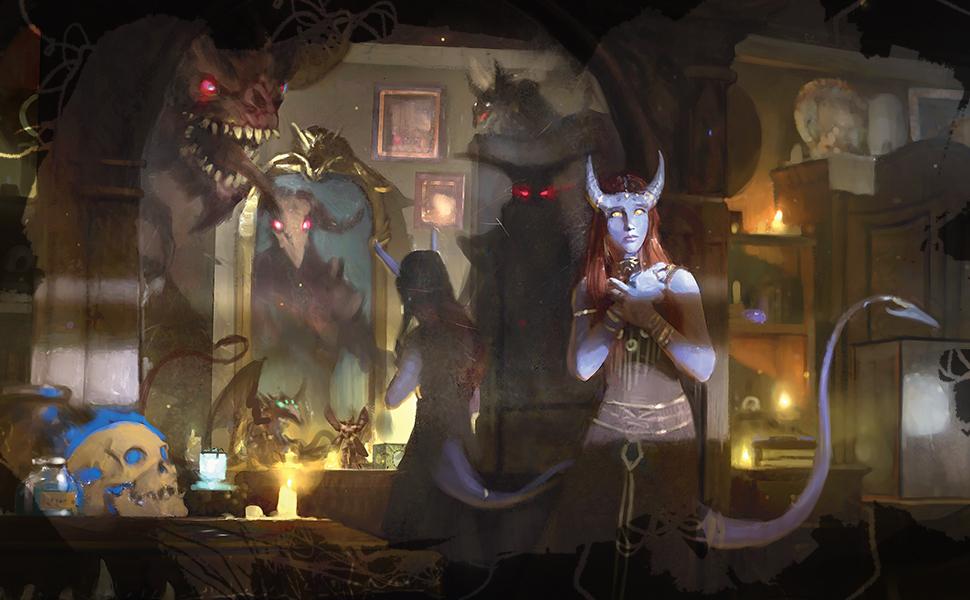
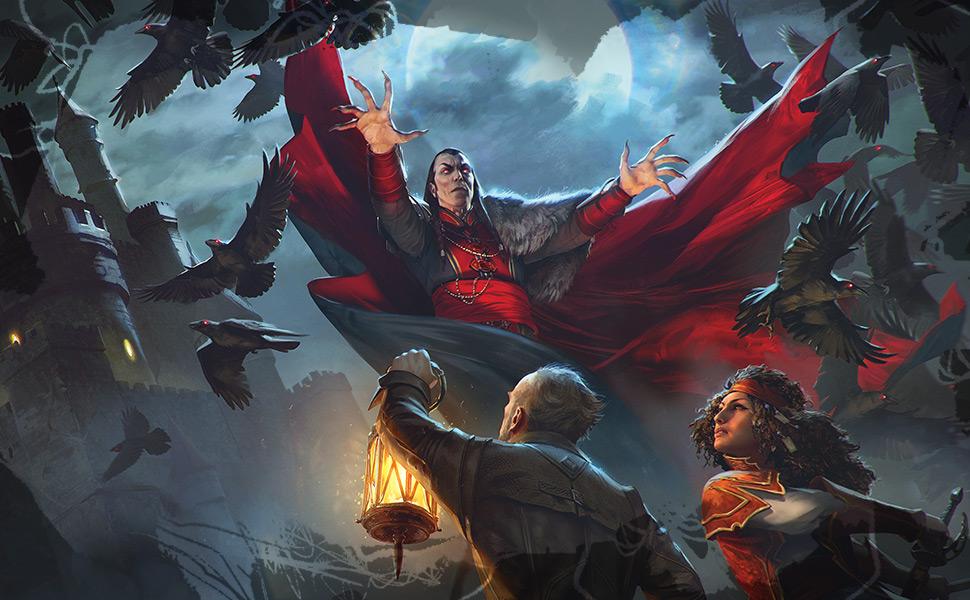
Van Richten's Guide to Ravenloft is one of my absolute favorite D&D books, offering an incredibly rich variety of gothic and horror settings within the Domains of Dread. The guide takes you deep into the Plane of Shadow, where dark, nightmarish worlds await, and the notorious Dark Lords reign over their respective domains with terrifying power. Rather than relying on traditional spooks, the book focuses on unsettling, psychologically complex horrors, creating settings that are eerie, atmospheric, and uniquely terrifying. The new character options fit perfectly with campaigns set in these dark domains, and the monstrous additions are both imaginative and disturbing. I particularly loved the beastiary's take on familiar creatures, such as a swarm of zombie limbs—a fresh, horrifying twist on an already terrifying idea. The book is a valuable resource for any Dungeon Master looking to add layers of dread, tension, and intrigue to their campaigns. It arrived in perfect condition, with high-quality artwork that truly captures the dark beauty of Ravenloft. If you’re looking to bring a darker, more psychological horror flavor to your games, Van Richten's Guide to Ravenloft is an indispensable resource that will make your campaigns stand out.
D**S
Mwahaha
Beautiful book and a great campaign setting. The nice thing about Ravenloft is because of the nature of the Mists that transport beings to and from the setting, it is easy to pop PCs in and out of it. This is great if the horror mood strikes you, say in October, and you want to spend the month freaking out your PCs with a crimson-soaked slasher chase, and then spit them back out of Ravenloft back into an ongoing campaign. Also, because of Ravenloft’s many possible realms , any genre of horror can be used. The book even gives short descriptions of various genres, along with some story ideas. It gives you tools to craft your own realms. Of course, 17 pre-created domains of dread have been provided , with fetching maps to boot. Another 32 domains are given a less thorough treatment. There are also backgrounds and rules for playing dhampir and some subclass options as well as a really nice bestiary with some choice baddies. There is an adventure provided as well. It’s all deftly written by those who are clearly familiar with horror, and beautifully illustrated. My only complaint, and this is how you know this book is good stuff, is that i wish there were more. Highly recommended to DM’s who want to create a horror campaign within the Ravenloft setting.
W**E
Best of the 3 recent books I bought
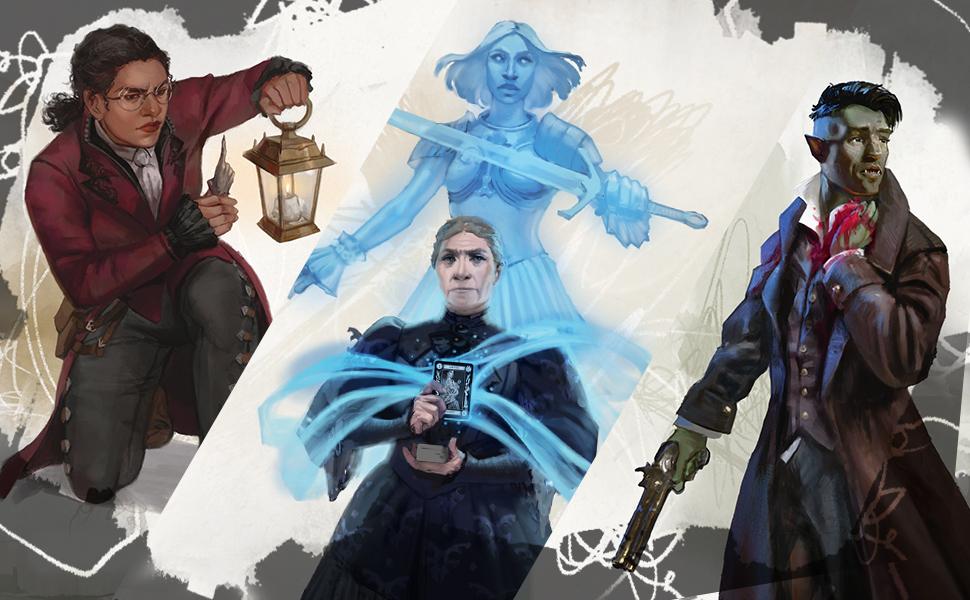
I am not a fan of Ravenloft, but this book was purchased for character options for race, class/subclass, backgrounds, feats, new monsters, as well as lore and options for crafting horror and dark fantasy adventures makes this a great book in my opinion as a player and a DM. I recently bought this book, fizban's dragon book, and strixhaven book with each book at a third off the regular price. This book was the best valued at of the three, with fizban being next and lastly strixhaven. In my opinion though, strixhaven was still not worth it price and would only have commiserate value at half price. Van Richten's Guide is a great book in my opinion. There are so many options for building and developing a character, bard subclass is interesting and warlock of the undead has some interesting rp elements to it as well. I like how they introduce lineages in place of races and how it works with races too. Dark gifts also offer some great rp options too and will explore them a bit more. The domains and dark lords options and how it is much more in depth than what I realized. This is a really good book and the options offered to players and DMs is very good and in depth. One last thing, and this has nothing to do with the book or anything has to do with Amazon shipping. The book arrived in a box with 2 other items, and no bubble wrap or protective packaging inside. The box had a hole knocked into one side of the box and as a result the book top right cover front and back cover had the corners severely blunt from impacts. Not much of a surprise with Amazon packaging items for shipping really poorly, par for the course and has no impact on the score given to this book.
E**D
More fun than a bucket of meat!
I have not played prior versions of Ravenloft so can’t really comment on the differences between then and now. I really enjoyed this source book, lots of ideas and concepts that can really spice up a game! I note there has been some criticism that the book is somehow too “Politically Correct”. I didn’t find that. There are a few minor paragraphs on checking with players on the level of horror that they want in the game, other than that its left up to the DM. The book covers themes from gothic horror to creating a slasher theme with lots of grisly detail. So not sure why there was so much negative feedback. A page on discussing the level of horror with the players does not make a 250 page book! If you want to run a cannibal apocalypse you can. It’s a guide and ultimately its up to the DM’s creativity what game they want to run. Chapter 1: Lots of info here on creating your character and character options. What I really liked are the Dark gifts, the DM could have lots of fun with those, from unseen spirits haunting a player, a living shadow to a nasty symbiote/parasite living off a player character with its own goals and intents - and much more. The new backgrounds are great too. Lots of horror based options to flesh out your character including character ideals, bonds, personality and some great character flaws! Chapter 2: Great chapter on creating your own horror domains and adventures with a nice summary of different genres you can use - running the gamut from gothic horror, body horror, the apocalypse to grisly slasher themes. So lots of ideas for the creative DM! Chapter 3 covers the various domains, a lot to choose from here. Probably my only criticism is that section could have had fewer domains and more information on each. That said there are a lot of domains and the information is enough to get a creative DM started or as a basis for creating your own domains. These are more spring boards for adventure rather than comprehensive worlds. Chapter 4 is a great guide to running horror themed D&D games, creating atmosphere etc. It includes a great module to get you started on the path. Chapter 5 is the bestiary with a nice selection of new monsters to engage in your game. I especially liked the section on monster tactics with suggestions on how they may behave, my favourite being that a monster may pause during battle to take a bite out of an unconscious character - heheheheh... Now that’s my type of game :) I’m giving this one five stars, while nothing is perfect, there is lots in here to keep everyone entertained and a few ideas I plan to port over to my Call of Cthulhu games! I rate this as a great investment for a DM who wants to use this setting or even spice up normal game play. The only thing missing from the guide is Sanity loss. However this can be found in Peterson’s guide to Cthulhu mythology for D&D.
C**E
Nova versão de um clássico.
Essa não é uma sequência, mas uma nova versão, um Reboot do cenário e isso não é ruim, principalmente pra quem não conhece Ravenloft. Muita coisa mudou, mas nem tudo mudou muito. O Lorde Negro de Falkovnia ainda é cruel, mas agora é uma mulher, Necropolis ainda não existe, sendo a cidade de Il Aluk e algumas mudanças que jogadores veteranos vão reparar. Os pontos positivos são a ausência de um mapa geral, já que a ideia é que não há como se orientar de fato nas terras de Ravenloft, as características de personagens como as linhagens por exemplo e os estilos de horror que podem ser abordados nas campanhas, os novos monstros são bem interessantes e alguns bem assustadores. Nos pontos negativos, o fato das regras de medo, horror e loucura estarem no Livro do Mestre tiram a sensação de que os personagens podem sucumbir a essas forças, mais do que aos perigos do cenário, além do livro ter muitos "dedos" pra abordar os temas de horror, por último as raças da versão 3.5, os Caliban e os Meio-Vistani não estarem presentes é um pouco frustrante, mas não estraga a experiência, na minha opinião seria melhor se estivessem lá, já a inclusão de Tiefling e Dragonborn tiram o impacto da experiência do horror já que temos raças visivelmente monstruosas andando pelas aldeias, tirando a aura de mistério que elas poderiam ter. Como tudo em RPG, nada no livro é absoluto e pode ser alterado. Ótimo acabamento gráfico, texto de um inglês bem simples. Em suma, é o Ravenloft da 5a edição e funciona muito bem.
L**M
Excelente encuadernación, papel algo frágil, contenido fabuloso
No me esperaba esta calidad de el producto. Es la primera vez que compro un manual a través de Amazon, y el primer libro de Wizards fuera de los manuales básicos. Esperaba un buen producto pero la calidad del contenido y la inspiración que estoy obteniendo es demencial. Te encontrarás algunos loquitos que hablarán de lo horrible que es la corrección política contenida en estas páginas, pero no creo que sea una situación tan impresionante. Jamás te están obligando a incluir ninguna de las sugerencias, pues simplemente se trata de conceptos que bien entendidos pueden ser útiles. En alguna de las reseñas vemos como puedes llevar al extremo de lo ridículo el uso de la tarjeta X, pero no se trata de limitar la libertad creativa del DM, sino el establecer limites y pedir un respeto por los mismos durante la puesta en marcha del juego. Como digo, son solo sugerencias que pueden funcionar para mesas más sensibles o con temas relmente chungos. Si los soportas y estás consiente de que las personas con las que juegas comparten ese gusto y por eso están jugando contigo, no deberá suponer ningún problema para ti, omitir esta mecánica. Ahora, respecto a la mitología q
C**N
Ottimo manuale
Arrivato in tempo e in ottime condizioni, arricchisce bene la collezione
Trustpilot
2 weeks ago
1 week ago