![El Topo[2 Blu-ray]](https://m.media-amazon.com/images/I/71kMTbrTpWL._AC_SL3840_.jpg)
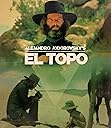
El Topo[2 Blu-ray]
Product ID: 286972552
Desertcart purchases this item on your behalf and handles shipping, customs, and support to Austria.
It was the landmark cult film that began the Midnight Movie phenomena of the counterculture crazy 1970s. Classic Americana and avant-garde European cinema sensibilities meet Zen Buddhism and the Bible as master gunfighter and cosmic mystic El Topo (played by writer/director Alejandro Jodorowsky) must defeat his four sharp-shooting rivals on an ever-increasingly bizarre path to allegorical self-enlightenment and surreal resurrection. Stunning 4K restoration with new extras. It was the landmark cult film that began the Midnight Movie phenomena of the counterculture crazy 1970s. Classic Americana and avant-garde European cinema sensibilities meet Zen Buddhism and the Bible as master gunfighter and cosmic mystic El Topo (played by writer/director Alejandro Jodorowsky) must defeat his four sharp-shooting rivals on an ever-increasingly bizarre path to allegorical self-enlightenment and surreal resurrection. Stunning 4K restoration with new extras. Review: Brilliant Movie - I first saw this movie at the Elgin Cinema in NYC, directly after its run at the Museum of Modern Art. In fact, I've seen it many times as there is so much symbolism in this movie, simultaneous symbolism, that it is a very difficult film to grasp in one viewing. As you've heard, it took over 30 years to be released on video because of a dispute. And as you can also see, some love it, some hate, and others have no idea what its about. IMHO, its one of the most brilliant movies ever made. I would characterize it most simply as an "eastern western," that is, a western with strong eastern philosophical leanings. If you haven't seen it, see it. At least then you can join the controversy. If you have seen it and haven't a clue what its about, I'll attempt to summarize it for you below. (SPOILER ALERT) The story concerns a man, who is known by the name of El Topo (the mole). He is called the mole because he is like that animal. That is, a mole is an animal that spends most of its life underground, in darkness, searching for the light (wisdom). However, should it find the light of day, it is blinded by the sun. Similarly, this person spends his life in spiritual darkness in a search for true enlightenment. But when he achieves his ultimate goal, it is far too painful to deal with. El Topo is a western style cowboy who tries to be a good man - helping people, righting wrongs. Think the Lone Ranger. When he sees wrong, he uses his guns to provide justice. The movie opens with him assisting his son in the passage towards adulthood. His son is naked to symbolize his purity and honesty. Traveling, they encounter a mass murder. El Topo is determined to avenge this crime. He is successful in this effort but after defeating the murderers, Mara, a woman who worked for them asks if El Topo can take her with him. He agrees. Howwever, in time, she works to manipulate and control him. While he sees this happening, her sexuality is too overpowering for him to resist. She wants him to abandon his son, to leave him with some priests and to travel with her alone. He agrees, knowing that what he is about to do is wrong. He asks his son for forgiveness. The son becomes dressed in the robes of the priests. While El Topo enjoys relaxing with Mara, she is not content. She makes demands. She wants him to display his power, to become the most powerful person on earth, or she will leave him. She explains that there are several masters who live out in the desert. Only after he has defeated them all will he be the best. Only after that will she love him. Reluctantly, to ensure her love, he confronts each of these masters. However, these are not criminals. These are the finest, holiest people on earth. They are masters of life, each having mastered a certain aspect of how life should be lived. Each master that he meets is at a higher level of spirituality than the previous master. Each succeeding master that he meets has fewer and fewer possessions. The final has only a loin cloth and a butterfly net. El Topo realizes that it is wrong to challenge and attempt to defeat/destroy these holy people, but he must do this to make Mara happy and keep her love. He also realizes that these people, besides being very holy, are both extremely powerful and smart....far more powerful and smart than he is. Therefore, the only possible way that he can defeat them is by using deception, trickery. The masters are each incredibly good and honest people. In the end, Topo kills them all, through trickery. But when you win through trickery, have you really won? In attempting to kill the final master, who is dressed in a loin cloth and carries a butterfly net, El Topo takes out his gun. The final master, laughing, waves his butterfly net menacingly. When El Topo shoots at the master, the master uses his net to return the bullet into the sand. "Come, try to shoot me again," says the Master. "The next bullet that you fire I will return to your heart." El Topo throws down his gun, crying. He realizes that he has been defeated. The master attempts to comfort him. "Why are you crying?" he says, "I have nothing that you could have taken from me." "I could have taken your life," says El Topo, weeping. "My life?" laughs the final master, "My life is unimportant. Here, give me your gun. I will show you." El Topo gives the final master his gun. The master takes the gun and shoots himself in the mouth. As he lies dying, he whispers to El Topo, "You lose." The final master is dead. El Topo's goal had been to win back Mara's love by defeating the masters. However, achieving this goal does not bring the happiness he was seeking. The actions he has taken now tear at his soul. Also, Mara is no longer interested in El Topo. She takes up with another young, attractive woman gunslinger, dressed in black, just as El Topo. She speaks in a deep male voice. Mara has no further need of him. She takes his gun and shoots him, then rides off with the woman in black. El Topo's wounded body is carried away by the local leper colony. They bring him to their cave to heal him. His hair turns all white. He is being purified, cleansed. Finally, he is reborn through loving care and magic. He is appreciative and is determined now to dedicate himself to helping these people. He shaves his head. He wears plain brown, simple clothes. He will not carry a gun ever again. The lepers have been banished by the townspeople and are forced to live in a dark cave far from the city. (as a mole would) They want to be allowed back into society, into the world. El Topo will assist them in their efforts at freedom. However, the lepers are very unwelcome by the townspeople, who are incredibly selfish, evil people. El Topo decides that he will meet with the townspeople, work for them in order to earn money for both himself and the lepers and to make friends with them, so that his friends, the lepers, will be able to become full fledged members of the town. With the money that he makes, he buys equipment to assist him in digging a hole from their underground leper colony to the surface, and freedom. El Topo marries one of the leper ladies who has been the kindest to him since his arrival. They go into town to be married by the local priest. El Topo recognizes the priest as his son, now grown up. His son recognizes his father and is enraged at El Topo for abandoning him. He begins beating him with his fists. El Topo does not fight back. He is bloodied and on the ground. The woman pleads with the priest to stop his attack. She explains that El Topo has changed...that he is a very good man now, doing good work....trying to assist the lepers in obtaining their freedom. The son listens and finally agrees to the following - he will permit his father to complete his work in helping the lepers. However, after his work is complete, he will kill him. In the meantime, he agrees to marry his father and this woman. El Topo completes the opening to the cave. The lepers now have their tunnel to freedom, their tunnel to what they see as enlightenment, their tunnel to the light of day. When he finishes the digging, the son says that he will now kill his father. El Topo stands straight, prepared to die. But the son begins crying. "I cannot kill my master," he says. He throws down his gun. El Topo realizes that his next goal is to prepare the town for the lepers, to gain their acceptance. He must go to town and talk with them. When they are ready to accept the lepers, he will tell them to enter the town. But the lepers are not in a patient mood. They can no longer wait to see the light of day. They want to come into the light now. The minute they realize that the path to the surface has been completed, they run out of the cave, and walk towards the town. They intend to become citizens of the town. That is their goal. That will be their ultimate happiness. But El Topo knows that the townspeople aren't yet ready to receive these people. If they go into town now, the townspeople will destroy them. When he learns that they have journeyed to town, he runs there as fast as he can. When he arrives, he sees that he is too late. The townspeople, using their guns, have killed all of the lepers. El Topo falls on the ground, crying loudly. He is devastated. He is filled with rage at the townspeople for what they have done. He walks towards them. They all shoot at him but the bullets bounce off. He takes a gun from one of the townspeople and begins shooting at them. Eventually, he kills them all. After they are all dead, he sits on the ground in a lotus position. He pours oil from an oil lamp all over himself. He then sets himself on fire. He will immolate himself in protest for what has taken place here. He hopes that this action will make the world a better place. After a few minutes, all that is left of El Topo is a skeleton. Then, even the skeleton has been consumed. When the fire finally goes out, we see that his body has been transformed not to dust but to pure honey...with all of the bees of the world gathering there...... Brontis, his son, has now changed his garb from priest to gunslinger. He is now dressed all in black, just like his father was. He walks with El Topo's wife and young son. They get on a black horse, just as El Topo rode on, and move on to the next town. We see now that the son must follow the same path as the father. For such is life. It continues in a circle, and must be self-taught. My favorite line from the movie is "Too much perfection is a mistake." Review: A brilliant and unique film that pushes the boundaries of reality over the edge. - I first heard of Alejandro Jodorowsky after I read the book the "Dune" by Frank Herbert and saw the eventual film adaptation made by master surrealist filmmaker David Lynch. From watching that movie, I learned that some time before Lynch's adaptation was made, another filmmaker by the name of Alejandro Jodorowsky was set to adapt Herbert's story to film. Interested, I looked into the films of this Jodorowsky fellow and found out about "El Topo," which was described as being like a "Spaghetti Western." Already being an aficionado of the Spaghetti Western genre, I looked into "El Topo" to discover it's not in fact a 'true' Spaghetti Western, but what they call an "Acid Western," which is a movie with Old West themes keeping the excesses and absurdities that is typical of a Spaghetti Western. That said, "El Topo" is a film unlike anything you've ever seen. It tells the tale of a wandering gunslinger who over the course of the first half of the movie fights four 'masters' and then finds himself in a cave of deformed people in the second act, where he becomes a monk who must help them make a tunnel from their cave to the adjacent town, which is full of religious nuts and sex fiends. That's all I really need to say about the movie, if you want to see it, you either will or won't. As for the release itself, I must say, it looks absolutely gorgeous on Blu-Ray, it's hard to tell that it was forty three years ago. The use of colors and camerawork are brilliant, the acting is over the top, but in a good way. It's a film filled with absurd images and acts that make you wonder what exactly it all means, but there is an underlying message in the madness. Check it out!



| Contributor | Alejandro Jodorowsky |
| Customer Reviews | 4.5 out of 5 stars 796 Reviews |
| Format | Blu-ray, Dolby, NTSC, Surround Sound, Widescreen |
| Genre | Feature Film |
| Initial release date | 2021-04-16 |
| Language | Spanish |
J**Y
Brilliant Movie
I first saw this movie at the Elgin Cinema in NYC, directly after its run at the Museum of Modern Art. In fact, I've seen it many times as there is so much symbolism in this movie, simultaneous symbolism, that it is a very difficult film to grasp in one viewing. As you've heard, it took over 30 years to be released on video because of a dispute. And as you can also see, some love it, some hate, and others have no idea what its about. IMHO, its one of the most brilliant movies ever made. I would characterize it most simply as an "eastern western," that is, a western with strong eastern philosophical leanings. If you haven't seen it, see it. At least then you can join the controversy. If you have seen it and haven't a clue what its about, I'll attempt to summarize it for you below. (SPOILER ALERT) The story concerns a man, who is known by the name of El Topo (the mole). He is called the mole because he is like that animal. That is, a mole is an animal that spends most of its life underground, in darkness, searching for the light (wisdom). However, should it find the light of day, it is blinded by the sun. Similarly, this person spends his life in spiritual darkness in a search for true enlightenment. But when he achieves his ultimate goal, it is far too painful to deal with. El Topo is a western style cowboy who tries to be a good man - helping people, righting wrongs. Think the Lone Ranger. When he sees wrong, he uses his guns to provide justice. The movie opens with him assisting his son in the passage towards adulthood. His son is naked to symbolize his purity and honesty. Traveling, they encounter a mass murder. El Topo is determined to avenge this crime. He is successful in this effort but after defeating the murderers, Mara, a woman who worked for them asks if El Topo can take her with him. He agrees. Howwever, in time, she works to manipulate and control him. While he sees this happening, her sexuality is too overpowering for him to resist. She wants him to abandon his son, to leave him with some priests and to travel with her alone. He agrees, knowing that what he is about to do is wrong. He asks his son for forgiveness. The son becomes dressed in the robes of the priests. While El Topo enjoys relaxing with Mara, she is not content. She makes demands. She wants him to display his power, to become the most powerful person on earth, or she will leave him. She explains that there are several masters who live out in the desert. Only after he has defeated them all will he be the best. Only after that will she love him. Reluctantly, to ensure her love, he confronts each of these masters. However, these are not criminals. These are the finest, holiest people on earth. They are masters of life, each having mastered a certain aspect of how life should be lived. Each master that he meets is at a higher level of spirituality than the previous master. Each succeeding master that he meets has fewer and fewer possessions. The final has only a loin cloth and a butterfly net. El Topo realizes that it is wrong to challenge and attempt to defeat/destroy these holy people, but he must do this to make Mara happy and keep her love. He also realizes that these people, besides being very holy, are both extremely powerful and smart....far more powerful and smart than he is. Therefore, the only possible way that he can defeat them is by using deception, trickery. The masters are each incredibly good and honest people. In the end, Topo kills them all, through trickery. But when you win through trickery, have you really won? In attempting to kill the final master, who is dressed in a loin cloth and carries a butterfly net, El Topo takes out his gun. The final master, laughing, waves his butterfly net menacingly. When El Topo shoots at the master, the master uses his net to return the bullet into the sand. "Come, try to shoot me again," says the Master. "The next bullet that you fire I will return to your heart." El Topo throws down his gun, crying. He realizes that he has been defeated. The master attempts to comfort him. "Why are you crying?" he says, "I have nothing that you could have taken from me." "I could have taken your life," says El Topo, weeping. "My life?" laughs the final master, "My life is unimportant. Here, give me your gun. I will show you." El Topo gives the final master his gun. The master takes the gun and shoots himself in the mouth. As he lies dying, he whispers to El Topo, "You lose." The final master is dead. El Topo's goal had been to win back Mara's love by defeating the masters. However, achieving this goal does not bring the happiness he was seeking. The actions he has taken now tear at his soul. Also, Mara is no longer interested in El Topo. She takes up with another young, attractive woman gunslinger, dressed in black, just as El Topo. She speaks in a deep male voice. Mara has no further need of him. She takes his gun and shoots him, then rides off with the woman in black. El Topo's wounded body is carried away by the local leper colony. They bring him to their cave to heal him. His hair turns all white. He is being purified, cleansed. Finally, he is reborn through loving care and magic. He is appreciative and is determined now to dedicate himself to helping these people. He shaves his head. He wears plain brown, simple clothes. He will not carry a gun ever again. The lepers have been banished by the townspeople and are forced to live in a dark cave far from the city. (as a mole would) They want to be allowed back into society, into the world. El Topo will assist them in their efforts at freedom. However, the lepers are very unwelcome by the townspeople, who are incredibly selfish, evil people. El Topo decides that he will meet with the townspeople, work for them in order to earn money for both himself and the lepers and to make friends with them, so that his friends, the lepers, will be able to become full fledged members of the town. With the money that he makes, he buys equipment to assist him in digging a hole from their underground leper colony to the surface, and freedom. El Topo marries one of the leper ladies who has been the kindest to him since his arrival. They go into town to be married by the local priest. El Topo recognizes the priest as his son, now grown up. His son recognizes his father and is enraged at El Topo for abandoning him. He begins beating him with his fists. El Topo does not fight back. He is bloodied and on the ground. The woman pleads with the priest to stop his attack. She explains that El Topo has changed...that he is a very good man now, doing good work....trying to assist the lepers in obtaining their freedom. The son listens and finally agrees to the following - he will permit his father to complete his work in helping the lepers. However, after his work is complete, he will kill him. In the meantime, he agrees to marry his father and this woman. El Topo completes the opening to the cave. The lepers now have their tunnel to freedom, their tunnel to what they see as enlightenment, their tunnel to the light of day. When he finishes the digging, the son says that he will now kill his father. El Topo stands straight, prepared to die. But the son begins crying. "I cannot kill my master," he says. He throws down his gun. El Topo realizes that his next goal is to prepare the town for the lepers, to gain their acceptance. He must go to town and talk with them. When they are ready to accept the lepers, he will tell them to enter the town. But the lepers are not in a patient mood. They can no longer wait to see the light of day. They want to come into the light now. The minute they realize that the path to the surface has been completed, they run out of the cave, and walk towards the town. They intend to become citizens of the town. That is their goal. That will be their ultimate happiness. But El Topo knows that the townspeople aren't yet ready to receive these people. If they go into town now, the townspeople will destroy them. When he learns that they have journeyed to town, he runs there as fast as he can. When he arrives, he sees that he is too late. The townspeople, using their guns, have killed all of the lepers. El Topo falls on the ground, crying loudly. He is devastated. He is filled with rage at the townspeople for what they have done. He walks towards them. They all shoot at him but the bullets bounce off. He takes a gun from one of the townspeople and begins shooting at them. Eventually, he kills them all. After they are all dead, he sits on the ground in a lotus position. He pours oil from an oil lamp all over himself. He then sets himself on fire. He will immolate himself in protest for what has taken place here. He hopes that this action will make the world a better place. After a few minutes, all that is left of El Topo is a skeleton. Then, even the skeleton has been consumed. When the fire finally goes out, we see that his body has been transformed not to dust but to pure honey...with all of the bees of the world gathering there...... Brontis, his son, has now changed his garb from priest to gunslinger. He is now dressed all in black, just like his father was. He walks with El Topo's wife and young son. They get on a black horse, just as El Topo rode on, and move on to the next town. We see now that the son must follow the same path as the father. For such is life. It continues in a circle, and must be self-taught. My favorite line from the movie is "Too much perfection is a mistake."
S**H
A brilliant and unique film that pushes the boundaries of reality over the edge.
I first heard of Alejandro Jodorowsky after I read the book the "Dune" by Frank Herbert and saw the eventual film adaptation made by master surrealist filmmaker David Lynch. From watching that movie, I learned that some time before Lynch's adaptation was made, another filmmaker by the name of Alejandro Jodorowsky was set to adapt Herbert's story to film. Interested, I looked into the films of this Jodorowsky fellow and found out about "El Topo," which was described as being like a "Spaghetti Western." Already being an aficionado of the Spaghetti Western genre, I looked into "El Topo" to discover it's not in fact a 'true' Spaghetti Western, but what they call an "Acid Western," which is a movie with Old West themes keeping the excesses and absurdities that is typical of a Spaghetti Western. That said, "El Topo" is a film unlike anything you've ever seen. It tells the tale of a wandering gunslinger who over the course of the first half of the movie fights four 'masters' and then finds himself in a cave of deformed people in the second act, where he becomes a monk who must help them make a tunnel from their cave to the adjacent town, which is full of religious nuts and sex fiends. That's all I really need to say about the movie, if you want to see it, you either will or won't. As for the release itself, I must say, it looks absolutely gorgeous on Blu-Ray, it's hard to tell that it was forty three years ago. The use of colors and camerawork are brilliant, the acting is over the top, but in a good way. It's a film filled with absurd images and acts that make you wonder what exactly it all means, but there is an underlying message in the madness. Check it out!
I**W
ILHM Reviews: El Topo
The road to enlightenment is paved in blood in EL TOPO, the feature film that brought Alejandro Jodorowsky to the public for the first time and single-handedly started the "midnight movie" craze! In it, a mystical gunslinger enters the desert to confront the Four Masters, warriors of legend who hold the keys to personal enlightenment. After defeating each of them, he is betrayed by his followers and left to die in a small desert town. Years later, El Topo awakens as the prophet and savior to a group of misshapen inbreeds who have become trapped in a perilous cavern. He then begins a noble quest to tunnel his people out, not knowing that the outer world is not ready to accept them. EL TOPO is a postmodern religious allegory set in an ultra-violent Western setting that is sure to blow your mind! Jodorowsky stars as the mysterious lead, a chauvinistic New Age messiah clad in black that progresses through each new stage of personal understanding through the barrel of a gun. Like in each of his films to follow, Jodorowsky creates a surreal cinematic landscape that is not unlike the works of Salvador Dali. His symbolism and cynical humor can often be difficult to deconstruct, but they amount to a viewing experience unlike any other. Hailed by leaders in the counterculture movement such as John Lennon and Dennis Hopper, EL TOPO is an important piece of world cinema from one of Mexico's most profound directors. -Carl Manes I Like Horror Movies
M**W
good movie
good movie
B**P
First of the Midnight Movies
I first saw this film at the Elgin Theater in New York in the spring 1971 as a "Midnight Movie." My best friend had called me and was adamant that I had to come to New York (from Athens, Ohio) just to see the film. So, my ex-wife and I hitch-hiked for a day in an odyssey trip just to get there. That night we went to a packed theater--John Lennon and Yoko Ono were even there. Then we saw the film and stayed up all night long talking about it. It seemed to change our lives forever. This BluRay disk is a beautiful copy and really looks great on a big screen TV, too. El Topo, of course, is the film that started the phenomenon of the "Midnight Movies." Some early reviewers dismissed the film as ripoff of a "Spaghetti Western," but it is much more than that. It has that true and pure vision of what we would call now as an "Independent Film." El Topo is an allegory of a spiritual quest for sainthood and a personal transformation of a liberal conscience to a revolutionary conscience. And although the times have changed form those Kent State Days, and the "Baby Boomers" have grown older, and there isn't the huge rift anymore in the country between the young people and older (well, that will always be there), you should see this film as it stills holds up to the test of time very well.
S**D
Found of about this movie because of John Lennon's interest in it....
I'm a Beatles fan, and upon reading about John Lennon, I found out that he supposedly advertised/or helped get this film popular in New York. It's been described as spaghetti western and mixed of eastern religious themes. WARNING; to ALL those who haven't seen this movie, it's in Spanish; there's subtitles, but in my opinion, I think the translations could be redone to be more spot on. I liked this movie because it's so fascinating with the artistic imagery and symbols&themes; it's very difficult to interpret this movie to reach for a conclusive understanding of the content. I've watched it multiple times(each time, better understanding the Spanish), wondering what it all means, but, I think to truly understand this movie is to be the artist/director himself. Director Jodorowsky deserves praise for this film for, not only playing the main character, but also directing. Overall, a mysterious, strange, movie to watch. I'd recommend it
M**A
NOT 4K! (…and a bad master to boot)
Cool movie for a headtrip. But 1) This is a regular HD Blu-Ray NOT 4K, and 2) Whatever master, or TeleCine gear they used, rendered a somewhat fuzzy and detail-lacking rendition. For a nstance, Alejandro Jordorowsky’s Son (IRL and in movie), Brontis got a very unusual circumcision for his role. It’s clear and obvious in a 35mm film print I own — as are the bizarre effects work choices and general cinematographic compositions. Not in this Blu-Ray though. Low-budget 70’s era film and camera tech is still…just…better. Get the Blu-Ray while le they’re available. Hopefully us fans will get a legit, faithful 4K transfer (or higher) someday.
A**R
and downright stupid. And it all gets thrown together
Do yourself a favor, and read something online about what the story is about and what it is supposed to mean It works as an allegory for the inner journey to understanding the self. Without knowing what the writer / director / lead actor were aiming at before hand, I would've been very lost, in this crazy movie. The movie can be very thoughtful and moving, but also really absurd, and downright stupid. And it all gets thrown together, leaving the audience to sort out the gems from the crap The moviemaking, the editing and the visuals, are excellent for the time and genre. But like many artistic geniuse allowed to do whatever they want, with a story or a movie, it doesn't come out all that well as a whole. This movie was very influential, and in hindsight absurd but vital in movie making history, As it planted seeds in future artist minds to run with, not only in movies, but music as well. The movie is hard to watch all the way through, but ultimately with it. And it does stick with you.
M**N
Wetern Mind Trip
I've watched it a few times, the plot twists and turns from weird to weirder all the time staying coherent (if your tripping or insane (I'd say I'm insane enough to just about follow it)). Don't bother trying to explain the film to anyone it's something to be experiences, rather like some bizarre western dream quests and story of spiritual transformation. There's lots of religious undertones to the imagery and I think it's one of those films to keep coming back too. If your into personal development in a spiritual sense there's a whole set of other levels that can be taken from this film
R**K
Possui apenas um disco.
O Anúncio é mentiroso, o item contém apenas um disco de 2 Blu Ray. Ainda não testei o produto, mas a falta do segundo disco pra mim soa como um grande erro, pois comprei pensando haver extras intensos sobre a produção dessa obra, que sim, vale 5 estrelas.
M**S
Irgendwo zwischen Wüste, Wahnsinn und Erleuchtung – und ich will nicht mehr zurück
Es gibt Filme. Und dann gibt es das, was Alejandro Jodorowsky macht. „El Topo“ ist kein Film, den man schaut. Er schaut zurück. Tief in dich rein. Und wenn du Pech hast (oder Glück), findest du da Dinge, die du vorher nicht bestellt hast. Kein Wunder, dass selbst John Lennon ein Faible dafür hatte – das hier ist pures Mitternachtskino-Gold, irgendwo zwischen spiritueller Offenbarung und staubiger Revolverphantasie. Ein Western, ja… aber als hätte jemand die Realität durch einen Traum gejagt und dann vergessen, sie wieder richtig zusammenzusetzen. Und wenn du denkst, du hast es verstanden – dann kommt dir „The Holy Mountain“ in den Sinn und flüstert: „Du hast gar nichts verstanden.“ Beide Filme wirken wie zwei Seiten derselben bewusstseinserweiternden Münze. Der eine schießt, der andere predigt – und beide treffen. Die DVD? Tut, was sie soll. Aber seien wir ehrlich: Hier geht’s nicht um Auflösung oder Menüführung. Es geht darum, sich freiwillig in einen cineastischen Fiebertraum zu begeben. Fazit: „El Topo“ ist kein Abendprogramm. Es ist ein Ritual. Ein Trip. Ein Rätsel ohne Lösung. Und genau deshalb liebt man es… oder rennt schreiend davon. Ich bin geblieben.
T**N
Awesome movie
I've been trying to find this movie for a while so I'm glad I finally found it.
A**S
Llego en excelentes condiciones
Muy buena película y excelente el envío la película estaba nueva y ya la disfruto, gracias esta en español
Trustpilot
2 weeks ago
1 day ago