Buy anything from 5,000+ international stores. One checkout price. No surprise fees. Join 2M+ shoppers on Desertcart.
Desertcart purchases this item on your behalf and handles shipping, customs, and support to Austria.
๐ฅ Cool your tech, seal the deal โ stay ahead of the heat game!
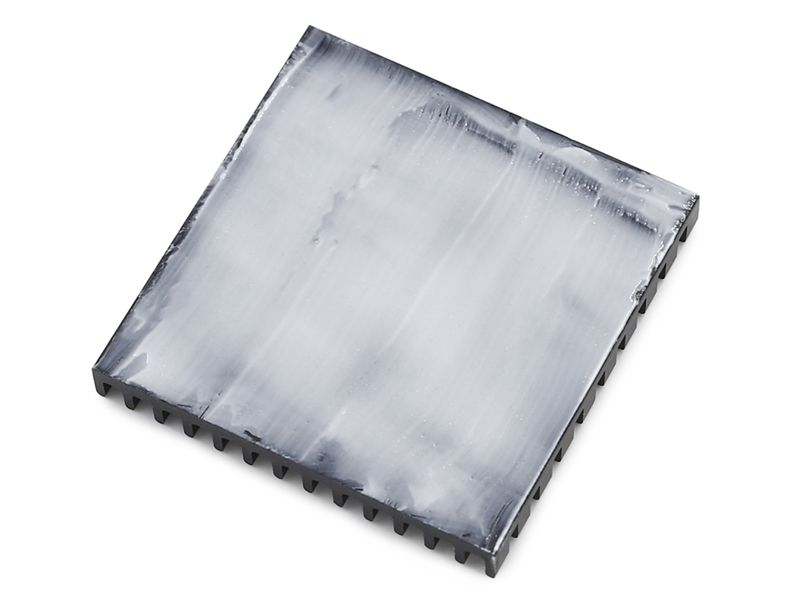
The GENNEL 10g Thermal Conductive Silicone Plaster is a high-viscosity, heat-resistant adhesive compound designed to efficiently cool and bond LED, GPU, and chipset heatsinks. Compatible with ceramic, metal, and plastic, it offers strong thermal conductivity and reliable adhesion, making it a top choice for professionals seeking durable, precision cooling solutions.


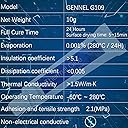



| ASIN | B072MSXHJD |
| Best Sellers Rank | #12,459 in Computers & Accessories ( See Top 100 in Computers & Accessories ) #48 in Thermal Paste |
| Brand | GENNEL |
| Brand Name | GENNEL |
| Colour | Clear |
| Compatible Material | Ceramic, Metal, Plastic |
| Container Type | Tube |
| Country of Publication | USA |
| Customer Reviews | 4.5 out of 5 stars 1,047 Reviews |
| Item Form | Paste |
| Item Package Quantity | 1 |
| Item Weight | 10 Grams |
| Manufacturer | HNZY |
| Manufacturer Part Number | GN-109 |
| Material | Silicone |
| Material Type | Silicone |
| Model | GENNEL G109 |
| Number of Pieces | 1 |
| Other Special Features of the Product | Heat Resistant |
| Special Feature | Heat Resistant |
| Specific Uses For Product | personal |
| UPC | 605826628065 604270468975 |
| Unit Count | 10 Grams |
| Volume | 10 Millilitres |
| Warranty Description | no warranty available |
S**H
good product
Works as advertized. (I used it to glue and seal a heat exchanger). Takes a few hours to set and forms a strong bond. Would help to have detailed spec sheet giving thermal conductivity.
V**.
Heatsink Glue
good quality glue for heat sink of processor etc
A**L
Regular gum. Paper glue
This glue ruined my chipset
A**R
Good โค๏ธ ๐
Worked great ๐ ๐
P**Z
It glues very thight, but very slow to cure. Not a problem to me.
This thermal glue is great. It glues the heat sink to the IC very tight. In my experience, the curing time is very long. Over one week to fully cure. I do not regret buying it. I have used it with several ICs since I purchased it. The fluid is still good inside the tube even months after opening. I though it would be hardened by now, 9 months after opening. The fluid is not a paste, I would say, it is medium thick fluid. It does not run and it is easy to apply. A small application works great.
D**S
It works
Had to use this with an crypto miner that needed new heatsinks and never experienced a problem since then
D**N
good shelf life and workability
I purchased this adhesive in June 2018 and first used it over the past couple of days to assemble homemade heat sinks and apply them to NVME SSDs. Before bonding parts I applied the adhesive to lapped 1/2" square pieces of 1/16" thick aluminum 1100 and applied moderate pressure. A joint gap of .001" was measured with calipers. At a thermal conductivity of 1.2 W/m-K, this bond thickness has neglible thermal resistance for my application. Bonding of parts was done at a humidity of ~30% and a temperature of ~70ยฐF. The adhesive did not "skin over" or otherwise exhibit an increase in viscosity during the fifteen minutes or so that I was working with it. I prefer a slower curing adhesive so that I do not have to race to get parts assembled before increased viscosity causes problems. This applies in particular to parts being bonded to circuit board components since large clamping forces have the risk of damaging the circuit board. Silicone (polysiloxane) adhesives require moisture to cure and this moisture can be provided from the atmosphere or adsorbed moisture on surfaces that are being bonded. Thin joints will cure faster than thicker joints. If you are not going to be able to leave the bonded parts alone for at least 24 hours, it is a good idea to bond pieces of scrap metal and/or plastic and test the bond strength of the test pieces prior to putting your bonded assembly into service. Cleaning surfaces to be bonded with a cotton swab and isopropanol and/or acetone (not suitable for some plastics) is also recommended since the solid filler used to enhance thermal conductivity inhibits the flow and wetting capability of the silicone adhesive. TANSTAAFL. Two pieces of copper were cleaned, bonded, and tested after a 24 hour cure (see photo). The lap joint (~.3 sq.in.) held up under the application of a 10 pound shear force, but failed at 20 pounds. The adhesive in the interior region of the failed joint was still plastic, indicating that the joint wasn't fully cured; however the bond was strong enough for my application.
K**.
Tiny portion
It functions as a heatsink adhesive, but it is not very strong at all, tiny portion....like individual crazy glue sized.
Trustpilot
2 months ago
2 days ago