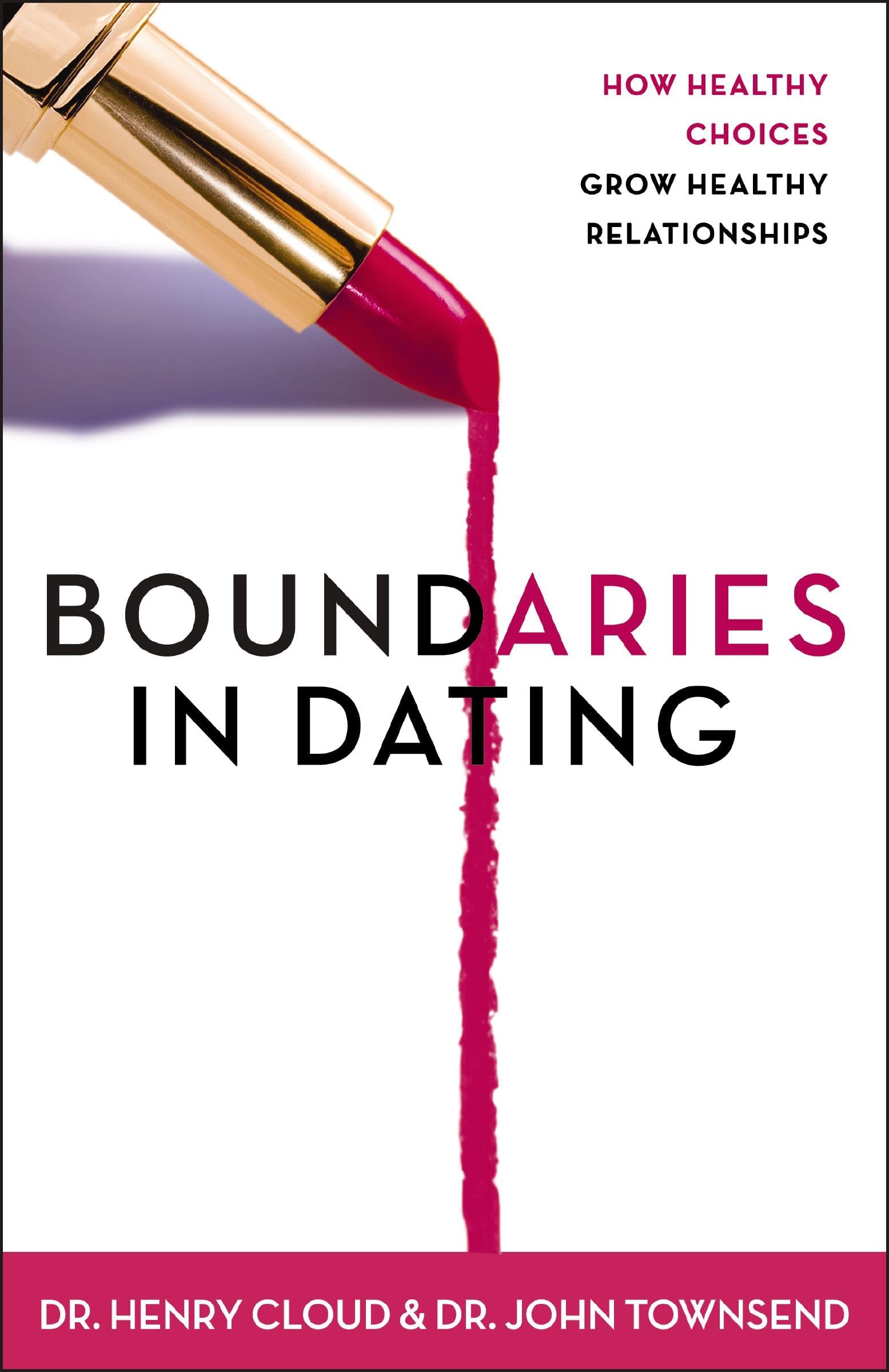
Boundaries in Dating: How Healthy Choices Grow Healthy Relationships
Product ID: 3604998
Buy anything from 5,000+ international stores. One checkout price. No surprise fees. Join 2M+ shoppers on Desertcart.
Desertcart purchases this item on your behalf and handles shipping, customs, and support to Austria.
Insights for romance to help you grow in freedom, honesty, and self-control as you pursue healthy dating limits that can lead to a happy marriage. How do you set smart limits on your physical relationship? How much do you get involved financially? And how do you know if you've found your future spouse? Dating can be fun, but it's not always easy to navigate the questions and intricacies along the way. In Boundaries in Dating , Drs. Henry Cloud and John Townsend, counselors and authors of the New York Times bestseller Boundaries , share their practical advice for adding healthy boundaries to your dating life. Full of insightful, real-life examples, this book will give you the tools you need to: Recognize and choose quality over perfection in a dating partner. Prioritize friendship within your relationship. Preserve friendships by separating between platonic relationships and romantic interest. Move past denial to handle real relational problems in a realistic and hopeful way. Enjoy this season of life. Boundaries in Dating unfolds a wise, biblical path to developing self-control, freedom, and intimacy. Let Drs. Cloud and Townsend help you get to know yourself, solve problems, and enjoy the journey of dating and finding your life partner. Review: Discussion of suitability for use in home school sex ed - I read this book because I was looking for material to use in conjunction with high school sex education material in a home school situation, so this review will focus on the benefits it has for discussion between parents and teens who are not yet or just beginning to be interested in dating. The book was written partially as a response to I Kissed Dating Goodbye, and the accompanying message preached in some Christian circles that dating is destructive, selfish, and inherently painful. The authors disagree, and think dating, when done by healthy people working toward maturity, can facilitate important developmental processes that prepare you to be a good spouse, whether or not you marry the person you date. I think it would make for interesting discussions to read the two books side by side. The authors are both psychologists with lots of counseling experience, so the advice they give is grounded in Christian psychology more than in Bible study or personal experience, which makes it different from what you find in some other books that are more pastoral in focus. They frequently back up what they say with Scripture passages and principles that support the concepts, but the many of the concepts themselves (transference, co-dependence, parental bonding issues, etc.) are drawn from the field of psychology and counseling. This book is not geared toward high school students. A premise of the book is that dating is for adults. People who have not reached a certain level of maturity, who have not clearly identified their goals and values, have not taken ownership of their spiritual life and decisions, who do not know who they are and what they want in life will not likely have healthy relationships, and will wreak havoc on themselves and others. So, the primary audience of the book is single, independent adults. But the authors acknowledge that age and maturity do not necessarily go hand in hand, and mature teens are perfectly capable of dating responsibly and productively. However young people living at home with their parents are not the primary audience. Much of the book presumes you have a dating past to analyze or a current serious relationship to work on, but the many of the discussions could still be valuable for teens who are not dating yet, because they present lots of examples of what healthy and unhealthy ways of relating look like. There is also good advice about how to start a relationship off well, how to set and maintain healthy personal boundaries, and how to guard against destructive patterns in relationships. Here are some of the things I found particularly worthwhile: There is a valuable distinction made between the difference between giving and serving in a loving relationship and how it differs from being “adaptive” (losing your own sense of self to be what another person wants you to be) or overly compliant in an unhealthy way, and how giving and serving differs from trying to rescue someone who really needs to get their own issues dealt with before they can do their fair share of the relationship work. There is a lot of discussion of what it means to be honest in a relationship, and lots of scenarios that show what it looks like when someone is not being honest with themselves, or about themselves, what it looks like when someone else is not giving you space to be honest with them, and how much space you should give someone to learn and grow in their ability to be more honest. There is a good section on what leading someone on looks like and how deceptive and very destructive it is. It discusses unhealthy patterns of relating and how to recognize when you are: being controlled, being controlling, trying to rescue someone, trying to parent someone, trying to compensate for your own character weakness or deficiency by unhealthy dependence on someone, romanticizing opposite gender friendships, committing prematurely, being “kidnapped” by a relationship to the detriment of other friendships, harboring false hope for change, blaming, and disrespecting or being disrespected. There is also a list of deal breakers that no one should put up with in a relationship. Interestingly enough, top on the list is deception or lying. Some of the things should be no-brainers (addiction, violence, faithlessness), but it also includes refusal to respect boundaries, and what that looks like. There is good information on how recognizing patterns in the kind of people you attract or are attracted to can help you identify areas of immaturity, brokenness, or unresolved hurt in your life that you need to address. There is a valuable discussion of what to do if you notice a big split between the people you are attracted to romantically and the people you would choose as friends, since this is usually an indication that you need to deal with some hurt or unresolved issue in your own soul. Healthy people develop romantic feelings for people that make good friends too. One of the strengths of this book is the numerous “case studies” of actual relationships it presents so you can see how the abstract issues look when fleshed out with real situations and people. I also appreciate that the tone of the book is not like some I have read where you are basically encouraged to find someone “compatible” with no problems or issues, as if people are not works in progress. This book encourages and equips people to work through issues in relationships, and use dating experiences to spur personal character development and movement toward more wholeness and maturity. It gives lots of practical suggestions for how to try to work through a number of common problems before bailing on the relationship. It presents a multi-faceted rationale for abstinence before marriage without descending into unnecessary scare tactics or preachiness. It presents “purity” as something positive (available to all, not just virgins) that protects and safeguards a person in dating, not this oppressive thing that must be protected and that is in constant danger of being lost or defiled. What it does not do: It presumes you accept the idea that Christians should date Christians. It might be beneficial to spend more time with a teen building a case for why. The discussion of sexual boundaries basically says you need them, but leaves all the working out of the details up to the individual. My feeling is that teens could benefit from a much more detailed discussion with some practical guidelines and suggestions, as well as encouragement to define exactly what those boundaries are going to be for the present and how they might change as they are older and/or closer to marriage. The book does not really give any formulas or guidelines for “how to date,” or how Christian dating might look different from what the rest of the world does or expects. It assumes you will basically follow the accepted cultural model of picking out someone you are potentially romantically interested in and intentionally spending time alone with them to get to have fun and get to know them better. This book is not an introduction to the world of dating for people with limited social skills, it presumes you know what you are doing. The attitude toward dating is a bit more cavalier than I am totally comfortable with, especially for a teen or college student. I personally gravitate more toward the idea that you should not get involved romantically with someone until you have a solid friendship and you think you might realistically have a future together even if it is a ways off. The authors take more of a view that you can’t possibly know where something might lead and romantic involvement is often the way you solidify your friendship and learn enough about yourself and another person to see if there is a future. As long as you have healthy boundaries, it’s all good. They vacillate between using the word “date” to refer to anyone you are casually spending time getting to know and someone you have an exclusive and serious romantic relationship with, which was confusing sometimes. It would have been helpful to have two terms. The book operates from the position that the goal of dating is to get experience that helps you grow and mature and develop interpersonal skills that will prepare you to marry someday, not that the goal of dating is to find someone to marry. For some people this will be an important philosophical difference, but one that would be worth exploring with a teen. In this book, the idea of any parental involvement is absent. It presumes that a peer group of friends will be the main support and accountability network in a person’s life. The authors also believe that “leaving home” and establishing a life independent of one’s family (though they acknowledge this can happen at college) is an important prerequisite for any healthy serious relationship. Families that gravitate more toward the courtship model may find it hard to incorporate advice based on those assumptions, but it still brings up many things worth discussing and considering. Such parents may discover they are preventing their children from setting healthy boundaries at home, something that may negatively impact their attempts to set healthy boundaries with a future partner. Review: Great advice for safe dating/courting/friendships - This book was life changing. Coming out of an abusive situation which led to a divorce, I knew I needed help if I were ever to marry again! I figured that it was best to figure out why the abuse happened, as well as what I had done wrong in my choice of mate. This book was SO insightful that I wish it had been in print before my first marriage. As it happens, I got into a dating relationship much sooner than I had expected. I had figured that I needed at LEAST 2 years to regroup before even planning to begin dating again. "Fate" had other plans. I got into a very bizarre and abusive dating relationship with a man who was unlike anyone I had ever known in that he manipulated me, lied, and had the gall to accuse me of trying to control him! Soon I began to feel those awful, trapped feelings from before. I kept trying to step back and just slow things down (since he wanted to date me AND someone else at the same time and I happen to think one should be patient enough to date only one person at a time for the sake of other people's feelings). Part of the reason it felt so exhausting was the way he would talk about really wanting to marry me and then in the next breath tell me about a date he planned with the other gal he was just starting to see. When I challenged him about the hypocrisy and cruelty of playing with my feelings, he would accuse me of being controlling. When I tried to just be "coffee friends" until he decided how he felt about the other gal, he would accuse me of being controlling and not wanting the best for his son and himself. God had to finally wrest him away from me by having him dump me without telling me and then find out in a month or so that he was planning to marry yet a different gal in 4 months. Praise God for His mercy AND for THIS BOOK! After the fact I read this book and it was like a bolt of lightning sending me back to reality. NO, it hadn't been wrong for me to tell him how I only felt comfortable dating one person at a time and only dating people who felt the same way. YES, I had been right to be bothered by the "little" lies he told me about his whereabouts. And YES, I was really wrong to have felt so desperate that I was so unattractive and getting old so fast (at 44--LOL) that I was not taking the time to think things through and to insist on an equal footing in our relationship. I have given a copy of this book to several people, including to my own handsome but single sons:) My story has a happy ending in that several months after the end of that nutty relationship I met a very honest, polite, considerate, generous, kind, affectionate, hard working man who just adores me:) It was a whirlwind romance, but the RIGHT kind. We are coming up on our 4th wedding anniversary and the 5th anniversary of our first email and first date. God is good and this book is the kind of great advice one would hope to get from BOTH one's mother and father (if one were smart enough to LISTEN to them--LOL). I recommend this as essential, insightful reading for guys and gals from age 12 to age 100! If you follow these guidelines I can almost guarentee that you will NEVER get yourself into another abusive relationship. Just make sure that YOU are the same kind of person that the book discusses so that you may bless your date as well as he/she may bless you! Happy dating:) This is ALSO a great book for picking out your friends! These authors have written several other great books such as Changes That Heal, Boundaries, Boundaries in Marriage, Boundaries With Children, and a book which I think is called 12 Things That Can Drive You Crazy. God bless you!


| Best Sellers Rank | #9,015 in Books ( See Top 100 in Books ) #3 in Christian Dating & Relationships (Books) #26 in Christian Marriage (Books) #63 in Love & Romance (Books) |
| Customer Reviews | 4.6 out of 5 stars 3,229 Reviews |
C**Y
Discussion of suitability for use in home school sex ed
I read this book because I was looking for material to use in conjunction with high school sex education material in a home school situation, so this review will focus on the benefits it has for discussion between parents and teens who are not yet or just beginning to be interested in dating. The book was written partially as a response to I Kissed Dating Goodbye, and the accompanying message preached in some Christian circles that dating is destructive, selfish, and inherently painful. The authors disagree, and think dating, when done by healthy people working toward maturity, can facilitate important developmental processes that prepare you to be a good spouse, whether or not you marry the person you date. I think it would make for interesting discussions to read the two books side by side. The authors are both psychologists with lots of counseling experience, so the advice they give is grounded in Christian psychology more than in Bible study or personal experience, which makes it different from what you find in some other books that are more pastoral in focus. They frequently back up what they say with Scripture passages and principles that support the concepts, but the many of the concepts themselves (transference, co-dependence, parental bonding issues, etc.) are drawn from the field of psychology and counseling. This book is not geared toward high school students. A premise of the book is that dating is for adults. People who have not reached a certain level of maturity, who have not clearly identified their goals and values, have not taken ownership of their spiritual life and decisions, who do not know who they are and what they want in life will not likely have healthy relationships, and will wreak havoc on themselves and others. So, the primary audience of the book is single, independent adults. But the authors acknowledge that age and maturity do not necessarily go hand in hand, and mature teens are perfectly capable of dating responsibly and productively. However young people living at home with their parents are not the primary audience. Much of the book presumes you have a dating past to analyze or a current serious relationship to work on, but the many of the discussions could still be valuable for teens who are not dating yet, because they present lots of examples of what healthy and unhealthy ways of relating look like. There is also good advice about how to start a relationship off well, how to set and maintain healthy personal boundaries, and how to guard against destructive patterns in relationships. Here are some of the things I found particularly worthwhile: There is a valuable distinction made between the difference between giving and serving in a loving relationship and how it differs from being “adaptive” (losing your own sense of self to be what another person wants you to be) or overly compliant in an unhealthy way, and how giving and serving differs from trying to rescue someone who really needs to get their own issues dealt with before they can do their fair share of the relationship work. There is a lot of discussion of what it means to be honest in a relationship, and lots of scenarios that show what it looks like when someone is not being honest with themselves, or about themselves, what it looks like when someone else is not giving you space to be honest with them, and how much space you should give someone to learn and grow in their ability to be more honest. There is a good section on what leading someone on looks like and how deceptive and very destructive it is. It discusses unhealthy patterns of relating and how to recognize when you are: being controlled, being controlling, trying to rescue someone, trying to parent someone, trying to compensate for your own character weakness or deficiency by unhealthy dependence on someone, romanticizing opposite gender friendships, committing prematurely, being “kidnapped” by a relationship to the detriment of other friendships, harboring false hope for change, blaming, and disrespecting or being disrespected. There is also a list of deal breakers that no one should put up with in a relationship. Interestingly enough, top on the list is deception or lying. Some of the things should be no-brainers (addiction, violence, faithlessness), but it also includes refusal to respect boundaries, and what that looks like. There is good information on how recognizing patterns in the kind of people you attract or are attracted to can help you identify areas of immaturity, brokenness, or unresolved hurt in your life that you need to address. There is a valuable discussion of what to do if you notice a big split between the people you are attracted to romantically and the people you would choose as friends, since this is usually an indication that you need to deal with some hurt or unresolved issue in your own soul. Healthy people develop romantic feelings for people that make good friends too. One of the strengths of this book is the numerous “case studies” of actual relationships it presents so you can see how the abstract issues look when fleshed out with real situations and people. I also appreciate that the tone of the book is not like some I have read where you are basically encouraged to find someone “compatible” with no problems or issues, as if people are not works in progress. This book encourages and equips people to work through issues in relationships, and use dating experiences to spur personal character development and movement toward more wholeness and maturity. It gives lots of practical suggestions for how to try to work through a number of common problems before bailing on the relationship. It presents a multi-faceted rationale for abstinence before marriage without descending into unnecessary scare tactics or preachiness. It presents “purity” as something positive (available to all, not just virgins) that protects and safeguards a person in dating, not this oppressive thing that must be protected and that is in constant danger of being lost or defiled. What it does not do: It presumes you accept the idea that Christians should date Christians. It might be beneficial to spend more time with a teen building a case for why. The discussion of sexual boundaries basically says you need them, but leaves all the working out of the details up to the individual. My feeling is that teens could benefit from a much more detailed discussion with some practical guidelines and suggestions, as well as encouragement to define exactly what those boundaries are going to be for the present and how they might change as they are older and/or closer to marriage. The book does not really give any formulas or guidelines for “how to date,” or how Christian dating might look different from what the rest of the world does or expects. It assumes you will basically follow the accepted cultural model of picking out someone you are potentially romantically interested in and intentionally spending time alone with them to get to have fun and get to know them better. This book is not an introduction to the world of dating for people with limited social skills, it presumes you know what you are doing. The attitude toward dating is a bit more cavalier than I am totally comfortable with, especially for a teen or college student. I personally gravitate more toward the idea that you should not get involved romantically with someone until you have a solid friendship and you think you might realistically have a future together even if it is a ways off. The authors take more of a view that you can’t possibly know where something might lead and romantic involvement is often the way you solidify your friendship and learn enough about yourself and another person to see if there is a future. As long as you have healthy boundaries, it’s all good. They vacillate between using the word “date” to refer to anyone you are casually spending time getting to know and someone you have an exclusive and serious romantic relationship with, which was confusing sometimes. It would have been helpful to have two terms. The book operates from the position that the goal of dating is to get experience that helps you grow and mature and develop interpersonal skills that will prepare you to marry someday, not that the goal of dating is to find someone to marry. For some people this will be an important philosophical difference, but one that would be worth exploring with a teen. In this book, the idea of any parental involvement is absent. It presumes that a peer group of friends will be the main support and accountability network in a person’s life. The authors also believe that “leaving home” and establishing a life independent of one’s family (though they acknowledge this can happen at college) is an important prerequisite for any healthy serious relationship. Families that gravitate more toward the courtship model may find it hard to incorporate advice based on those assumptions, but it still brings up many things worth discussing and considering. Such parents may discover they are preventing their children from setting healthy boundaries at home, something that may negatively impact their attempts to set healthy boundaries with a future partner.
D**R
Great advice for safe dating/courting/friendships
This book was life changing. Coming out of an abusive situation which led to a divorce, I knew I needed help if I were ever to marry again! I figured that it was best to figure out why the abuse happened, as well as what I had done wrong in my choice of mate. This book was SO insightful that I wish it had been in print before my first marriage. As it happens, I got into a dating relationship much sooner than I had expected. I had figured that I needed at LEAST 2 years to regroup before even planning to begin dating again. "Fate" had other plans. I got into a very bizarre and abusive dating relationship with a man who was unlike anyone I had ever known in that he manipulated me, lied, and had the gall to accuse me of trying to control him! Soon I began to feel those awful, trapped feelings from before. I kept trying to step back and just slow things down (since he wanted to date me AND someone else at the same time and I happen to think one should be patient enough to date only one person at a time for the sake of other people's feelings). Part of the reason it felt so exhausting was the way he would talk about really wanting to marry me and then in the next breath tell me about a date he planned with the other gal he was just starting to see. When I challenged him about the hypocrisy and cruelty of playing with my feelings, he would accuse me of being controlling. When I tried to just be "coffee friends" until he decided how he felt about the other gal, he would accuse me of being controlling and not wanting the best for his son and himself. God had to finally wrest him away from me by having him dump me without telling me and then find out in a month or so that he was planning to marry yet a different gal in 4 months. Praise God for His mercy AND for THIS BOOK! After the fact I read this book and it was like a bolt of lightning sending me back to reality. NO, it hadn't been wrong for me to tell him how I only felt comfortable dating one person at a time and only dating people who felt the same way. YES, I had been right to be bothered by the "little" lies he told me about his whereabouts. And YES, I was really wrong to have felt so desperate that I was so unattractive and getting old so fast (at 44--LOL) that I was not taking the time to think things through and to insist on an equal footing in our relationship. I have given a copy of this book to several people, including to my own handsome but single sons:) My story has a happy ending in that several months after the end of that nutty relationship I met a very honest, polite, considerate, generous, kind, affectionate, hard working man who just adores me:) It was a whirlwind romance, but the RIGHT kind. We are coming up on our 4th wedding anniversary and the 5th anniversary of our first email and first date. God is good and this book is the kind of great advice one would hope to get from BOTH one's mother and father (if one were smart enough to LISTEN to them--LOL). I recommend this as essential, insightful reading for guys and gals from age 12 to age 100! If you follow these guidelines I can almost guarentee that you will NEVER get yourself into another abusive relationship. Just make sure that YOU are the same kind of person that the book discusses so that you may bless your date as well as he/she may bless you! Happy dating:) This is ALSO a great book for picking out your friends! These authors have written several other great books such as Changes That Heal, Boundaries, Boundaries in Marriage, Boundaries With Children, and a book which I think is called 12 Things That Can Drive You Crazy. God bless you!
A**R
Excellent reading material - if only your teen would read.
Excellent book for teens heading to college
E**T
Good advice, I'm just not churchy
This book is great, but I'm not very religious. It talks about god and stuff. Thanks.
S**Y
A must read for dating and intimate relationships!
You might ask yourself, I have heard this word boundary, but I do not know what it means. Boundaries are often mentioned in terms of relationships. Boundaries are a simple concept, but they can vary from person to person. Boundaries essentially keep the good stuff on the inside and the bad stuff on the outside. In the book Making Dating Work Boundaries in Dating, Dr. Henry Cloud and Dr. John Townsend discuss boundaries at length. Now, I just mentioned that everyone has boundaries whether they realize them or not, and they are meant to keep the good stuff on the inside, and the bad stuff on the outside. Now boundaries can keep the good people close to you, and the people that will hurt you away. Think of boundaries as an invisible property line around yourself, and that those boundaries should keep the good things in, and protect you from things you do not want in. Examples of violations of your person boundaries include: the loss of freedom of oneself, being with the wrong person, control issues, the inability to say no, doing too much within the relationship at the expense of yourself. Boundaries are your beliefs and ideals that make you especially unique. Infringing upon your boundaries only serves to make you an unhappy person. How do you know what your personal boundaries are? You need to know yourself. Shakespeare said "To thine own self be true." You do need to know what is important to you. What qualities do you like in yourself, and want from others. For example if you value honestly, being with someone that is not honest will not make you happy in the long term. You will need to be strong enough in your personal character to eliminate people who do not exhibit honestly in their words and in their actions. Now looking at just you being honest with yourself requires some homework on your part to acknowledge what is important to you, for you to be willing to uphold your ideas, and then you must communicate your ideals to others. You need to communicate your expectations about a relationship clearly. When that other person may violate your expectations you need to be willing to discuss these ideas head on, and if need be you need to be willing to set that relationship free. Boundaries are really meant to protect you. They are meant to keep you happy, and safe in relationships, whether these are friendships or relationships that may go further. You do have some ownership in knowing what things are important to you, they may be honestly, personal character, not using drugs and or alcohol. Once you know where your standards are you can communicate these to others and position yourself around people that will not violate your personal boundaries. In addition to this book, I also recomment their other book Boundaries, and the workbook to go along with the text. Their topics are so insightful and do a marvelous job of explaining what boundaries are, how to set them, and how to tell others where are boundaries lie.
M**N
great book
Amazing advice to live by that is based in holy scripture. I read the original book first and then other following books.
J**7
So Practical…Not about rules just common sense!
The combination of Christian counseling with psychology research that was involved in writing this book has made it so practical and helpful in any relationship, but especially dating. Whether you are a Christian or not, there are no tricks or lists of rules encouraged in this book as much as practical guidance and suggestions that give a compass for navigating relationships, especially the most important relationship of your life. I was actually given this book by a guy I was dating and reading it was the third party voice giving me reassuring permission in my mind to be kind to both of us and call it off. I just wasn’t interested and we needed to not waste our time hoping something would work out. Everyone is at a different stage in their dating relationships and this will be helpful to you whether confirming truths you already knew or bringing practicality to an emotional situation that you just need a truthful/loving/helpful voice to remind you of the best choice in your actions…give it a try! I have given several of these as gifts already and plan to continue doing so. I also love that they use Bible passages and principles to guide and inform the advice they give! Today I am happily married to the right one and I am so thankful this book was a part of my journey.
K**H
An ounce of prevention...
I'm a Christian woman in her 30s. I purchased this book after realizing that the man I was dating was emotionally cheating. It was a very painful discovery and confrontation, and I knew that I would need to establish boundaries on our interactions so that I could see if his verbal desire to change matched his behavior. Reading this book and remaining in prayer not only assured me of the validity of the steps I took to preserve my peace, but also gave me some clear guidelines on what was acceptable in partnership and what was not. I ended up leaving the relationship, but I gained so much knowledge about setting healthy boundaries in dating that I I'm completely rethinking the way that I approach it. It's a shame that I didn't come across this book sooner. I highly recommend it to anyone who is experiencing relational problems but also to: parents as part of sex and social education for kids that want to date; young adults small groups; any single person wanting to date. As the adage says, an ounce of prevention is worth a pound of cure, and it's a shame that I never came across this valuable resource until tragedy struck. I will be purchasing the rest of the books in the series as well as "Safe People." "Boundaries in Dating" is a wonderful look at how we can date in a way that reflects God's love and keeps us safe from unnecessary pain/hardships. Please give it a chance. I guarantee that you'll walk away with something that will serve you and your loved ones well.
C**E
Cool
Great
ア**ン
とてもよかったです
クリスチャンのデート(Dating)について、なぜ必要なのか、それを通じてどういうことを学んでいけばいいのかについて詳しく書かれています。心理学者の著者たちが、クリスチャンの恋愛関係について実用的な内容を盛り込んでいます。各項目にあるTake-Away Tipsは、人間関係作りで注意する点がリストにされていて、とても参考になりました。クリスチャンの方で、恋愛関係について考えてみたい方々にお勧めの本です。
K**Y
Excellent for dating.
Really helpful with knowing what to do and not to do during dating and helping me look deeper into myself and others.
T**I
Healthy Tips for Setting Boundaries.
Great book for setting boundaries and knowing what is allowed and not allowed from others. It helps people who struggle with setting proper boundaries do so wisely. This book will also help you view yourself better, as you realize your worth and value. As they say, what you allow, is what you would get.
B**V
Gritty and Humanising
Such a good book! The authors are not afraid to challenge their audience, calling us on to more loving, honest relationships and proving that dating should be a place for contribution and growth. Thanks again!
Trustpilot
1 month ago
2 months ago