
Buy anything from 5,000+ international stores. One checkout price. No surprise fees. Join 2M+ shoppers on Desertcart.
Desertcart purchases this item on your behalf and handles shipping, customs, and support to Austria.
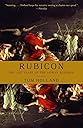
A vivid historical account of the social world of Julius Caesar’s Rome as it moved from republic to empire, from the acclaimed author of Dynasty and co-host of the hit podcast The Rest Is History “A fascinating picture of Roman city life . . . In every aspect of this story, Holland expertly makes the Romans, so alien and yet so familiar, relevant to us.”— Los Angeles Times “Stunning . . . Holland keeps his narrative moving at chariot-race speed.”— Newsday In 49 B.C., the seven hundred fifth year since the founding of Rome, Julius Caesar crossed a small border river called the Rubicon and plunged Rome into cataclysmic civil war. Tom Holland’s enthralling account tells the story of Caesar’s generation, witness to the twilight of the Republic and its bloody transformation into an empire. From Cicero, Spartacus, and Brutus, to Cleopatra, Virgil, and Augustus, here are some of the most legendary figures in history brought thrillingly to life. Combining verve and freshness with scrupulous scholarship, Rubicon is not only an engrossing history of this pivotal era but a uniquely resonant portrait of a great civilization in all its extremes of self-sacrifice and rivalry, decadence and catastrophe, intrigue, war, and world-shaking ambition. Review: Captivating history for the layman and beginner - I say layman and beginner only because the obvious texts for those serious about Roman history are the likes of Plutarch, Livy, etc. I just don't understand why there are people on here holding Tom Holland to that standard. there are reviewers here complaining about a lack of detail or depth, or his touristy language of Roman history that reads more like a novel than history. those reviewers should stick to Plutarch and leave T.H. alone. he never proposes that his work is a textbook. it's stylized ancient history, and in writing it so well he proves that ancient history doesn't always have to come from a textbook and taste like an old graham cracker. This book would have no merit if it were in any way embellished, but it isn't. The facts he provides are well-researched and demonstrate his impressive command of the history. Each chapter is an unfolding of decades of important Roman history delicately tied together to seem like one great big narrative. I can see where historians would have a problem with this aspect of the book, however. he does tend to connect events and figures loosely at times, but look at what we're working with. I say WE because the nature of Roman history is stunted by what little facts we have that have survived and so it is always a daunting task to hook together events that happened 30 or 40 years apart by what little we know. Tom Holland deserves accolades for how he managed to do this by using slight elements of suspense and other novelist's tools to make the reader very willing to suspend chronology in favor of a broad understanding. He shines when he muses about the personal lives and emotional makeups of his characters, whom he treats like real people, because they were. He avoids sounding like a novelist here only because the personal inclinations of his characters are only offered as a means for understanding their actions and trends within the times. For instance, he goes on about the villas of Sulla, Marius, etc., and their various interests in oyster farming, for instance, not because he thinks that by understanding Gaius Marius as an oyster farmer we will sympathize with his character interpretation, but because it was a crucial fact worth pointing out that wealth and power were displayed in this way and that Marius, though history remembers him as a blood-spattered golden boy of Rome, was also a political entity with public relations and images to uphold. It makes his rivalry with Sulla seem more like a modern jockeying for power that we can wrap our minds around, and less like a Charlton Heston movie. I think it speaks to the quality of this work that I, a seasoned veteran of Roman history with years of study under my belt, still found this book utterly enchanting, despite knowing almost every story before he got to it. If you love it as much as I, you should by all means read his second book, Persian Fire. It's almost just as good. Review: Rubicon: a consumer sized portion of Roman history - I've long had a fascination with the characters and politics of ancient Rome, whether it be the Republican Period or the Imperial Period that followed the fall of the Republic. However, the most fascinating time for me, perhaps because of the vivid and larger-than-life characters in the cast, the gruesome violence of its politics, and the sheer scale of the stage (from the tip of Spain west to the far shores of the Black Sea east, from the shores of Britain north to the deserts of Africa and the Nile south), is the period as the Republic began to falter and fail and the Roman Empire began to ascend. Perhaps this period has gained even more currency with me recently because so much of our own politics in many ways echoes the arguments and politics of the Roman Republic. As I have listened, and occasionally participated in, debates and discussions about the role of government, I have heard arguments not unlike those that once were made in the Forum by senators of Rome. How much power should government have, what government should, and shouldn't, do for the people, whether we should engage in wars far across the ocean, whether we should be nation building, what should we do with the many millions of people immigrating across our borders, who should be an American, and so on, and so on. Long before the modern American Republic encountered these issues, the Roman people--under the Republic--debated these issues from in the Forum of Rome. With these thoughts in mind, as well as a love for gritty and real bare knuckle politics of ancient Rome, I picked up Tom Holland's book. Told in a narrative style with vibrant language, the story reads with novel like ease and speed. But for footnotes and awareness of the history being accounted from other sources, I might have wondered at the fictional like quality to it. All the great names of Roman history are present. Julius Caesar and his legions. Marcus Cicero, the oratorical giant. Pompey the Great, hero and megalomaniac. Cleopatra, seducer, queen and Pharaoh-goddess. And, of course, my favorite, Cato, the Spartan like idealist and champion of Republican principles, falling upon his sword rather than surrender to dictatorship as Caesar's army marches on Utica. I usually confine my gym reading to "fun stuff," like novels and other brain candy. However, I found that Holland's history was sufficiently enjoyable that I had difficulty picking up other books for the duration of the read, including at the gym. For those who complain that history is boring, a list of "one thing after another," Holland's Rubicon may be for them. For in it, they may find that `yes,' history does seem to repeat itself, but no, it is not just one thing after another, nor is it boring. Roman history, especially in Holland's telling, is as vibrant, alive, and violent as the Italian operas that their descendants would write over fifteen hundred years later. Rubicon is, ultimately, a tragic tale marked by violence, civil war, conquest and the fall of the world's longest standing republic. As the turmoil begins to end, we see Octavian rise as the second Caesar, but really as the first emperor, of Rome. His long life and mostly peaceful reign were a marked difference from the tumultuous years of the Republics fall, and they gave rise to a different period in Rome's, and the West's, history. It would be more than seventeen hundred years before another republic with Rome's staying power was established. As the only constant in history is change, as I closed the book, I could not help but wonder how long our republic will last. I don't mean to speak doom and gloom by saying so, only to point out that human nature is tends to bring about repetition of history, including the failures of democracies and republics alike. How long can ours last? Even if it is only at mid-point or, to be optimistic, a relative beginning, what duration can it have? And will the causes of Rome's fall also cause ours to fall?


| Best Sellers Rank | #9,601 in Books ( See Top 100 in Books ) #6 in Ancient Roman History (Books) #17 in History & Theory of Politics #68 in Military History (Books) |
| Customer Reviews | 4.6 out of 5 stars 3,743 Reviews |
T**1
Captivating history for the layman and beginner
I say layman and beginner only because the obvious texts for those serious about Roman history are the likes of Plutarch, Livy, etc. I just don't understand why there are people on here holding Tom Holland to that standard. there are reviewers here complaining about a lack of detail or depth, or his touristy language of Roman history that reads more like a novel than history. those reviewers should stick to Plutarch and leave T.H. alone. he never proposes that his work is a textbook. it's stylized ancient history, and in writing it so well he proves that ancient history doesn't always have to come from a textbook and taste like an old graham cracker. This book would have no merit if it were in any way embellished, but it isn't. The facts he provides are well-researched and demonstrate his impressive command of the history. Each chapter is an unfolding of decades of important Roman history delicately tied together to seem like one great big narrative. I can see where historians would have a problem with this aspect of the book, however. he does tend to connect events and figures loosely at times, but look at what we're working with. I say WE because the nature of Roman history is stunted by what little facts we have that have survived and so it is always a daunting task to hook together events that happened 30 or 40 years apart by what little we know. Tom Holland deserves accolades for how he managed to do this by using slight elements of suspense and other novelist's tools to make the reader very willing to suspend chronology in favor of a broad understanding. He shines when he muses about the personal lives and emotional makeups of his characters, whom he treats like real people, because they were. He avoids sounding like a novelist here only because the personal inclinations of his characters are only offered as a means for understanding their actions and trends within the times. For instance, he goes on about the villas of Sulla, Marius, etc., and their various interests in oyster farming, for instance, not because he thinks that by understanding Gaius Marius as an oyster farmer we will sympathize with his character interpretation, but because it was a crucial fact worth pointing out that wealth and power were displayed in this way and that Marius, though history remembers him as a blood-spattered golden boy of Rome, was also a political entity with public relations and images to uphold. It makes his rivalry with Sulla seem more like a modern jockeying for power that we can wrap our minds around, and less like a Charlton Heston movie. I think it speaks to the quality of this work that I, a seasoned veteran of Roman history with years of study under my belt, still found this book utterly enchanting, despite knowing almost every story before he got to it. If you love it as much as I, you should by all means read his second book, Persian Fire. It's almost just as good.
D**N
Rubicon: a consumer sized portion of Roman history
I've long had a fascination with the characters and politics of ancient Rome, whether it be the Republican Period or the Imperial Period that followed the fall of the Republic. However, the most fascinating time for me, perhaps because of the vivid and larger-than-life characters in the cast, the gruesome violence of its politics, and the sheer scale of the stage (from the tip of Spain west to the far shores of the Black Sea east, from the shores of Britain north to the deserts of Africa and the Nile south), is the period as the Republic began to falter and fail and the Roman Empire began to ascend. Perhaps this period has gained even more currency with me recently because so much of our own politics in many ways echoes the arguments and politics of the Roman Republic. As I have listened, and occasionally participated in, debates and discussions about the role of government, I have heard arguments not unlike those that once were made in the Forum by senators of Rome. How much power should government have, what government should, and shouldn't, do for the people, whether we should engage in wars far across the ocean, whether we should be nation building, what should we do with the many millions of people immigrating across our borders, who should be an American, and so on, and so on. Long before the modern American Republic encountered these issues, the Roman people--under the Republic--debated these issues from in the Forum of Rome. With these thoughts in mind, as well as a love for gritty and real bare knuckle politics of ancient Rome, I picked up Tom Holland's book. Told in a narrative style with vibrant language, the story reads with novel like ease and speed. But for footnotes and awareness of the history being accounted from other sources, I might have wondered at the fictional like quality to it. All the great names of Roman history are present. Julius Caesar and his legions. Marcus Cicero, the oratorical giant. Pompey the Great, hero and megalomaniac. Cleopatra, seducer, queen and Pharaoh-goddess. And, of course, my favorite, Cato, the Spartan like idealist and champion of Republican principles, falling upon his sword rather than surrender to dictatorship as Caesar's army marches on Utica. I usually confine my gym reading to "fun stuff," like novels and other brain candy. However, I found that Holland's history was sufficiently enjoyable that I had difficulty picking up other books for the duration of the read, including at the gym. For those who complain that history is boring, a list of "one thing after another," Holland's Rubicon may be for them. For in it, they may find that `yes,' history does seem to repeat itself, but no, it is not just one thing after another, nor is it boring. Roman history, especially in Holland's telling, is as vibrant, alive, and violent as the Italian operas that their descendants would write over fifteen hundred years later. Rubicon is, ultimately, a tragic tale marked by violence, civil war, conquest and the fall of the world's longest standing republic. As the turmoil begins to end, we see Octavian rise as the second Caesar, but really as the first emperor, of Rome. His long life and mostly peaceful reign were a marked difference from the tumultuous years of the Republics fall, and they gave rise to a different period in Rome's, and the West's, history. It would be more than seventeen hundred years before another republic with Rome's staying power was established. As the only constant in history is change, as I closed the book, I could not help but wonder how long our republic will last. I don't mean to speak doom and gloom by saying so, only to point out that human nature is tends to bring about repetition of history, including the failures of democracies and republics alike. How long can ours last? Even if it is only at mid-point or, to be optimistic, a relative beginning, what duration can it have? And will the causes of Rome's fall also cause ours to fall?
D**D
"In truth nothing better illustrated the ambiguities of Rome than the fact that ...
Chapter 1 is a well written descriptive of living and surviving, as an inhabitant of the republic of Rome; as a soldier of raised armies, of holding Sicily, and of legions conquering Spain's Carthage empire. As page 16 narrates: "In truth nothing better illustrated the ambiguities of Rome than the fact that she was both the cleanest and the filthiest of cities." The B.C. era was punctuated with endless wars, atrocities, betrayals, tortures, and brutalities against any and all opposing forces. Even hardened cynics would be challenged to define humanity as directly descended from any virtuous god. Military, political and social bellicosities were simmering behind the scenes of many conflicts in Greece and in Rome. Some war some where always seemed imminent. Disease must have been rampant, especially STD's; Germs had not yet been identified and sexual dalliances were prolific. One example of the brutalities, butchery and carnage of the time is told in some detail on page 94 as a military conqueror reminded his audience in a Senate address that he was the favorite of the gods. As such he proceeded to massacre each of his war prisoners: "The massacre was total...corpses were dragged...flung into the Tiber, clogging the banks and bridges with pollution..." The murder and desecration of the remains of renowned orator Marcus Antonius is detailed "as his body was fed to birds and dogs. His head was displayed in the Forum". Another example of how prisoners were disposed by their victors. Beheading was in vogue long before Islam become a contemporary focus. Perhaps this book's most important message will be found on Preface page XVII: "...everything that happens in the world at any time has a genuine resemblance to what happened in ancient times". The author devotes most of his manuscript to historical plunders and events, reserving pages of Rubicon largely for metaphoric legend and interpretation. The other chapters, however, are filled with noteworthy names, and events, many familiar to readers, some not, such as Alexander the Great, Alexandria, Marcus Antonius, Mark Antony, Caesar Augustus, Marcus Brutus, Julius Caesar, Marcus Cicero, Cleopatra, Hannibal, Machiavelli, Octavian, Pompey. Ptolemy, Rufus Rutilius, Clodius, Sibyl Spartacus, Trojans, Venus, Vesuvius and many more. Sometime in the 2nd century B.C. Gauls, and Romans, found something quite satisfying to both merchants and consumers: wine. A slave for one jar of wine. It became a big and lucrative market. Wine was more precious than gold to Gallic chieftains. It as at this historic period that elites wanted more entertainment forums so they invented, developed, and parlayed gladiators into public spectacles. In the first century A.D. the colosseum was an amphitheater built in Rome to hold gladiator and other public events. Rubicon is a book title in search of an identity. The word is found only a few times throughout some 400 pages. This sparsity, however, does not diminish the metaphorical power of river Rubicon. On page XIV of the preface Caesar decides to either surrender his command under existing law, or he could cross the Rubicon and risk the unknown consequences of engulfing the world into war and collapsing the Roman empire. Would he cross the Rubicon? The answer is to found on page XV of the Preface. To this writer the word Rubicon has a certain mystery, a swagger attached to it, a blending of royalty, a foreboding, suspense, legends, and treasures. Indubitably.
E**E
A joy to read
The author packs a lot of information into a fast-paced narrative. It covers roughly the 20 years before Julius Caesar crossed the Rubicon River through the reign of Augustus Caesar. I thoroughly enjoyed it.
D**Y
It reads more like an adventure novel than a book on history
In this book, Holland does a marvelous job of taking the reader through not only what happened in @ the last 100 years of the republic as a real Roman state, but also what was going on in the minds of its principal actors in the process. History is a peculiar thing. It usually seeks only to tell what happened and who did it, and maybe why, but Holland has taken the admittedly risky tactic of taking the reader into the minds of the principal actors in a way that is refreshing and, in my opinion, fascinating and very much illustrative of what made Rome, Rome. It brings into sharp focus how the values and ethics (what there was of them) shaped the republic, and eventually wound up bringing it down. He does not take the stance of trying to instruct the reader, but allows the reader to see the reasonings at work on all sides. This, along with his writing style, make the book one you just don't want to put down. I read until 2:00 a.m. one night! It's a captivating tale, made all the moreso by Holland's writing style and his insights into the minds of the actors involved in every major event. It reads more like an adventure novel than a book on history! It helped me understand why Christianity came along just when it did, and why the timing was so right for the world at that time. It makes Biblical stories more understandable when the motives and morals of the Romans are understood more fully. I highly recommend this book for anyone interested in Roman history, world history, politics, philosophy, and in Christianity. It's truly pregnant with insights, and easy to read and understand. I loved it!
S**R
OK but moves fast and the characters are mostly unlikeable
I read Rubicon to refresh and fill in my knowledge of late Republic Roman history. It serves reasonably well for that purpose, and is, as other reviews say, much more readable that a standard history book. However, it is not quite a five-star work for two reasons: pacing and characterization. The pace is rapid but not really novelistic as some reviews claim. Rather, it is just hurried. To be fair, there was a lot that happened in the 50 years or so that the book covers and it cannot do justice to everything. A novel would pick a single point of view and develop that, but Rubicon tries to cover much more, with each chapter presenting a different time and/or character's point of view. This serves reasonably well to cover the high points but without a lot of depth. Many smaller players flit in and out of the picture, and motives remain unclear even for the main characters. As for characterization, it is fairly negative all around. The Romans are presented mostly as scheming, lying, inflexible, adulterous, and generally power-hungry and despicable in virtually every case (except Cato). Perhaps that is a fair characterization but (a) I doubt it since Rome would not have achieved what it did or be so endlessly fascinating in that case; and (b) even if accurate, it is not terribly exciting to read about one person after another groveling and/or cheating everyone else. I'd rather see a bit more of the positive side: more attention to what the Roman leaders were trying to accomplish for good (as they saw it) and not just their power politics. Overall, it's good and readable for a short history. Just don't expect sustained high drama or a single narrative, and be prepared to read a lot about political and moral turpitude.
L**E
reads like a historic fiction - this was an amazingly well crafted narrative
Vivid and well researched characters come to life with an encompassing understanding of the culture and times thanks to Holland’s beautifully rendered history. Like the cool history teacher that keeps everyone entertained while they learn - I loved it. Great maps that I constantly referenced and some fantastic photos of art and landmarks to remind you this is real history- not fiction. First time I read Tom Holland and will not be my last. - Greg
L**N
The Roman Empire on the Cusp
Tom Holland's book on the Roman Empire at the time of Julius Caesar's decision to cross the Rubicon is superb. After a quick review of the rise of the Roman Republic in the wake of the overthrow of king Lucius Tarquinius Superbus around 510 BCE, the author presents the Roman Empire as it was around 140 BC. He captures the life and politics of those times clearly and succinctly. He then narrates the political aspirations and machinations of Marius, which presaged Sulla's decision to invade Rome with the Roman Army, thus becoming the first Roman to do so. This disastrous transgression resulted in great violence, neutered the Roman Republic, and eventually set the stage for Julius Caesar's later attack on Rome. He ends with the death of Augustus, and the Roman Empire as it was in 14 AD. Tom Holland has managed to condense the complex history of a turbulent time in Roman history and to present it with admirable clarity, and in an exceptionally readable form. The text is well footnoted, and those footnotes will lead the curious reader to the original sources (in themselves fascinating). The author has chosen to follow participants individually (which apparently has bothered some reviewers), which results in some minor backtracking in time. However, that turns out to be a very reasonable way to approach a complex subject with many threads. I found it easier to follow each sequence of events in that fashion than I would havbe had he chosen to proceed strictly chronologically, jumping from character to character. Tom Holland provides a wonderfully detailed and vivid hsitory of a crucial period in Roman history. This is a book which can spark a keen interest in Roman history in any reader. I highly recommned it.
C**A
Geschichte als Roman
"Narrative History", so nennt man den Stil von Tom Holland (und anderen) wohl. Das wird von Hardcore-Historikern und Puristen sicher nicht ernstgenommen oder sogar abgelehnt. Aber sei es drum, das nehme ich gerne in Kauf. Bei Holland wird der Alltag römischer Politiker in den letzten ca. 100 Jahren der Republik bis zu deren Ende unter dem ersten Kaiser Augustus (Octavian) lebendig. Fast meint man, die Protagonisten in der Toga über das Forum schlendern zu sehen. Trotzdem (oder vielleicht deswegen ?) werden die Ereignisse historisch und wissenschaftlich korrekt wiedergegeben. Vielleicht mag man Holland die teilweise plakative Erzählweise, die hin und wieder zu drastischen Schilderungen greift (Crassus' Untergang gegen die Parther ist ein gutes Beispiel...) krummnehmen, mir hat das Lesen mehr Spass gemacht, als wenn ich mich durch die sonst übliche, staubtrockenen Aufzählung von Ereignissen, Kriegen, Schlachten etc. hätte durchkämpfen müssen. Holland gelingt es dabei, alle Winkel und Ecken des politischen Lebens in der römischen Republik zu durchleuchten. Plötzlich tauchen Figuren auf, deren Namen man zwar mal gehört hat (Catilina z.B.), mit denen man aber sonst nicht viel anzufangen wusste und gewinnen an Profil. Andere, die sonst prominent abgehandelt werden - wie bspw. Cäsar - bleiben, wie in der damaligen Realität auch, erst einmal verschwommen, um dann mit politischen Schachzügen und Intrigen Farbe und Charakter zu gewinnen. Besonders gut ist das Holland bei Octavian, Cäsar und Pompeius gelungen. Das Leben anderer - z.B. Cicero - zieht sich hingegen wie ein roter Faden durch einen Großteil des Buchs. Alles in allem ein wahres Feuerwerk und mit viel Vergnügen und Spannung lesbar !
A**R
Exelente libro
Uno de los mejores libros sobre Roma que he leido. Ha llegado rapido y en perfecto condicion.
C**.
Çok hızlı ve sağlam teslimat
M**D
An excellent book giving vast amounts of good information.
I am interested in Roman History and found this book to be a very satisfying and informative read. I shall be looking to purchase more books by Mr. Holland.
P**R
An Informative & Enjoyable read!!
Tom Holland needs no introduction. One of the most versatile writers on antiquity out there. His grasp of historical events and their interpretation across the Eastern and Western halves of the Roman Empire are enjoyable to read and impressive in their coverage of the issues.
Trustpilot
1 week ago
2 weeks ago