Buy anything from 5,000+ international stores. One checkout price. No surprise fees. Join 2M+ shoppers on Desertcart.
Desertcart purchases this item on your behalf and handles shipping, customs, and support to Austria.
🎧 Elevate your desktop audio game with studio-grade clarity and modern versatility.
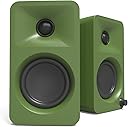
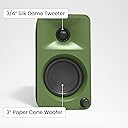
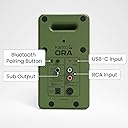
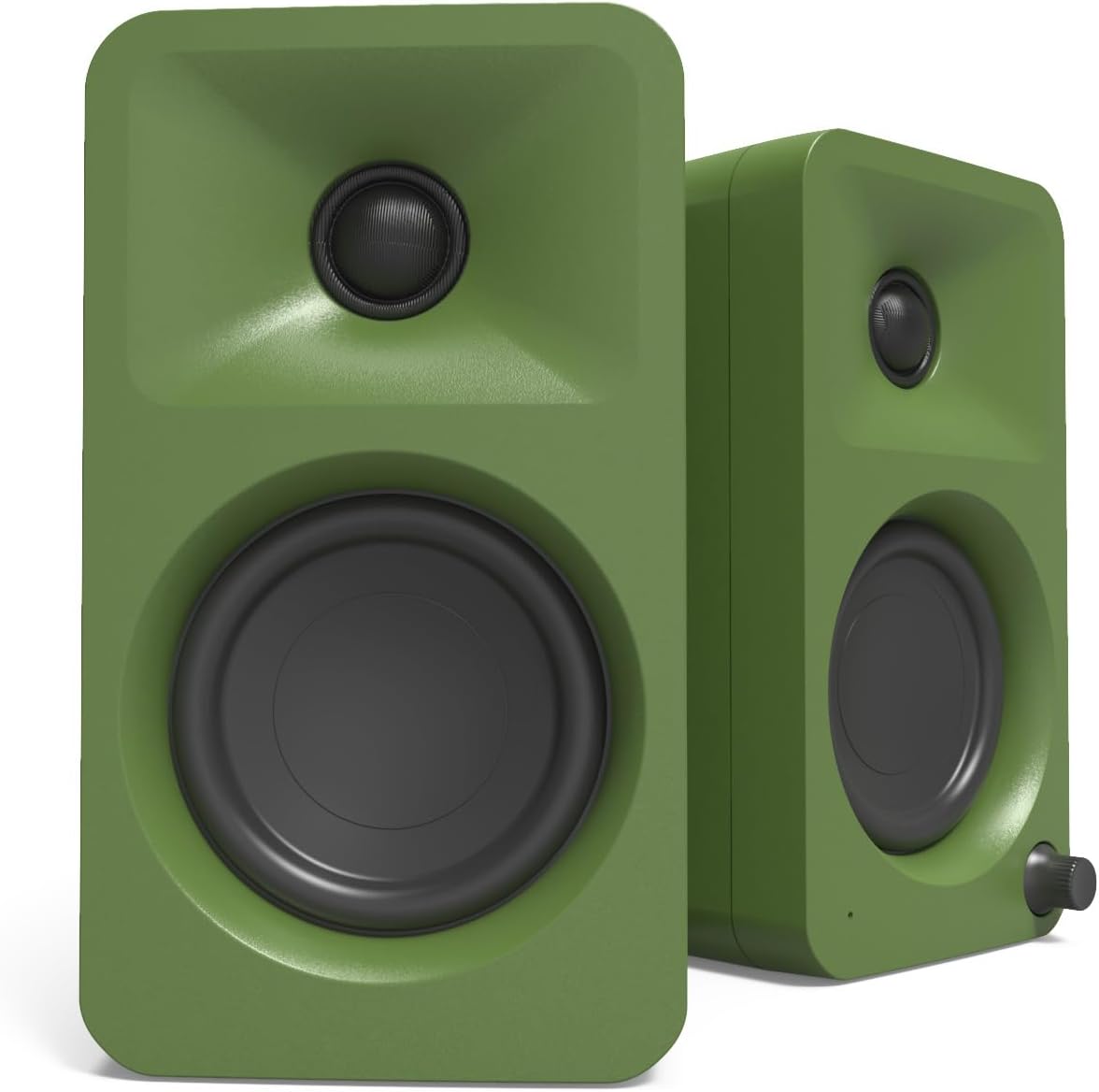
The Kanto ORAMN 100W Powered Reference Desktop Speakers combine bi-amplified Class-D power with DSP tuning to deliver near studio-quality sound from compact 3” woofers and ¾” silk dome tweeters. Featuring Bluetooth 5.0, USB-C, and RCA inputs, these speakers offer seamless connectivity for digital and analog devices. An automatic 100 Hz crossover optimizes subwoofer integration, enhancing clarity and volume without distortion. Designed for desktop use with rear mounting options, the ORA speakers provide a sleek, modern aesthetic in Moss color, perfect for professionals seeking premium sound in a minimal footprint.


| ASIN | B0DSQSZ7V9 |
| Additional Features | 100W Peak Power, 3" Paper Cone Drivers, 3/4" Silk Dome Tweeters, 70 Hz - 22 kHz Frequency Response, Bluetooth® 5.0, USB Type-C, and RCA Inputs |
| Age Range Description | Adult |
| Antenna Location | For Computers |
| Audio Driver Type | Dynamic Driver |
| Audio Output Mode | Stereo |
| Best Sellers Rank | #149 in Computer Speakers |
| Brand | Kanto |
| Built-In Media | 2 Speaker |
| Color | Moss |
| Compatible Devices | Desktop, Laptop, MP3 Player, Projector, Smartphone, Tablet, Television |
| Connectivity Protocol | USB, Bluetooth, RCA |
| Connectivity Technology | Bluetooth |
| Control Method | Touch |
| Customer Reviews | 4.3 out of 5 stars 242 Reviews |
| Enclosure Material | Plastic |
| Frequency Response | 70 Hz |
| Is Waterproof | False |
| Item Dimensions D x W x H | 5.6"D x 3.9"W x 6.9"H |
| Manufacturer | Kanto |
| Model Name | ORAMN |
| Model Number | ORAMN |
| Mounting Type | Desktop | Rear Mounting Hole |
| Number of Audio Channels | 2.0 |
| Number of Items | 2 |
| Power Source | AC |
| Speaker Maximum Output Power | 100 Watts |
| Speaker Size | 6.9 Inches |
| Speaker Type | Reference Desktop |
| Specific Uses For Product | For Computers |
| Tweeter Diameter | 0.75 Inches |
| UPC | 800152722832 |
| Unit Count | 1.0 Count |
| Warranty Description | Two Year Manufacturer's Warranty |
| Warranty Type | Limited |
| Water Resistance Level | Not Water Resistant |
| Wireless Technology | Bluetooth |
| Woofer Diameter | 3 Inches |
G**O
Excellent desktop speakers
The Kanto ORA is a really good pair of desktop speakers. They have a pretty flat and laid-back sound. The bass with the unit itself sounds good, but it still doesn't produce much sub-bass (as expected of a speaker this size). If you don’t listen to a lot of bass-centered tracks, then you would not necessarily need a subwoofer with this. Connecting a subwoofer (I used a Kanto Sub8) activates the crossover (at 100Hz), allowing the ORA to focus its power on the mids and highs, producing a well-rounded, full-range sound. I bought this to replace my KEF Q100 + Pioneer SW-8MK2 + SMSL AD18 DAC/AMP setup, which was taking up a lot of space on my desk. Using a passive speaker also meant adding an amplifier and all the additional wires required, making the desk a mess. The ORAs are tiny in comparison and are powered, simplifying the setup considerably. One huge quality-of-life improvement for me with the ORA is that I can change its volume at the OS level (via keyboard) like an analog connection, even when connected via USB. I do this hundreds of times a day and don’t have to take my hands off the keyboard now. It is still a little confusing as the speaker volume (controlled via knob) and system volume are independent, and I am not sure how it’s affecting the subwoofer volume (it was at 50% with the SMSL, but I had to reduce it to 25% with the ORA). It took me a day or two of tinkering to get the volumes at a balanced state. @Kanto, if you are reading this, I hope you can share a guide on how to balance system, speaker, and subwoofer volumes, especially within the Kanto ecosystem. After dialing in the ORA and the Sub8, I compared it to the larger KEF system, and it was a tough one. The KEF, thanks to its coaxial drivers, sounded more magical than the Kanto. The imaging on certain tracks is out of this world, but on the flip side, they do sound thin and fatiguing with other songs (even though they are not bright speakers). The Kanto, on the other hand, sounded more laid back and neutral, which makes it a bit boring but more consistent across the range of songs I tried. At the end of the day, I prefer and am keeping the kanto setup for the desk, due to its size, laid-back neutral sound, simplicity, and other convenience features. The ORA feels well-tuned and optimized for the desk. If you want a speaker that you would like to move from the desk to the living room when needed, there are many other excellent (but larger) speakers at this price point that might serve you better. If this was priced around $249, it would have been a no-brainer recommendation.
B**E
These speakers are incredible. They fit easily on my desk and they punch WAY above their size.
Pros: The sound stage is one of the best Ive ever heard. Bass is spot on and the high and mid are very clear. Very good looking, amazing size for desktop use and fits under my monitors when they are up all the way on their stands. They can get very loud and do not distort their sound on nearly full volume. Cons: They like to be a bit louder than some other speakers to really shine. I think they like having a little extra power to get the drivers to where they want to be. That being said they still sound fantastic at lower volumes, they just like to be louder. I got mine for $249 USD. That is not cheap, but honestly these things are probably worth way more than that. Their material is a plastic, but it is good quality plastic. Edit: one additional con that is very minor. The volume knob spins infinitely in either direction. It has an LED that flickers when you turn it, but has no indicator that it is at minimum volume (0 sound) or max volume. This is an issue for me because I make sure my speakers are at 0 during work calls just to prevent interruptions, and there is no visual way to confirm they are muted. I would recommend the LED indicator have a different color, or have the volume knob stop turning if volume is 0.
W**W
Tips for getting the most out of these speakers + Review
I bought these specifically for the depth of the bass they can produce for their compact size, back when they originally released. On a 42 inch desk they still look noticeably large but not comically so, about as large as I would go for a small desk. First off, if you have a desk made of wood or plywood then I HIGHLY recommend using the SP9 stands, as using no stand or the S2 stand will causes early reflections which negatively impact the imaging. The RCA input on these have identical clarity to using a digital input, meaning they're good sounding even without the DSP (so don't fret if you have an analog audio setup like me, you aren't missing out on too much). One other tip I highly recommend trying, is to play around with how far away you have these speakers distanced from your wall. Initially I was disappointed in these speakers because they didn't sound as clear as I hoped, but after moving them farther away from my wall, the the clarity improved to a genuinely surprising degree and my opinion on them changed! The manual recommends these to be 20-25cm (about 8-10in) away from the wall, but I found that to be too close for sound quality sake and currently I have them set 13.5in away from the wall; Which is the farthest I could set them from my wall without ruining the bass performance. Make sure you have them aptly distanced apart from each other as well, not too close together. And atlas, the bass - they have generally a flat sound profile, but if you pair these speakers with a tone control (I'm using a Schiit Loki+ for example) or EQ them, you can raise the lower frequencies without ruining the sound clarity as long as you don't bloat the mid-bass. After raising said low frequencies, raise the volume higher than you normally have it set to. With these tweaks, I found that my eardrums could feel a thump come from the speakers during gunshots during gaming use, instead of just simply hearing the sound of a gunshot. Granted, these are certainly no bass cannons, it's a light thump that's just strong enough for your eardrums to feel the bass.
L**V
Make sure to run an EQ if you want to enjoy your music through these.
If you’re planning to use these as PC speakers, I highly recommend installing Equalizer APO right away. Seriously. It makes a massive difference, and I would not suggest running these speakers without some kind of EQ. I’m generally a fan of these speakers. I’m not an audiophile, but I do care about clear, balanced sound. Out of the box, though, I was honestly pretty close to returning them. Without EQ, the soundstage feels very flat, like everything is coming from the same place instead of having any real depth or separation. On top of that, they sound very muddy, especially with rock or metal. Once there are a lot of instruments happening at the same time, everything blends together and it starts to sound dirty. To be fair, these are reference speakers, and I probably should have taken that more into account before buying them. They are clearly tuned to be neutral rather than exciting right away. That said, there are some real positives even before EQ. The bass response by itself is surprisingly strong and solid for small four inch drivers, and it is perfect for an apartment setup without shaking the walls. The highs on their own are also very clear and crisp without being overbearing or shrill. The speakers do not sound hollow at all, which I really appreciate. Once I installed Equalizer APO and boosted the highs and lows a bit, everything came together. The soundstage opened up, instrument separation improved a lot, and the overall clarity jumped way up. With a few EQ tweaks, these speakers end up sounding very well balanced. Because of that, I decided to keep them. With EQ, they sound great for listening to music, watching movies, and even playing games. Without EQ, I really would not recommend them unless you're looking for studio monitors. One small but annoying thing to note: the speakers are not labeled left and right. The one with the volume knob is the left channel. If you are like me and running these to a PC, you will probably put that speaker on the right side closest to your tower so you do not have to run a long USB C cable across your desk. The downside is there is no built in way to swap channels on the speakers themselves, so you will need software like Equalizer APO to reverse them. Overall, these are very good value for your dollar. They absolutely need EQ to shine, but if you are willing to do a little setup, they become a really well balanced set of speakers for everyday use.
B**E
Fantastic Speakers — And Yes, the Pink Makes Me Even Happier
Amazing speakers—especially at the sale price I paid! Tremendous, authentic sound quality without any coloration, which is exactly what I look for in a speaker. I want to hear audio as the creator intended, not overblown highs or lows. Because these speakers produce a flat response (and this is a good thing), the highs and lows stay smooth and aren’t fatiguing over long listening sessions. Bluetooth pairing works fine—though I don’t normally use it—and the USB‑C input works flawlessly with my setup. They get surprisingly loud for their size without distorting. They feel solid and well‑built, not like the flimsy plastic you get with many desktop speakers. I also own another pair of Kanto speakers, and based on that experience, the overall quality of Kanto products is exceptional IMHO. Add to that, these speakers came in pink—at least before I purchased one of the last pairs—and you have one happy girl. Even if you can’t get them in pink, these are fantastic speakers for your computer desk. My development and creative work, media, and games have never sounded better. I’m finally hearing content close to what the creator intended, rather than the exaggerated or masked sound you get from so many other speakers. Compared to my previous desktop speakers, these reveal details I didn’t even realize I was missing instead of the muddied mess those older speakers produced. My desk has never looked or sounded better.
R**X
Lovely sound and stylish design
These were my first set of nice desktop speakers and they blew me away. They are more compact than I expected, and when paired with stands, look great on my desktop.
R**E
Disappointing Quality for the Price – Wouldn't Recommend
I recently purchased the Kanto Ora in pink and had high hopes for this speaker, but unfortunately, it didn’t live up to expectations. First off, the Bluetooth connection was a headache. It took multiple attempts to get it to pair, and even when it finally did, the connection wasn’t always stable. You’d think for $349, basic functionality like this would be smoother. That said, the bass response was surprisingly solid. For a speaker of this size, it packs a punch in the low end, which was one of the few things I actually enjoyed during testing. It really fills the room, and if you're a fan of bass-heavy music, it does well in that department. However, the speaker's build quality left a lot to be desired. The plastic cabinet feels cheap, and the “pink” color is way off. It’s more of a beige or dirty white, which was really disappointing considering we were hoping for something that actually looked pink. Plus, the finish scuffs ridiculously easy, so I can only imagine how rough it would look after a few months of regular use. For this price point, the external power supply is another letdown. It feels like they cut corners here, and I would’ve expected something built-in and more robust for a speaker that’s being marketed as premium. Ultimately, we’re returning it. The Ora may have potential, especially if you're just looking for a speaker with decent bass, but it’s just not delivering on the overall quality or design you’d expect at this price.
B**S
Needs EQ to fix muffled vocals. Not "DSP Tuned reference quality"
Pros: - Compact design with decent bass (50–70 Hz) for the size - Built-in USB DAC ensures low-noise PC connectivity - Flat base and treble - Sounds acceptable—but only after applying EQ to correct vocal issues Cons: - Muffled Vocals: Voices sound as if underwater, with a noticeable midrange abnormality (confirmed using a UMIK-2 mic). Despite being marketed as “DSP tuned” and “reference quality,” the speakers require careful manual EQ to fix this flaw. - Limited Connectivity: EQ fixes work only via RCA or USB; Bluetooth (which is limited to SBC, no AptX) won’t apply EQ unless you use a phone app like SpotEQ31. - Harsh Treble: Sibilance makes strings sound scratchy unless corrected with treble roll-off in the EQ. - Channel Layout: The main speaker is always on the right, with no ability to swap. - Paper Cone Woofers: These may compromise both sound quality and longevity. Not acceptable at this price. EQ Adjustments: Preset 1 – Correcting Vocals & Midrange Defects: 20 Hz: 0dB 25 Hz: 0dB 32 Hz: 0dB 40 Hz: 0dB 50 Hz: 0dB 63 Hz: +0.5dB 80 Hz: +1dB 100 Hz: +0.5dB 125 Hz: 0dB 160 Hz: 0dB 200 Hz: 0dB 250 Hz: 0dB 315 Hz: 0dB 400 Hz: -1.7dB 500 Hz: -2.5dB 630 Hz: -1.8dB 630 Hz: -0.9dB 1 kHz: +1.4dB 1.2 kHz: -1.4dB 1.6 kHz: +1.1dB 2 kHz: +2.6dB 2.5 kHz: +2.6dB 3.1 kHz: +2.2dB 4 kHz: +3.5dB 5 kHz: +1.5dB 6.3 kHz: 0dB 8 kHz: 0dB 10 kHz: 0dB 12 kHz: 0dB 16 kHz: 0dB 20 kHz: -2.5dB Preset 2 – Normal Vocals and Midrange, Enhanced Bass & Treble: 20 Hz: 0dB 25 Hz: 0dB 32 Hz: +1dB 40 Hz: +2dB 50 Hz: +3dB 63 Hz: +3.5dB 80 Hz: +4.5dB 100 Hz: +3.3dB 125 Hz: +1.4dB 160 Hz: +1.4dB 200 Hz: +1.4dB 250 Hz: +1.1dB 315 Hz: 0dB 400 Hz: -1.7dB 500 Hz: -2.5dB 630 Hz: -1.8dB 630 Hz: -0.9dB 1 kHz: +1.4dB 1.2 kHz: -1.4dB 1.6 kHz: +1.1dB 2 kHz: +2.6dB 2.5 kHz: +2.6dB 3.1 kHz: +2.2dB 4 kHz: +3.5dB 5 kHz: +1.2dB 6.3 kHz: +0.9dB 8 kHz: +1.2dB 10 kHz: +1.3dB 12 kHz: +2.0dB 6.3 kHz: -2dB 16 kHz: +1dB 20 kHz: -3dB 20 kHz: -5dB Using either preset significantly improves the sound by eliminating the muddled vocals. Preset 2 is better for music, preset 1 is better for audiobooks and youtube. Overall Verdict: While the Kanto ORA’s compact size and basic sound performance are appealing, its factory DSP tuning falls short—forcing you to manually EQ to fix muffled vocals and harsh treble. It is perplexing that Kanto did not use its DSP to calibrate the speakers properly. That's a huge missed opportunity. I am not sure what Kanto audio engineers were doing here. They could have used a basic UMIK-2 calibration mic to see the easily fixable flaws. I hope they can release a firmware update to fix the sound signature. At this price, bluetooth codecs like AptX (or Snapdragon Sound) and proper out-of-the-box EQ should be standard. If you have room on your desk, alternatives such as the JBL 305 MKII offer gold-standard performance, backed by superb audio engineering, without needing manual EQ. Consider the Kanto ORA only if compact speakers are a must and you’re willing to invest time in fine-tuning the sound with EQ software.
Trustpilot
3 weeks ago
1 month ago