Loving Frank: A Novel
Product ID: 6984580
📖Deeply researched historical narrative
❤️Scandalous, passionate love affair
🏛️Iconic Frank Lloyd Wright architecture
Desertcart purchases this item on your behalf and handles shipping, customs, and support to Austria.
📚 Where passion meets architecture — the love story that reshaped history.
Loving Frank is a critically acclaimed historical novel by Nancy Horan that vividly reimagines the scandalous love affair between iconic architect Frank Lloyd Wright and feminist Mamah Borthwick Cheney. Winner of the James Fenimore Cooper Prize, this richly detailed narrative explores themes of love, societal rebellion, and artistic genius, making it a must-read for fans of historical fiction, architecture, and feminist literature.


| Best Sellers Rank | #46,788 in Books ( See Top 100 in Books ) #67 in Biographical Historical Fiction #106 in Biographical & Autofiction #1,767 in Literary Fiction (Books) |
| Customer Reviews | 4.3 out of 5 stars 5,535 Reviews |
P**S
Complex, well-developed characters
Set in the first decade of the 1900‘s, Loving Frank, by Nancy Horan is part soap opera, part Architectural Digest, part travel guide and a must read for feminists and Frank Lloyd Wright-ophiles alike. It’s easy to see how the uber-talented Wright struggled to make a name for himself and his Organic Architecture in the stifling mindset of the early 20th century. Wright, who liked to say he saw God in nature, strove to make his buildings so in tune with their natural surroundings it looked as though the buildings were birthed from the very ground upon which they sat. It’s also easy to see how an intellectual feminist, suffragette and very married woman, Mamah Borthwick Cheney, gave up everything she thought was hers: devoted husband, Edwin; two beautiful children; a warm relationship with her sister, Lizzie who had sacrificed much to put Mamah through college; and a cushy, affluent lifestyle in the suburbs of Chicago; and threw in her lot with Wright. Mamah was married -- one of the few options open to women at the time -- but not terribly happy. She’d turned over the raising of her children to their nanny and busied herself with women’s issues and lectures at the University, but couldn’t really find her niche. She and Edwin were more like partners who ran a home and raised children together rather than soul mates. Along came Wright, flamboyant, eccentric and completely self-assured in his craft, despite the lack of a formal architectural education, with charisma and genius out the wazoo. Married at the immature age of 19, Wright had six children with his wife, Catherine, and while Catherine threw herself into their children, Wright threw himself into his work and giving “his gift” to the world. Mamah loved Edwin in a way, but Frank’s marriage to Catherine had been a shell for years. Still she would not give Frank a divorce. Frank and Mamah’s relationship started innocently enough, he the up and coming architect with wild new ideas, and she the sublime intellectual with her feminist ideals and steady husband, the clients, yet the magnetism between Frank and Mamah was inescapable. A spark ignited, one that almost sent the lovers up in flames after the media in Oak Park got wind of the scandal They tried to fight it for the sake of their families, but the pull was too great so they ran to escape, these two highly individualized citizens of the world, to Germany where Mamah met the Swedish writer and feminist, Ellen Key a meeting that again altered her life. Mamah took a solo trip to Sweden to learn the language as a prerequisite to being hired to translate Key’s works into German and English and then she and Frank were in Paris, and Italy, and Japan and with much trepidation on Mamah’s part, finally back home to Wisconsin, Wright’s boyhood home, where he built Taliesin East, an architectural marvel and the first place since childhood that Mamah truly felt she belonged. At the time it was the consummate dwelling and encompassed all Wright believed about organic architecture. Perhaps in the 21st century, the lovers could have lived at Taliesin in peace, but the early 1900’s was not a broad-minded, forgiving time. That the book ends in tragedy is both shocking and expected. The world wasn’t ready for this kind of love, and maybe not even this kind of architecture, but their love, like Nature herself, was resilient, and the legacy lives on through Wright’s masterpieces, and now, Horan’s writing.
S**N
Richly imaginative
In 1972, I attended a conference at Frank Lloyd Wright's famous house, Taliesin, and I've carried a vision of it ever since: its startlingly flat planes, the Oriental lines of its roofs, the way it snugs into the side of a Wisconsin hill. And indoors, the Zen-like simplicity of furnishings, the wide windows that open onto green landscape, and the glowing walls that seem to shimmer with their own inner light. I can understand why Mamah Borthwick Cheney fell in love with its architect and loved him with an outrageous passion until she died. I may have been a little in love with him myself when I left that remarkable house. Loving Frank is a fictional recreation of the true story of the adulterous affair with Wright that pulled Mamah Cheney away from her young children, her husband, and their prosperous, comfortable life in Oak Park, Illinois. Wright himself was married, the father of six children, and a rising young architect. The two were drawn together in 1903 when Wright designed a house for the Cheneys. Mamah Borthwick was a scholar and feminist when she married Edwin Cheney, and one of the things Nancy Horan does best in this tumultuous novel is to show how the egotistical, charismatic Wright reawakens her desire to be more than simply a mother and wife-to dream dreams impossible for those whose existences are constrained by convention. Horan also brings to life Mamah's terrible dilemma: how to create and sustain a life based on passion when that means giving up her two children, whom she also deeply loves. And Horan tellingly illuminates the conflicted relationship between Mamah and Ellen Key, a Swedish feminist and writer whose liberal ideas about sex, marriage, and child-care were far ahead of her time. Loving Frank is all the more remarkable because it is Nancy Horan's first novel. The pace and intensity may lag a bit in the middle and drop off after the tragic events of 1914. And I might have wished for a more detailed documentation of sources. Still, these are minor reservations about what is overall a fine achievement, a rich, compellingly imaginative work that allows us to see into the private emotional lives of two intriguing people: the man who significantly influenced American architecture for over fifty years, and the woman who loved him. It's a book that will be remembered. Susan Wittig Albert is the author of several historical novels, including Death on the Lizard (Robin Paige Victorian Mysteries, No. 12) . A longer version of this review may be read on the Story Circle Book Review website.
V**G
Mamah May-muh Martha!
Mamah, May-muh, Martha! She was born at the wrong time and wrong place! She was educated in Ann Arbor Michigan at the turn of the 20th century, had the pedigree of the upright Midwestern railroaders who valued work and honesty, married a decent and loving businessman-gregarious provider, had the tenacious intellect of a sharp librarian-school marm and suffragist-feminist, was a "looker", but she was too crazy in love with a man who would have given her the world but could not. Darn! Mamah Cheney could have had it all but she was sideswiped by her lust for life on the fastlane, the big ego of Frank Lloyd Wright, the promise of being the polyglot sidekick of Swedish born suffragist Ellen Key, and in the end, she had nothing for herself and her two (three including her orphaned nephew) children who she left behind to find love and fulfillment with the iconic architect. This fictional account of a love story gone tragically wrong and painful, leaves me reeling with wonder, I cannot help but raise some points that challenge thinking outside the home, domesticity, community, society and even world affairs. First of all, can a mother really be so wildly in love so as to leave her very young children behind to traipse all over Berlin, Italy and Japan to pursue finding herself and her paramour's budding career? Given that Frank Lloyd Wright was really brilliant (after the fact), was he really worth it? Her marriage to Edwin Cheney was flailing but was she really really that unhappy? She had little Martha with Edwin while she was consorting with Frank! I think it was a case of moral fiber fraying and falling dangerously to an abyss that she couldn't get enough fortitude to figure herself out of. Granted that it was the zeitgeist of women's emancipation and feminism, the attendant focus on lack of rights to get out of bad marriages, lack of equal pay for men and women, identity issues surrounding motherhood and caring for children, did Mamah really blaze into the forefront to liberate women of all ages for all time? Or did she just end up exonerating herself? Was her sacrifice worth the cause? Her alliance with Ellen Key's cause was almost a chance event in her search for herself and her raison d'etre for villyfying her home and turning her loved one's lives upside down. The Swedish suffragist had modern ideas about women's morality and new feminist roles, I think Mamah was eagerly quick to translate Key's ideas as seen through her private moral dilemma, adultery. In Berlin, Key was tagged as the "wise fool of the feminist movement", vacillating between being a protector of children and the essence of mothering as a human species-forwarding endeavor versus a woman's fulfilling her happiness through achieving her personhood through being allowed the choices and liberties to propel one's potential. I think Ellen Key was wise, period. In Nancy, France, she had told Mamah to find herself first, without Frank, and pursue her own niche in the world, otherwise Frank will just be another "diversion". It was Mamah who could not find her moral compass and was torn, time and time again between her love for her offspring and her love for Frank and herself. It is a pity that her "soulful" translations of Ellen Key's work coulda-woulda been heard by a bigger audience had she sent it to The Atlantic Monthly and not published with those who were affiliated with Frank Lloyd Wright's folios. Horan's skill in writing allowed for her characters to be heard, to be seen in both good and bad lights, she allowed all their foibles, their humanity to filter through the puritanical times when society was quick to judge moral turpitude. She allowed her readers to look for understanding and to be compassionate; that her characters were flawed, slaves for higher ideals of truth and beauty and most of all, love. But in being so, they chose paths that were dangerously selfish and hurtful to others. I will not be quick to say that the tragedy of Mamah's end in Taliesin is divine retribution, but simply a horrific event in the life that already has gone through baptism by fire, a fall from grace that happens when people are just going about their daily lives because people are the way they are, fallen from the very start.
R**G
If you want to get to know Frank Lloyd Wright...
It's an interesting story with an epic ending. Fictional but unfortunately based on true events. I really wanted to know as little as possible going into this book. I was interested in the subject matter (personal side of Frank Lloyd Wright) and have found that you can learn so much about the leading male figures that we know from history through the eyes of their female partners. I did know that the female in this novel is not Franks wife, but his mistress. Throughout the whole book, I found her highly unlikeable. She made such awful decisions and basically abandoned her friends and family. It was well written though and I do appreciatethe perspective of where she was coming from. I countinued to read and at a certain point just wanted it to end so that I could move on to my next book. Well...then came the ending that I didnt see coming. At all. I will not ruin this part, but I will say that the last 12% or so (accordingto Kindle) of the book was so jaw dropping and disturbing that I literally couldnt sleep the night I finished it. I find it extremely fascinating that this memorable part of Frank's life is barely is mentioned in biographical the works about his life. The story will stay with you, but I would not be able to recommend it to my friends or family members.
C**N
This book is phenomenal!
You can imagine every page! Strong character development, beautiful detail and a gripping story. such a lovely book. I could see this one becoming a movie. Kudos to the author.
A**R
A very engaging story
I wish I could give this book 3.5 stars, but I will be generous and round it up to four. Here's why: First of all, I didn't know anything about Frank Lloyd Wright's personal life until I read this novel, which is based on true events. From the very beginning, I was completely swept away by Frank's relationship with Mamah Cheney, the wife of one of Frank's clients. Both Frank and Mamah were trapped in loveless marriages, and they ultimately sacrificed everything in order to be together: leaving their spouses, their children, and their credibility (infidelity was a big social taboo back in the early 1900s). Although society pegged these two lovers as wicked adulterers, I was moved by their desire to share their lives together. They thrived off each other not just physically, but they had a deep intellectual connection that seemed to justify their choice to be together. However, about halfway through the book, I started to get annoyed with Mamah. She became so self-righteous and full of herself that I started hoping that Frank would tire of her and leave her. It was frustrating to watch her be so incredibly judgmental of everyone around her, when I felt that she never fully took full responsibility of her own actions and the implications they had on her family. It was supremely irritating. Then, the ending of the book caught me completely off guard. I did not see it coming at all, and it was shocking and incredibly sad. It made me stop feeling completely irritated with Mamah as I had through most of the book. I really enjoyed this novel. "Loving Frank" is very well-written, with many engaging characters and storylines. I find myself wanting to learn more about these people and plan on reading more books about their lives.
C**B
Would Make a Great Movie
I found this story thoroughly fascinating. It is not a book about architecture but about a very famous married architect that had a torrid affair with a married, fairly wealthy, very educated woman that made headlines in its day 1911-1914 in Chicago. If this happened now, it would be plastered all over the tabloids, internet and TV! It is a story of lust, love, abandonment, travel and living in Europe. It is about the suffragette movement, the European contemporary art movement (Bauhaus). But is a story of 2 very selfish people, self-absorbed with little regard for the families they are leaving behind in their quest for Frank L Wright's success and her "finding herself", could she live with him? like a little trial run. She wouldn't want to leave her comfortable family with 2 young children officially if this romance didn't work out. As exciting as this story is, based upon true events, it was terribly sad to see how many lives were ruined and scarred from their jaunt to Berlin and other European places trying to escape the publicity they were creating. All along they felt they were being tormented and harassed by the press, that they were the victims. This book appears to be well-researched for the actual events of the two main characters even though it is a novel. I will not spoil the ending, but this must have been some scandal in its day especially for anyone in Chicago during that time. I would highly recommend this as a very interesting book, a piece of our architectural history and the precursor to the "women's movement" and "women's liberation" ideals.
S**N
A great choice for book clubs
Brief summary, no spoiler - This is the fictionalization of the affair between Frank Lloyd Wright, and Mamah Borthwick Cheney, that started in the early 1900s. We hear about Mamah's life, and see the story through her eyes. Both FLW and Mamah left their respective families for each other, and did so in a time and place that showed no mercy for this type of action. While people in Europe were more welcoming to them, in America, their relationship was scandalized. The fact is that the story (and the relationship) ended by a shocking event, yet for me, the draw of this book was Mamah's story. I thought the book was well written, and it was definitely a page-turner. I could not wait to get back to it when I put it down. My only criticism is that in order to tell the story, the author obviously had to take great leeway in trying to put herself in Mamah's shoes (and mind.) On the whole, the story worked, but I did find myself frustrated at points because I thought that her attitude and thoughts were at times inconsistent, almost forced, and used more as a way for the plot to proceed. All in all, highly recommended. I had never heard of Mamah Cheney before this, and her life, and relationship with FLW makes for a very interesting story. Shocking denouement withstanding. Also, highly recommended for book clubs, because I guarantee you, everyone is going to have a different view of Mamah, and different opinions about the decisions she made.
J**B
ONE OF THE BEST BOOKS I HAVE EVER READ!
This is the story of the scandalous affair between the renowned architect, Frank Lloyd Wright and his mistress, Mamah Borthwick Cheney. The story is told from Mamah's perspective. It was 1899 in Oak Park, Illinois, when Mamah Borthwick Cheney and her husband Edwin Cheney returned from their honeymoon. Edwin was a successful engineer, President of Wagner Electric Company. He was a kind man and rarely complained. All he wanted in life was a home full of children, friends and good times. Edwin was the one who pursued Mamah until she agreed to marry him. Mamah was an educated woman of thirty and she was a translator who spoke several languages. They moved into the house she grew up in called Queen Anne. Her father was very lonely since the death of Mamah's mother, so he was happy to have them. He continued to work. Mamah had two sisters, Jessie and Lizzie, who came to visit their father. One day, when her father returned from work, he went to take a nap and never woke up. A year later, her sister Jessie died giving birth to a baby girl, who was later named Jessica. The father of the baby could not properly care for the baby, so Edwin, Mamah and Lizzie would bring up the baby girl. Soon after, Edwin and Mamah had their own child, a baby boy named John. Edwin wanted a new and modern home, so he commissioned the renowned architect, Frank Lloyd Wright to design the home. Mamah and Catherine Wright belonged to the same club. Mamah spoke with Catherine and she arranged a meeting for Edwin and Mamah at Frank's studio. When they showed up at Frank's studio, they saw a very handsome man with wavy hair and intelligent eyes, who was around thirty-five years old. He was known to people as a man who was eccentric, arrogant and narcissistic. The main architect, who worked for Frank was a woman named Marion Mahoney. Together they worked on a sketch and by the end of the afternoon, Edwin and Mamah had a sketch they took home. The house would have two levels. They would live on the upper level and Mamah's sister, Lizzy,would live downstairs, the basement. Frank Wright had designed a house around the existing trees on the lot. The dining room, living room and library flowed into one another. A great fireplace would stand at the heart of the house. There would be window seats all around that would accommodate a crowd. There would also be a wall of stained-glass doors across the front of the house that would open onto a large terrace surrounded by a brick wall for privacy. Mamah was the one who worked with Frank at his studio and by the time Edwin and Mamah moved into the house, the Wrights had become their friends. Frank Wright called the house "the good times house." It was during the construction of the house that Frank and Mamah became attracted to each other and ended up having an affair. Mamah was in love with Frank. Whether Frank loved Mamah would be debatable. Mamah wanted more out of life than being a mother. She was an independent woman, well educated and a feminist. She wanted her freedom, so that she could improve her status as a translator and become well known. Frank and Mamah decided to leave their marriages. Frank had six children with Catherine and Mamah and Edwin now had two children, John and Martha. So Frank and Mamah took off for Europe abandoning their children and spouses. This move was the talk of the town and their lives would never be the same. You will be amazed and shocked as you read on. This novel is about love, motherhood, loss, adultery and the need to find one's personal strengths at all costs. Nancy Horan is an outstanding and gifted writer. Loving Frank is her debut novel. Her characters are strong and full of energy. Ms. Horan grips you with her eloquent prose until you are in for the shock of your life. This book is unforgettable. Loving Frank is one of the best books I have ever read. I highly recommend it.
H**G
Einfühlsam, Spannend, Geistreich
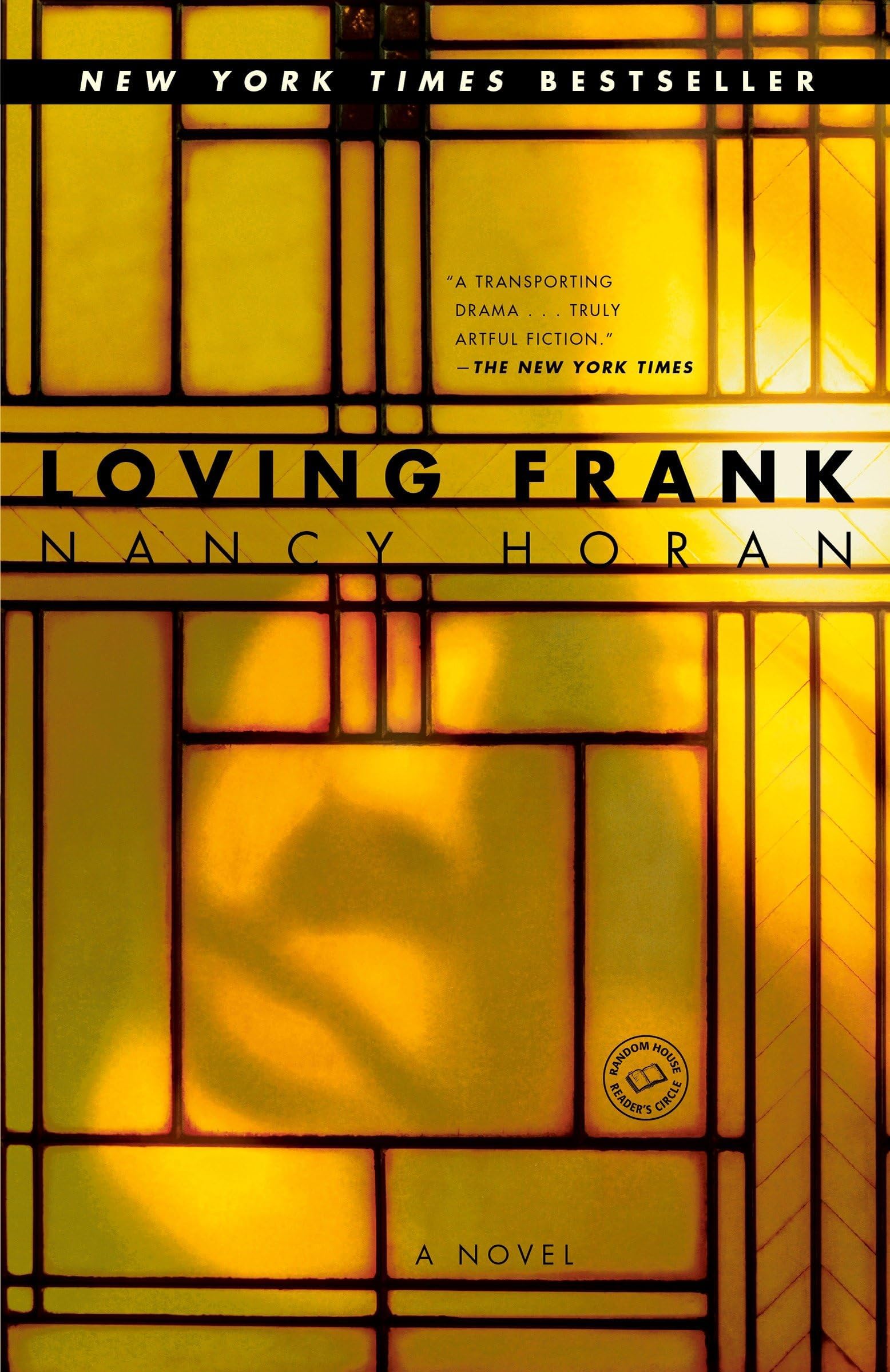
Oak Park, Illinois, USA, Anfang des 20. Jahrhunderts. Mamah Borthwick verlässt Ehemann und Kinder, um mit einem anderen Mann zu leben. Mutig? Verwerflich? Jedenfalls damals ein Skandal. Nancy Horan schildert den Ablauf sehr einfühlsam, spannend, nachvollziehbar, detailliert ohne Übertreibungen. Man hat oft das Gefühl, danebenzustehen, fast schon Gedanken lesen zu können. Und Mamah Borthwicks Liebhaber ist Star-Architekt Frank Lloyd Wright, der ebenfalls Frau und Kinder sitzen lässt. Horan erzählt eine wahre Geschichte, ausstaffiert mit erfundenen Details und Dialogen. Man lebt wirklich mit den Figuren, kennt ihre Spleens und ihre Räumlichkeiten, ahnt ihre Reaktionen und Gedanken im voraus. Alles klingt wie eben erst passiert und völlig plausibel. Oder fast plausibel. Die Briefe und Dialoge wirken manchmal zu geistreich, zu elegant, zu komponiert, aber das steigert den Unterhaltungswert dieses historischen Romans von 2007, bei dem fast jedes Wort perfekt sitzt. Mitunter packt Horan etwas zu viel Bedeutung in einzelne Gespräche, wenn sie die Gefühle der Hauptperson bloßlegen will; oder in einzelne Ereignisse, wenn Mamah Borthwick sich selbst mit der Gretchen-Figur in einer Faust-Oper vergleicht. Das Thema Frauenbewegung erscheint etwas leitartikelhaft. Freilich, Horan beschreibt zwei hochintelligente, kultivierte, gebildete und zugleich sehr emotionale, kreative Menschen, die sich unerschrocken gegen den herrschenden Komment stellten - ein dankbares Thema für eine interessante Erzählung. Horan erzählt im Prinzip chronologisch, nutzt aber vor allem in der ersten Buchhälfte viele Gelegenheiten zu schnellen Sprüngen in die Vergangenheit, um dann gegen Ende des (stets kurzen) Kapitels wieder in die erzählte Gegenwart zu schwenken. Das wirkt auf den ersten Blick kurzweilig und elegant, verwirrt aber öfter auch, wenn sie Geschehnisse mischt, die mehrere Jahre auseinanderliegen. Allerdings gibt es fast keine Andeutungen auf noch bevorstehende Ereignisse. Ansonsten wirkt der Roman blendend konstruiert: Dialoge, Gedanken, Zusammenfassungen und Detailschilderungen fließen nahtlos. Verblüffend, wie Deutschland in diesem Roman erscheint: Bei ihren Berlin-Aufenthalten 1909 und 1910 empfindet Borthwick Deutschland offenbar als toleranten, freigeistigen Platz, in dem auch Exzentriker in der Gesellschaft willkommen sind. Einmal sitzt sie unweit von Kaiser Wilhelm im Hotel Adlon. Horans Buch verkaufte sich gut in den USA und erhielt gute Besprechungen. Die meisten Profi- und Hobby-Rezensenten diskutieren jedoch vor allem das Leben der Figuren - auch das Ende wird genannt - und gehen kaum auf Qualitäten oder Schwächen des Romans ein. Aufmerksam wurde ich auf Horans Buch erst durch die Lektüre von T.C. Boyles The Women (vier Sterne), ein historischer Roman, der ebenfalls von Frank Lloyd Wright und seinen Frauen handelt. Offenbar wussten Boyle und Horan nichts voneinander; Boyle wurde später fertig und las Nancy Horans Version der Geschichte bewusst nicht. Beide Autoren kamen auf ihr Thema, weil sie täglich Lloyd-Häuser sahen: T.C. Boyle bewohnt ein Wright-Haus in Südkalifornien; Horan lebte in Oak Park, Illinois, das Wohnviertel mit der höchsten Dichte an Wright-Häusern, einschließlich der früheren Wohnhäuser von Wright und Borthwick. Meine Taschenbuchausgaben der beiden Bücher haben ähnliche Titelbilder, die mit dem typischen Stil der Wright-Fenster spielen. Im Vergleich zu Boyle wirkt Horans Roman reifer, sensibler, er befasst sich etwas mehr mit Wrights Architektur und zielt weniger auf Knalleffekte. Horan schildert weit detaillierter, weil sie einen kürzeren Zeitraum als Boyle behandelt. Sie skizziert auch Nebenfiguren sehr plastisch, aber nicht effektheischend, und sehr intim beschreibt sie die Beziehung zwischen Borthwick und ihren Kindern, die Borthwick zugunsten Wrights verlässt. Ich habe beide Bücher auf Englisch gelesen und hatte bei Horan weniger Vokabelprobleme, weil sie nicht mit Exotikwortschatz prunken will. Meine Loving Frank-Ausgabe von Ballantine richtet sich an Lesezirkel und enthält mehrere kurze Nachworte und ein längeres, interessantes Interview zur Entstehung des Romans. Die Internetseite mit dem englischen Romantitel zeigt historische Fotos und zwei kurze, halb interessante Videos zur Autorin und zu Oak Park.
A**T
Excellent
This is a wonderful, well researched book. A fascinating account of one woman’s attempt to live ‘true to herself’. A feminist before her time who was hounded by the Paparazzi.. This woman’s story made me think of Lady Diana, who suffered a similar fate 90 years later. Based on true events , this book is well written and quite simply riveting. Everyone has heard of Frank Lloyd Wright, but few have heard of his involvement in this tragic tale. I thoroughly recommend it. The author has done a brilliant job, bringing this story to life.
F**G
Gripping, thrilling, a real page turner.
I always enjoy a story that mixes real facts with fiction, especially when the make me want to go and find out more about the protagonists. This one had me on Wikipedia and Google for days, gleaning all I could about Frank Lloyd Wright and his affairs. I'd like to feel this was his one true love because he went on and had several more relationships after her which, when you reach the dramatic end, just doesn't seem possible. I'm really, really glad I didn't know what happened before I read the book - it was a complete shock!
C**N
una pena
Una gran historia muy mal escrita. Incompleta y aburrida, es una lástima porque la historia en si es interesante y es fascinante ver lo que hay escrito sobre ellos en internet.
Trustpilot
3 weeks ago
1 month ago