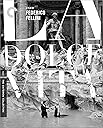
LA DOLCE VITA/BD [Blu-ray]
Product ID: 7660104
Details
- FormatBlu-ray
- GenreDrama
- LanguageItalian
- Runtime1 hour and 46
Desertcart purchases this item on your behalf and handles shipping, customs, and support to Austria.
A tabloid reporter joins the decadent idle rich in Rome. Directed by Federico Fellini. Review: A TRUE CINEMATIC MASTERPIECE gets a 3-DISC TREATMENT: IN A WORD? WOW!!! - Well... the only thing I am not happy about is that I bought the 2-disc version 6 months ago... and now this!!! But anyway... in this era of new-editions-that-just-keep-on-coming-down (LOL) we all should be used to that by now. But basically, this is the same 2-disc edition with a 3rd disc containing extras that will not make me pop up my wallet (mainly because I got european and brazilian Fellini DVDs where I already have those added extras). But still it's great to know that such an important film like La Dolce Vita is getting a 3-disc treatment. I and very very very happy to know the DVD industry does care about the good films... the ones that really matter. This is one of the best and most important films ever made in film history by a director whose (I am sure) command of his art puts him easily at the same level as Hitchcock, Ford, Kurosawa and two or three others. ROME, 1959. The war is a thing of the past. Rome is now a bright city full of stylish, vain, beautiful, rich people parading around exotic nightclubs, private parties and hot spots. The Via Veneto is the place to be seen while driving a big american car. While the moon is high, morals are ... well... low. Marcello (Mastroiani) is a journalist who earns his living writing about the beautiful people. He goes where they go... and boy, how do they go!!! . He knows everybody... and everybody knows him. He may be just a guy earning a living... but he is there in the high life with the ones he write about: rich lonely women starving for sexual adventures, internatonal starlets with nothing to say and big apetite for wild parties, cheated husbands, princes, expensive prostitutes... you name it. He knows them all! But deep down, Marcello is frustrated and unfulfilled. His ambitions of being respected, of having a meaningful job, of leaving that shallow circle are constantly being destroyed by circumstances he cannot control. He is the perfect example of a character unable to make a stand and take control of his own life. For every effort he makes there's always the constant set back to the fact that he is just a stupid, cheap, selfish journalist covering stories that are only meaninful to those he write about... for a day or two. AND YET... it is all there: a woman who loves him, the old dream of writing a book, family and roots to be rediscovered, the understanding of the need to make a change of life... but he is too blind to see (or maybe he is too deep to jump out of that Dolce Vita). And every day is the same... parties, scandals, fights and sex. And just when Marcello starts to believe the change is possible... an old friend (someone who was his model of integrity and moral virtues - values Marcello dreamt for himself) murders his own family and commits suicide. ...The incomprehensible caos of life blows everything into a meaninglessness. ...And that is too much to take. From then on... it's straight downward for Marcello who looses all his faith in truth, morality, hope and change. He allows himself to become a portrait of all the things he wanted to run away from. THIS IS ONE OF the most fascinating portraits ever put on celluloid. Everything is right in this masterpiece. The performers are top-notch with Marcello Mastroiani, Anouk Aimee, Anita Ekberg, Yvonne Furneaux, Alain Cuny, Nico and Lex Barker. Wardrobe (Oscar winner) and art direction by Piero Gherardi, cinematography by Otello Martelli, and music score by the legendary Nino Rota are more than perfect... and remind us about the few films who are lucky enough to have so many gifted professionals in peak form. The screenplay of La Dolce Vita is a masterclass in modern Cinema. The whole film is composed of episodes in the life of Marcello. Every episode follows a similar pattern: it starts as a promissing evening... develops Marcello's part in "the game"... add a sweet taste of a possible redemption (through love or honesty or truth)... goes on all night long... ...and ends up by dawn with a bitter unexpected negative twist of fate, exposing the lies, disonesty, unsensitivity, coldness, humiliation, detatchment, death and all the evil that goes with Marcello's high life (and that's what makes the film title such a lesson in irony... the sweet life). That's how it is written: several episodes, each comprising about 15 hours in the beautiful/horrible life of Marcello - a man whose biggest enemy ends up being himself. One cannot say enough about the quality of La Dolce Vita and its importance to modern Cinema. The film remains today as it always was... an unsurpassed flawless gem that begs for a mature viewer... someone who can comprehend all its richness and detail... the wisdom and the irony. A viewer whose arms are big enough to get the whole thing... the whole film. Certainly it may feel difficult to follow for some viewers... but I think with a film like this... the problem lies with the viewer's ability to read all that's there. Like any great work of art, La Dolce Vita demands time and a close look. IT IS ALL THERE!!! See it once, see it twice. A film like this comes once in a hundred years (next may be in 2060 - laughs!). AND NOW IN A 3-DISC EDITION!!!!!!! beautiful, beautiful, beautiful, beautiful, beautiful, beautiful, beautiful, beautiful, beautiful, beautiful, beautiful, beautiful, beautiful, beautiful, beautiful Fellini! We miss him so much! Review: Fellini's La Dolce Vita - Nothing but Brilliant... - La Dolce Vita is the outcome of a crossroads for Federico Fellini as Italian neo-realism influenced him prior making this film, Variety Lights (1950) and I Vitelloni (1953). After La Dolce Vita Fellini's creations became more extravagant and dreamlike as the films often became some sort of allegorical celebrations to mankind such as the autobiographical 8 ½ (1963) and dreamy Juliet of the Spirits (1965). This crossroad is heavily influenced by a search for something, maybe happiness, which is depicted through the main character, Marcello Rubini (Marcello Mastroianni), who drifts from day to day with no particular existential ambition. Marcello, a gossip columnist, works the upper society creating stories built on rumors supported by pictures taken by his friend and photographer, Paparazzo. A side note is that Paparazzo's name is the origin for the name of paparazzi that now stalks the famed and fortuned. Marcello's job has driven him to a soul search as he finds himself short of qualitative accomplishments and good deeds, which leads him in some sort of despair. The despair is augmented through Marcello's work that provides several opportunities to act upon his sinful desires. Marcello is led into a continuous negative cycle, as he does something good that is shortly followed by a sinful act. This is how Marcello searches for a meaning to his existence as it becomes painfully evident that he searches in all the wrong places as his desires leads him astray. At home Marcello has a heartbroken and suicidal fiancé that needs his love, but never fully receives it as he desires other beautiful women such as the voluptuous starlet Sylvia (Anita Ekberg) and the aristocratic beauty Maddalena (Anouk Aimée). Despite his desire for other women Marcello longs for the strong connection of a family as he envies his friend Steiner (Alain Cuny) and his seemingly perfect family. Marcello tries to seek redemption to his wrongdoings by nurturing his fiancé, yet restlessly he wonders what he might be missing. This leads him to continue to search for something to silence his internal desires, which seem infinite. Fellini displays his artistic brilliance as he displays Marcello's lost character through strong allegorical connotation with several different themes such as Catholic values, greed, desire, and existentialism. These themes are essential to the story as they reflect the identity of Marcello who, in essence, does not understand himself as he attempts to find an answer to life. Thus, Marcello's own confusion of self reflects his own dimwitted search for a meaning to his own life in places other than himself. Fellini directed a brilliant film with much to ponder and contemplate as most shots leave most of the story for the audience to reflect upon. For example, most scenes are left open ended such as when Marcello stays in a prostitute's apartment with Maddalena behind closed doors. The audience wants to think they know what happened, but they will never really know what happened behind the closed doors. The brilliance of La Dolce Vita lays in the clarity in which Fellini describes the ambiguous as the complete interpretation of the film is left to the audience. The result of the cinematic experience is an artistic experience that encourages thought and reflection upon life and self, which is nothing but brilliant.


| Contributor | Adriano Celentano, Alain Cuny, Alain Dijon, Alan Dijon, Alfredo Rizzo, Angelo Rizzoli, Anita Ekberg, Annibale Ninchi, Anouk Aimée, Archie Savage, Audrey McDonald, Cesarino Miceli Picardi, Enrico Glori, Enzo Cerusico, Federico Fellini, Franca Pasut, Giuseppe Amato, Harriet White, Ida Galli, Jacques Sernas, John Francis Lane, Laura Betti, Leo Coleman, Leonardo Botta, Lex Barker, Magali Noël, Marcello Mastroianni, Mario Conocchia, Mino Doro, Nadia Gray, Polidor, Renee Longanni, Riccardo Garrone, Umberto Orsini, Valeria Ciangottini, Walter Santesso, Yvonne Furneaux Contributor Adriano Celentano, Alain Cuny, Alain Dijon, Alan Dijon, Alfredo Rizzo, Angelo Rizzoli, Anita Ekberg, Annibale Ninchi, Anouk Aimée, Archie Savage, Audrey McDonald, Cesarino Miceli Picardi, Enrico Glori, Enzo Cerusico, Federico Fellini, Franca Pasut, Giuseppe Amato, Harriet White, Ida Galli, Jacques Sernas, John Francis Lane, Laura Betti, Leo Coleman, Leonardo Botta, Lex Barker, Magali Noël, Marcello Mastroianni, Mario Conocchia, Mino Doro, Nadia Gray, Polidor, Renee Longanni, Riccardo Garrone, Umberto Orsini, Valeria Ciangottini, Walter Santesso, Yvonne Furneaux See more |
| Customer Reviews | 4.5 out of 5 stars 1,101 Reviews |
| Format | Blu-ray, Multiple Formats, Widescreen |
| Genre | Drama |
| Language | Italian |
| Runtime | 1 hour and 46 minutes |
P**E
A TRUE CINEMATIC MASTERPIECE gets a 3-DISC TREATMENT: IN A WORD? WOW!!!
Well... the only thing I am not happy about is that I bought the 2-disc version 6 months ago... and now this!!! But anyway... in this era of new-editions-that-just-keep-on-coming-down (LOL) we all should be used to that by now. But basically, this is the same 2-disc edition with a 3rd disc containing extras that will not make me pop up my wallet (mainly because I got european and brazilian Fellini DVDs where I already have those added extras). But still it's great to know that such an important film like La Dolce Vita is getting a 3-disc treatment. I and very very very happy to know the DVD industry does care about the good films... the ones that really matter. This is one of the best and most important films ever made in film history by a director whose (I am sure) command of his art puts him easily at the same level as Hitchcock, Ford, Kurosawa and two or three others. ROME, 1959. The war is a thing of the past. Rome is now a bright city full of stylish, vain, beautiful, rich people parading around exotic nightclubs, private parties and hot spots. The Via Veneto is the place to be seen while driving a big american car. While the moon is high, morals are ... well... low. Marcello (Mastroiani) is a journalist who earns his living writing about the beautiful people. He goes where they go... and boy, how do they go!!! . He knows everybody... and everybody knows him. He may be just a guy earning a living... but he is there in the high life with the ones he write about: rich lonely women starving for sexual adventures, internatonal starlets with nothing to say and big apetite for wild parties, cheated husbands, princes, expensive prostitutes... you name it. He knows them all! But deep down, Marcello is frustrated and unfulfilled. His ambitions of being respected, of having a meaningful job, of leaving that shallow circle are constantly being destroyed by circumstances he cannot control. He is the perfect example of a character unable to make a stand and take control of his own life. For every effort he makes there's always the constant set back to the fact that he is just a stupid, cheap, selfish journalist covering stories that are only meaninful to those he write about... for a day or two. AND YET... it is all there: a woman who loves him, the old dream of writing a book, family and roots to be rediscovered, the understanding of the need to make a change of life... but he is too blind to see (or maybe he is too deep to jump out of that Dolce Vita). And every day is the same... parties, scandals, fights and sex. And just when Marcello starts to believe the change is possible... an old friend (someone who was his model of integrity and moral virtues - values Marcello dreamt for himself) murders his own family and commits suicide. ...The incomprehensible caos of life blows everything into a meaninglessness. ...And that is too much to take. From then on... it's straight downward for Marcello who looses all his faith in truth, morality, hope and change. He allows himself to become a portrait of all the things he wanted to run away from. THIS IS ONE OF the most fascinating portraits ever put on celluloid. Everything is right in this masterpiece. The performers are top-notch with Marcello Mastroiani, Anouk Aimee, Anita Ekberg, Yvonne Furneaux, Alain Cuny, Nico and Lex Barker. Wardrobe (Oscar winner) and art direction by Piero Gherardi, cinematography by Otello Martelli, and music score by the legendary Nino Rota are more than perfect... and remind us about the few films who are lucky enough to have so many gifted professionals in peak form. The screenplay of La Dolce Vita is a masterclass in modern Cinema. The whole film is composed of episodes in the life of Marcello. Every episode follows a similar pattern: it starts as a promissing evening... develops Marcello's part in "the game"... add a sweet taste of a possible redemption (through love or honesty or truth)... goes on all night long... ...and ends up by dawn with a bitter unexpected negative twist of fate, exposing the lies, disonesty, unsensitivity, coldness, humiliation, detatchment, death and all the evil that goes with Marcello's high life (and that's what makes the film title such a lesson in irony... the sweet life). That's how it is written: several episodes, each comprising about 15 hours in the beautiful/horrible life of Marcello - a man whose biggest enemy ends up being himself. One cannot say enough about the quality of La Dolce Vita and its importance to modern Cinema. The film remains today as it always was... an unsurpassed flawless gem that begs for a mature viewer... someone who can comprehend all its richness and detail... the wisdom and the irony. A viewer whose arms are big enough to get the whole thing... the whole film. Certainly it may feel difficult to follow for some viewers... but I think with a film like this... the problem lies with the viewer's ability to read all that's there. Like any great work of art, La Dolce Vita demands time and a close look. IT IS ALL THERE!!! See it once, see it twice. A film like this comes once in a hundred years (next may be in 2060 - laughs!). AND NOW IN A 3-DISC EDITION!!!!!!! beautiful, beautiful, beautiful, beautiful, beautiful, beautiful, beautiful, beautiful, beautiful, beautiful, beautiful, beautiful, beautiful, beautiful, beautiful Fellini! We miss him so much!
D**S
Fellini's La Dolce Vita - Nothing but Brilliant...
La Dolce Vita is the outcome of a crossroads for Federico Fellini as Italian neo-realism influenced him prior making this film, Variety Lights (1950) and I Vitelloni (1953). After La Dolce Vita Fellini's creations became more extravagant and dreamlike as the films often became some sort of allegorical celebrations to mankind such as the autobiographical 8 ½ (1963) and dreamy Juliet of the Spirits (1965). This crossroad is heavily influenced by a search for something, maybe happiness, which is depicted through the main character, Marcello Rubini (Marcello Mastroianni), who drifts from day to day with no particular existential ambition. Marcello, a gossip columnist, works the upper society creating stories built on rumors supported by pictures taken by his friend and photographer, Paparazzo. A side note is that Paparazzo's name is the origin for the name of paparazzi that now stalks the famed and fortuned. Marcello's job has driven him to a soul search as he finds himself short of qualitative accomplishments and good deeds, which leads him in some sort of despair. The despair is augmented through Marcello's work that provides several opportunities to act upon his sinful desires. Marcello is led into a continuous negative cycle, as he does something good that is shortly followed by a sinful act. This is how Marcello searches for a meaning to his existence as it becomes painfully evident that he searches in all the wrong places as his desires leads him astray. At home Marcello has a heartbroken and suicidal fiancé that needs his love, but never fully receives it as he desires other beautiful women such as the voluptuous starlet Sylvia (Anita Ekberg) and the aristocratic beauty Maddalena (Anouk Aimée). Despite his desire for other women Marcello longs for the strong connection of a family as he envies his friend Steiner (Alain Cuny) and his seemingly perfect family. Marcello tries to seek redemption to his wrongdoings by nurturing his fiancé, yet restlessly he wonders what he might be missing. This leads him to continue to search for something to silence his internal desires, which seem infinite. Fellini displays his artistic brilliance as he displays Marcello's lost character through strong allegorical connotation with several different themes such as Catholic values, greed, desire, and existentialism. These themes are essential to the story as they reflect the identity of Marcello who, in essence, does not understand himself as he attempts to find an answer to life. Thus, Marcello's own confusion of self reflects his own dimwitted search for a meaning to his own life in places other than himself. Fellini directed a brilliant film with much to ponder and contemplate as most shots leave most of the story for the audience to reflect upon. For example, most scenes are left open ended such as when Marcello stays in a prostitute's apartment with Maddalena behind closed doors. The audience wants to think they know what happened, but they will never really know what happened behind the closed doors. The brilliance of La Dolce Vita lays in the clarity in which Fellini describes the ambiguous as the complete interpretation of the film is left to the audience. The result of the cinematic experience is an artistic experience that encourages thought and reflection upon life and self, which is nothing but brilliant.
F**T
Criterion Does it Again With a Masterful Upgrade to a Fellini Masterpiece!
This Criterion blu ray release of Fellini's masterpiece is a real treat for fans; both the picture and sound qualities have been greatly enhanced providing a real feast for the senses. This film is full of metaphors and ironies beginning with the opening scene of a statue of Jesus "leaving" the city by helicopter as it turns out both literally and figuratively. We see the "sweet" lives of family man, Steiner, who has everything it seems and that of the celebrities that the protagonist, Marcello, closely follows for a living as a reporter and who himself is swept up in the trappings of the high life that causes him to constantly keep his fiancee at arm's length as she tirelessly tries to convince him to choose Steiner's version of the "sweet" life. This almost 3 hour film like any true classic film doesn't make you feel its length. The poignant scene at the end when a "monster" is discovered is my favourite when it appears the young guardian angel-like girl representing his conscience or last chance at making a choice motions towards him as if encouraging him to join her. Marcello realises there is a great gap keeping him apart from her as he has already irretrievably made his choice to join the "monsters"; he cannot hear or understand her anymore as he is too far gone. She then looks into the camera at us; what choice would we make? Brilliant! There are of course many other memorable scenes in between of "sweet " lives and the desperation of various characters trying to find this elusive goal or having found it are left wondering if that's all there is. As an indictment of the social and moral state of decline of Rome in the 1950s this film is a true masterpiece of storytelling and rightfully deserves its lofty standing on film critics' lists of best ever films and should be in any film buff's collection as it rewards repeated viewing. Highly recommended!
D**D
EXCELLENT !!
One of the most excellent films every created.
E**Z
Watching this Film is A New Experience
Like la Strada this is a film difficult to assess as enjoyable or fun, for even though many of it scenes seem to be appealing to the audiences - Anita Ekberg jumping in a fountain in Rome, for example - underneath the surface lies something dark and sinister about the human condition. Besides the Ekberg scene, there is an attempted suicide, a real suicide and killing of children, and an invalid boy is stampeded to death by a religiously excited crowd. Amidst all this is Marcello, who lives without purpose, and finds meaning only on the banal and superficial, be it physically beautiful women like Anita, or pseudo-intellectuals afraid of facing the challenges of the modern world. The film is undoubtedly enticing albeit sad at the same time. The viewer may be momentarily enticed by the pleasures that Marcello seeks, even including a strip tease by a woman who resembles Elizabeth Taylor; only to be shocked by the tragic. At the end, Marcello remains alive, but the audience suspects that he is not alive in a more meaningful way. This film is great for someone who likes to try new things in films.
D**Y
great
great
P**R
Excellent film and edition
There's not much to add to the laudits for this film. Groundbreaking director in what some consider his most groundbreaking film. The era produced many innovative films that influenced cinema thereafter, and La Dolce Vita is primary in that regard. More to the point of this review, this Criterion edition meets the highest of the quality standards they have almost solely set for the film DVD. Any DVD today that doesn't have commentary and features are a rip-off for buyers, but the quality varies significantly (I dare you to sit through Rob Reiner's commentary on "When Harry Met Sally"). Criterion truly understands the film lover, the person who wants to know as much as possible about the film, including the how and why of its elements and the who and what behind its making. They realize that not only film students are interested in the process and people of moviemaking. Not cheap, their editions however offer far more value than the usual DVD release. The commentary by Richard Schickel, a true expert on film, is extremely literate and informative. His command of his knowledge keeps the insights coming non-stop. His purpose is to inform and to interest, and he stays right on the mark throughout. Enough features are included to require a second disk, and I believe this edition contains more than any other Fellini film edition. Interviews with Fellini himself as well as others involved in the production give excellent background and context to the film and to Fellini and his career. Film buffs will appreciate the care with which this extensive set of extras has been compiled. Criterion certainly has set the standards for film editions, and this is one of their best.
L**O
Fellini's Greatest Movie
La dolce vita is one of my favorite movies. Being an Italian 78 year old, Fellini and his movies are definitely an essential part of my movie mania. I love all of Fellini's movies and found that they just don't age. However, I have found that I am drawn to Criterion because I am now at the age where I want to know all the "nuts and bolts" of his creations. Criterion does an excellent job regarding this. After looking at their many documentaries, the movie becomes bigger and better than without the documentaries. Fellini loved people and, thank God, he did not allow the Catholic Church to inject guilt and prejudice into his attitudes. The simple people and the variety of Italians (and Americans) whose faces inhabited the tapestries of Fellini's movies stimulated the plot and not the other way around. Fellini accepted all people for the persons they were. Their gift was their diversity. Plot became less important as he discovered the richness, colorfulness, and beauty of faces and the people behind the faces. These faces gave a resonance to the movies he made. It is easier to remember the faces than some of the convoluted plots he tries to put his faces. As the hundreds of watching faces look into our souls in "Satyricon," the effect is to feel that you are actually seeing faces from Roman times and seeing the humanity and vulnerability of this historical period. La dolce vita is a more plot-driven movie than most of his later movies. At this point he knew what he wanted to say. The fact that this movie put him "on the map", shows how effectively he constructed this movie. In my book, it is one of the most perfect movies ever made. As we learn from the documentaries, Fellini listened to people around him and they enriched his vision.
B**M
CD FORMIDABLE
livraison correcte et rapide
H**A
La dolce vita
Esta es, sin la menor duda, una verdadera obra maestra del maestro Federico Fellini. Ya la he visto varias veces, la primera vez fue en Santiago de Chile, poco después de haberse estrenado, y la última vez hace unos días en el blu-ray que les compre a ustedes
K**U
良いコンディションでした
良いコンディションでした
K**L
Les choix de la vie d'un homme
Fresque magnifique de la vie romaine, festive et glamour, la Dolce Vita est avant tout une oeuvre qui interroge sans jamais porter de jugement sur les différentes options proposées à un homme dans sa vie. Etre l'homme d'une seule femme aimante ou l'amant de dizaines de femmes frivoles ? Se laisser vieillir ou continuer de vivre sans compromis malgré l'âge ? Mener une vie facile avec un travail méprisable ou travailler dur pour devenir ce qu'on rêverait d'être ? Tous ces choix et de nombreux autres sont soumis au personnage central Marcello Rubini (incarné par Marcello Mastroianni, légendaire et brillant de classe et d'élégance) et à son entourage. Marcello ira de fête en fête autour de la célèbre Via Veneto pour "tâter" les différents choix et fera finalement le sien, qui est vrai, est le plus tentant ... Un chef d'oeuvre que je ne me lasse pas de regarder encore et encore. A titre personnel, sans doute mon film favori.
P**E
La Dolce Vita
Magnificent transfer to bluray of one of the greatest films ever made. Insightful booklet and special features
Trustpilot
1 month ago
1 month ago